Best Shoe Storage for Small Closet: 6 Space-Saving Picks
As an Amazon Associate we earn from qualifying purchases. Details
best shoe storage for small closet means storage that fits a narrow floor, a short door, or a small shelf without blocking clothes. This guide helps you decide between floor racks, tall towers, stackable boxes, fabric cubes, and door-hanging organizers for a small closet. You will learn what to measure, how many pairs each type holds, and which layout fits shoes, boots, and kids’ footwear. The focus is shoe storage for a small closet in rentals and small bedrooms where every inch matters. Use the dimensions and capacities below to match a pick to your closet depth, width, and door clearance.
Quick answer
If your closet floor is open, a low 2-tier or 3-tier expandable rack uses the space under hanging clothes. The listing for one 3-tier option states 9.2 inches deep and 17.7 to 33.1 inches wide, with room for up to 16 pairs. If you have a narrow gap beside clothes, a tall 10-tier unit at 10 inches deep by 17 inches wide by 68 inches high holds 20-25 pairs and must be kept stable. For shelf tops, stackable clear boxes at about 13.1 by 9 by 5.7 inches per box keep pairs visible and dusty shoes contained. For closet doors, a hanging organizer at 6 inches deep by 16.9 inches wide by 74.2 inches high holds 20-plus pairs without using floor space. Measure width, depth, height, and door swing first, then check the listing for assembly needs and load limits.
What matters for a small closet
1. Footprint and door clearance
Small closets often have 10 to 14 inches of usable floor depth in front of clothes. Quote both overall size and shelf interior when the listing gives both. One listing shows an overall assembled size of 13.1 by 9 by 5.7 inches and also lists item dimensions as 14.17 x 9.84 x 7.48 inches, so the two sets do not match and neither number should be trusted alone. Measure your floor from wall to door track. Leave room for the door to close. Sliding doors need less swing room than hinged doors. Bifold doors need side clearance.
2. Height under hanging clothes
Long dresses and coats leave little floor height. Short shirts and pants leave more room for stacked boxes. A 2-tier rack at 14 inches high fits under most shirts. A 3-tier rack at 23.6 inches high needs more open height. A 5-tier tower at 35.04 inches high works beside hanging clothes, not under them. Tall towers need wall support. For top-shelf use, fabric cubes need a tall shelf opening, so check the listing for height before buying. Check shelf spacing before buying. For more ideas on using high shelves, see ways to use the top shelf of a closet.
3. Shoe size and pair count
Pair counts assume adult flats or low sneakers. Boots, high-tops, and size 12 men’s shoes need more height and depth. One tower listing states each tier is 10.9 inches wide, 10.3 inches deep, and 7.5 inches high and fits men’s size 12 shoes. One box listing states fit up to men’s size 9 and women’s size 10. Count boots separately. One tall rack listing says you can remove one layer to fit long boots. If you own many boots, door pockets 10.5 inches deep may fit better than shallow shelves. For entry and overflow pairs, see shoe organizer ideas for small spaces.
4. Weight capacity and stability
Quote the listing’s stated capacity and say whether it is per shelf or total. One 10-tier listing states maximum weight: 55 pounds total. One 3-tier listing states maximum weight: 27 pounds total. One 2-tier listing states maximum weight: 30 pounds total. One 5-tier listing states 15 lbs per tier in bullets and 75 pounds maximum in specs. If a listing does not state a capacity, say so and check the listing. Freestanding racks can tip if children climb or if heavy boots sit on top. Secure top-heavy furniture with anti-tip brackets and follow the maker’s instructions. The CPSC Anchor It! campaign warns that unsecured furniture can tip and injure children.
5. Material, airflow, and cleaning
Listings name materials such as metal, plastic, non-woven fabric, Oxford fabric, nylon, cotton, cardboard, and PP boards. Metal frames with powder-coated finish resist daily use. Plastic boxes wipe clean and one listing states waterproof properties. Fabric cubes fold flat when empty, which helps in rentals. Open racks give airflow for damp shoes. Closed boxes give dust protection but need vents for odor. One box set includes ventilation holes and an aromatherapy stick. Check the listing for assembly time, included hardware, and care notes. One rack listing states assembly in under 5 minutes with tool-free setup. Another states no tools required.
1. LANTEFUL 10 Tiers Tall Shoe Rack 20-25 Pairs Boots Organizer Storage Sturdy Narrow Shoe Shelf (Best tall narrow pick)
Specs from the listing (checked 2026-10-10):
- Product Dimensions: 10"D x 17"W x 68"H
- Number Of Shelves: 10
- Weight Capacity Maximum: 55 pounds
- Item Weight: 3 pounds
- Material: Metal, Non-woven fabric, Plastic
Pros
- Holds 20-25 pairs per bullets with 10 tiers
- Narrow 17-inch width with 10-inch depth for side gaps
- Can split into two 5-tier units or remove a layer for boots
Cons
- 68-inch height needs anti-tip support and clear ceiling
- Per-shelf limit is absent from that listing
Best for: Narrow side gaps with open height
Skip if: Low ceilings, door interference, or all-boot storage
View on Amazon (affiliate link)
2. STO STO 3-Tier Expandable Shoe Rack for Closet, Entryway, 16 Pairs, Black (Best overall)
Specs from the listing (checked 2026-10-10):
- Product Dimensions: 9.2"D x 33.1"W x 23.6"H
- Number Of Shelves: 3
- Weight Capacity Maximum: 27 pounds
- Item Weight: 4.1 pounds
- Material: Metal
Pros
- Expands 17.7 to 33.1 inches to fit varied closet widths
- Holds up to 16 pairs with high-leg under-storage
- Shelf width adjusts 3.5 to 5.7 inches for small shoes
Cons
- 27-pound total limit restricts heavy boots
- Needs 23.6 inches of height under clothes
Best for: Open floor under shirts and jackets
Skip if: Very shallow floors under 9.2 inches or heavy boot loads
View on Amazon (affiliate link)
3. STORAGE MANIAC Expandable Shoe Rack for Closet, 8 Pairs Black 2 Tier (Best low-profile)
Specs from the listing (checked 2026-10-10):
- Product Dimensions: 8.8"D x 32.3"W x 14"H
- Number Of Shelves: 2
- Weight Capacity Maximum: 30 pounds
- Item Weight: 2.9 pounds
- Material: Metal
Pros
- Only 14 inches high for short hanging clothes
- Expands 17.7 to 32.3 inches with 8.8-inch depth
- Stackable to build 4-tier and higher setups
Cons
- Holds up to 8 pairs per unit, so large collections need multiples
- Stacking raises tip risk without maker stacking support
Best for: Short closets and kids-reach storage
Skip if: Need 10-plus pairs in one unit or tall boot clearance
View on Amazon (affiliate link)
4. UFORU 5-Tier Small Vertical Shoe Rack,Plastic Shoe Organizer,Narrow Spaces (Best corner tower)
Specs from the listing (checked 2026-10-10):
- Product Dimensions: 10.24"D x 10.9"W x 35.04"H
- Number Of Shelves: 5
- Weight Capacity Maximum: 75 pounds
- Item Weight: 2.7 pounds
- Material: Plastic
Pros
- 10.9-inch width fits corners and dorm closets
- Each tier 7.5 inches high fits men's size 12 per listing
- Tool-free setup in under 5 minutes with waterproof plastic
Cons
- 7.5-inch tier height limits tall boots unless a tier is removed
- Detached tiers need careful alignment during setup
Best for: Corners and narrow closet ends
Skip if: Tall boots on every level or uneven floors
View on Amazon (affiliate link)
5. Kotkn 10 Tier Over The Door Organizer – Heavy Duty Hanging Storage Rack with Sturdy Oxford Fabric (Best door-saving)
Specs from the listing (checked 2026-10-10):
- Product Dimensions: 6"D x 16.9"W x 74.2"H
- Number of Compartments: 10
- Capacity: 90 pounds
- Item Weight: 0.89 kg
- Material: Breathable hexagonal mesh fabric -Thickened Oxford fabric -Thickened mesh fabric
Pros
- Holds 24-30 pairs with 10.5-inch-deep slanted pockets
- Only 6 inches deep with 4 hooks and no hardware required
- Mesh sides add airflow and visibility
Cons
- Needs a sturdy door that still closes with hooks
- Vacuum packaging odor needs airing before use
Best for: Closets with zero open floor space
Skip if: Thin or hollow doors or very heavy footwear loads
View on Amazon (affiliate link)
6. SIMPDIY Clear Shoe Storage Boxes, Stackable Shoe Organizer for Closet (Best for shelf tops)
Specs from the listing (checked 2026-10-10):
- Number of Compartments: 12
- Unit Count: 12 Count
- Material: Plastic
- Additional Features: Dustproof
- Room Type: Closet
Pros
- 12 stackable boxes with magnetic doors for quick access
- Ventilation holes plus aromatherapy stick for airflow
- Folding design with no tools required
Cons
- Size data conflicts across bullets and specs, so fit is uncertain
- Weight limit is missing from the product details
Best for: Top-shelf dust protection for small sizes
Skip if: Wear over men's 9 / women's 10 or have shallow shelves
View on Amazon (affiliate link)
Picks for small closets
Tall narrow tower for side gaps
This pick is a 10-tier freestanding tower with a vertical shape. The listing states product dimensions of 10 inches deep by 17 inches wide by 68 inches high and an item weight of 3 pounds. It lists 10 shelves and a maximum weight of 55 pounds total. The maker says it holds 20-25 pairs and you can remove one layer to fit long boots. The frame uses metal poles with plastic connectors and non-woven fabric shelves. The listing states no tools required for assembly and says you can split it into two 5-tier units. It also lists hooks and a hammer among included parts, so read the hardware notes before setup. It fits a narrow side wall or closet end where floor width is limited but height is open.
Who should skip it: skip if your ceiling is low, if the unit would block a door, or if you need wide shelves for large boots on every tier. Tall units should be anchored and kept away from pull risks. Per-shelf limit is absent from that listing, so verify the figure in the product details and follow the maker’s mounting instructions.
Low expandable 3-tier rack for under clothes
This pick is a 3-tier metal rack with expandable width. The listing states product dimensions of 9.2 inches deep by 33.1 inches wide by 23.6 inches high and an adjustable width from 17.7 to 33.1 inches. It lists 3 shelves and a maximum weight of 27 pounds total. The maker says it holds up to 16 pairs. Each shelf can be set from 3.5 inches to 5.7 inches wide at the center support to keep smaller shoes from slipping through. It has arched handles and four foot pads. The listing names metal with powder-coated finish and lists hardware as included. It fits under shirts and jackets where you need a small shoe rack for the closet floor.
Who should skip it: skip if you need tall boot clearance on all levels or if your floor depth is under 9.2 inches. The total limit is 27 pounds, so heavy work boots can reach the limit fast. That listing gives only a total limit with no individual shelf rating, so review the load notes in the details and follow the maker’s instructions.
Low expandable 2-tier rack for short closets
This pick is a 2-tier metal rack with expandable width and stackable design. The listing states product dimensions of 8.8 inches deep by 32.3 inches wide by 14 inches high and an adjustable width from 17.7 to 32.3 inches. It lists 2 shelves and a maximum weight of 30 pounds total. The maker says it holds up to 8 pairs, with extra room underneath for slippers or sandals. It uses a metal frame with powder-coated finish and four foot covers. The listing states easy installation and lightweight design for moving between rooms. Multiple units can stack to form 4-tier or higher setups. It fits very short floor space under pants or kids’ clothes.
Who should skip it: skip if you need more than 8 pairs in one unit or if you own mostly tall boots. Stacking adds height and changes stability, so follow the maker’s stacking notes and anchor tall stacks. No individual tier rating appears in those specifications, so confirm limits in the details before stacking.
Narrow 5-tier plastic tower for corners
This pick is a 5-tier plastic tower with freestanding setup. The listing states product dimensions of 10.24 inches deep by 10.9 inches wide by 35.04 inches high and an item weight of 2.7 pounds. It lists 5 shelves and a maximum weight of 75 pounds, while bullets state 15 lbs per tier. The maker describes detachable tiers and tool-free assembly in under 5 minutes. Each tier is listed as 10.9 inches wide, 10.3 inches deep, and 7.5 inches high and fits men’s size 12 shoes. The material is listed as plastic with 100% waterproof design for muddy or wet shoes. It fits corners, dorm closets, and hallway ends.
Who should skip it: skip if your shoes are taller than 7.5 inches per tier or if you need long boot storage without removing a tier. Plastic shelves can bow if loads exceed the per-tier note, so spread weight and follow the maker’s instructions. Anchor tall units to the wall.
Over-door hanging organizer for no floor space
This pick is a hanging organizer with 10 compartments. The listing states product dimensions of 6 inches deep by 16.9 inches wide by 74.2 inches high and a capacity of 90 pounds. Bullets state tall deep pockets 10.5 inches deep and room for 24-30 pairs. The material is listed as breathable hexagonal mesh fabric with thickened Oxford fabric and mesh sides. It includes 4 hooks and the listing states no hardware required. The design uses doors, walls, or closet sides to save floor space. It fits renters who want ways to organize shoes in a small closet without drilling.
Who should skip it: skip if your door is thin, hollow, or cannot close with hooks, or if shoes are heavy and would pull the door. The 90-pound figure is listed as capacity, but door strength and hook fit control safe use. Check door clearance and follow the maker’s hanging notes. Air out vacuum-packed fabric before use as the listing notes odor from packaging.
Stackable clear boxes for shelf tops
This pick is a 12-count set of stackable plastic boxes with magnetic doors. The listing gives two size sets that do not match: bullets state overall assembled size 13.1 by 9 by 5.7 inches, while specs list 14.17 x 9.84 x 7.48 inches and also 9 inches deep by 13.7 inches wide by 5.5 inches high. Treat the sizes as inconsistent and measure against the larger set. The listing states fit up to men’s US size 9 and fit for women’s size 10. It lists 12 compartments and plastic PP material with waterproof properties. Features include magnetic door, ventilation holes, and aromatherapy stick. Assembly is folding with no tools required.
Who should skip it: skip if you wear larger than the stated sizes or if your shelf depth is under 14 inches. Stacks need a level shelf and a wall or side support to avoid sliding. The listing does not state a weight capacity, so check the listing. Clean with methods stated in the care notes, listed as hand wash.
How to choose shoe storage for a small closet
Start with wall type and mounting rules. Most picks here are freestanding or hanging, not wall-mounted. If you add wall shelves or wall hooks, use studs or rated anchors suited to drywall, plaster, or masonry. Do not promise a load for a generic anchor. Read the product’s hardware notes. For tall bookcases and shelving units, install anti-tip hardware right away. CPSC advises anchoring existing furniture with anti-tip brackets, placing TVs only on furniture made to hold them, and removing tempting objects from tops so children do not climb.
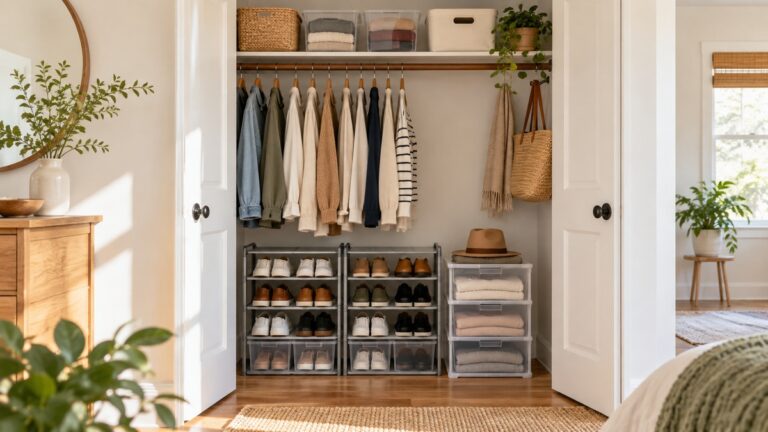
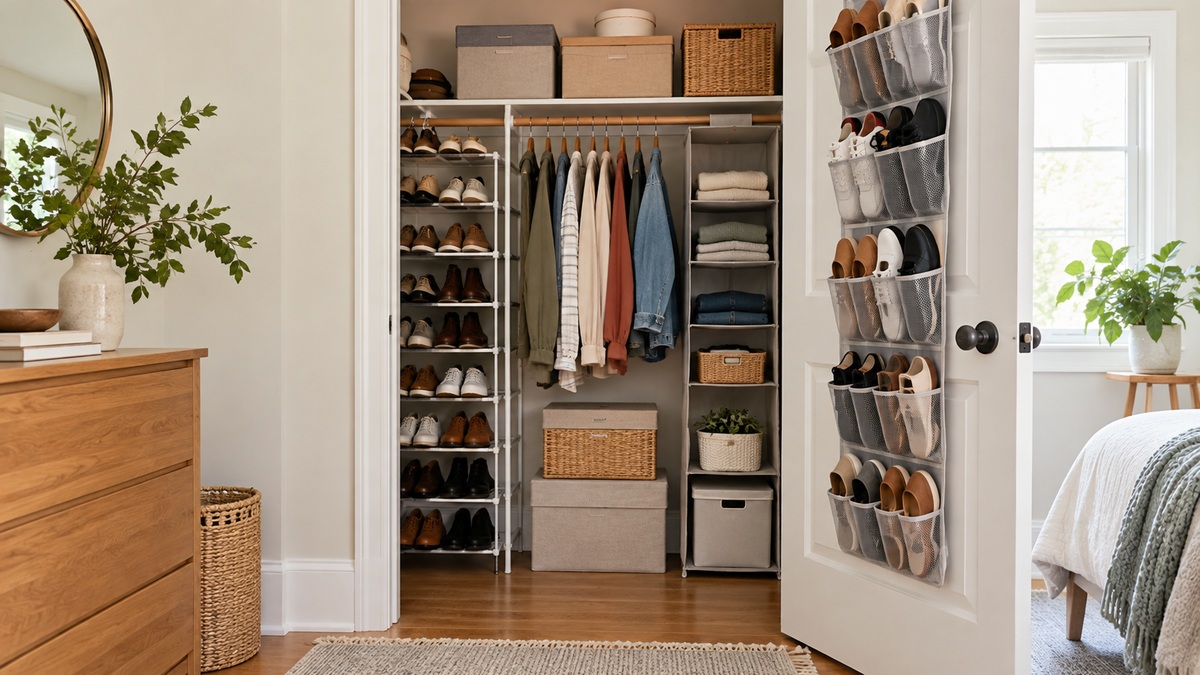
Next, map zones in a small reach-in closet. Floor zone suits low 2-tier and 3-tier racks. Side-gap zone suits tall narrow towers. Door zone suits hanging organizers. Shelf-top zone suits stackable boxes or foldable cubes. Under-bed overflow can hold off-season pairs. Measure each zone. Note hanging clothes length. Note baseboards and door tracks that reduce depth. For full closet plans, see closet organizing ideas for small spaces and tips for organizing your closet.
Fabric cubes add another option for shelf tops and for best shoe storage ideas for closet layouts with deep shelves. One 2-pack fabric box lists 17 by 17 by 12.99 inches, 16 compartments, 59 liters storage volume, and 3.28 kg item weight, with fold-flat thickness to 1.38 inches. Another lists 17 by 17 by 13.4 inches, 12 compartments, and cotton material. A third compact set lists each unit at 16.9 by 8.45 by 11.8 inches and a combined size of 16.9 by 16.9 by 11.8 inches, but specs list 10 by 12 by 5 inches, so the sizes conflict and should not be relied on without checking the listing. Cubes hold sneakers, flats, and kids’ shoes well. They fit less well for tall boots unless dividers are removed. They need a sturdy shelf because 12 to 16 pairs add weight fast.
Think about daily use. Open racks make quick grabs easy. Closed boxes protect dress shoes from dust. Door pockets keep pairs visible. If odors are a concern, choose open or mesh designs and rotate shoes. If dust is a concern, choose lidded boxes with vents. If cleaning muddy shoes matters, plastic or waterproof fabric wipes faster than cardboard-sided organizers. One under-bed style lists cardboard and fabric with 30 by 24 by 4.3 inches, 12 liters capacity, 16 ounces item weight, and cells for up to 11.5 inch shoes. That style suits overflow, not daily closet use, unless your closet has a low platform.
For diy shoe storage ideas for small closets, use the same measurements before building. A simple plywood shelf needs correct depth for your largest shoe plus door clearance. Leave vent gaps. Do not exceed the shelf bracket load. Renters should prefer freestanding or door-hung options that do not drill tile or plaster. For more rental-friendly builds, see diy clothes storage ideas for small spaces.
Planning example for a narrow closet
This section shows our planning estimate for fit, not a load promise. Suppose a reach-in closet has 30 inches of open floor width, 11 inches of usable floor depth, and 24 inches of height under shirts. You own 10 pairs of low sneakers and 2 pairs of ankle boots.
Step 1: floor width math. A 3-tier rack adjusts from 17.7 inches to 33.1 inches wide. Set it to 28 inches. Subtract from closet width: 30 – 28 = 2 inches left. That leaves 2 inches of side gap.
Step 2: depth check. Rack depth is 9.2 inches. Closet depth is 11 inches. Subtract: 11 – 9.2 = 1.8 inches clear in front. The door should still close, but verify track and baseboard.
Step 3: height check. Rack height is 23.6 inches. Space under shirts is 24 inches. Subtract: 24 – 23.6 = 0.4 inches clear. That is tight but workable if the floor is level.
Step 4: pair count plan. The rack listing says up to 16 pairs. Plan 10 sneakers on two levels, about 5 pairs per level. Place 2 ankle boots on the bottom level or on the floor space under the high-leg design. Keep total weight under the listed maximum of 27 pounds total. If boots are heavy, move off-season pairs to shelf boxes.
Step 5: re-verify twice. Width: 28 is less than 30. Depth: 9.2 is less than 11. Height: 23.6 is less than 24. Pair plan: 10 + 2 = 12 pairs, which is less than 16 pairs. All checks pass for fit, but stability, floor level, and door swing still control safe use. Follow the maker’s instructions and check the listing for load notes.
3 buying scenarios
Rental with no drilling
Choose a door-hanging organizer or a low freestanding rack. Doors need correct thickness for hooks. Floors need level space. Avoid wall shelves. Use fabric cubes on existing shelves. Check closet door closure before loading shoes.
Shared closet with clothes to the floor
Choose a narrow tower for the side gap and stackable boxes for the top shelf. Keep daily sneakers low. Keep dress shoes boxed up high. Leave hanging clothes room to move. For two-person layouts, see small his and hers walk-in closet ideas.
Kids’ shoes plus adult shoes
Choose a low 2-tier rack for kids’ reach and a separate tower or door organizer for adults. Kids climb, so anchor tall units and keep tempting items off tops. CPSC advises securing top-heavy furniture and following maker instructions. Keep heavy adult boots low.
Comparison table
| Pick type | Listed size | Listed capacity | Shelves / compartments |
|---|---|---|---|
| 10-tier narrow tower | 10 x 17 x 68 inches | Maximum weight: 55 pounds; holds 20-25 pairs | 10 shelves |
| 3-tier expandable rack | 9.2 x 33.1 x 23.6 inches; expands 17.7-33.1 inches wide | Maximum weight: 27 pounds; holds up to 16 pairs | 3 shelves |
| 2-tier expandable rack | 8.8 x 32.3 x 14 inches; expands 17.7-32.3 inches wide | Maximum weight: 30 pounds; holds up to 8 pairs | 2 shelves |
| 5-tier plastic tower | 10.91 x 10.24 x 35.04 inches | Maximum 75 pounds; bullets state 15 lbs per tier | 5 shelves |
| Over-door hanging organizer | 6 x 16.9 x 74.2 inches; pockets 10.5 inches deep | Capacity 90 pounds; holds 24-30 pairs | 10 compartments |
| Stackable clear boxes, 12-pack | 13.1 x 9 x 5.7 inches per bullets; specs list larger sizes | Fit to men’s 9 / women’s 10; listing does not state weight limit | 12 compartments |
5 common mistakes
Buying before measuring depth
Many small closets lose 1 to 2 inches to baseboards and tracks. Measure at the floor, not the wall. Bring a tape for width, depth, and height. Check door swing with shoes in place.
Trusting pair counts for boots
Pair counts assume small shoes. Boots need double height. Remove a tier where the listing allows it, or store boots on the floor under a high-leg rack. Count tall pairs first.
Stacking boxes too high
High stacks slide when doors bump them. Keep stacks on level shelves. Do not stack past the shelf sides. Keep heavy pairs low. Check the listing for stacking limits.
Ignoring weight limits
A full rack of boots can pass a 27-pound or 30-pound total fast. Spread pairs across zones. Move off-season shoes to another room. If the listing does not state a limit, ask what the shelf supports and follow maker guidance.
Blocking airflow and cleaning
Closed boxes trap odor if shoes go in wet. Dry shoes first. Use vented boxes or open racks for daily wear. Wipe plastic boxes as directed. For narrow units that trap dust, see narrow shelving units for small spaces.
Care and safety notes
Dust racks monthly. Wipe plastic with a damp cloth where care notes allow. Keep cardboard-sided organizers dry. Air out new fabric organizers before loading. Do not let children climb racks or towers. Anchor tall units. Place heavy shoes low. Keep walk paths clear. Follow the maker’s manual for assembly, hardware, and load limits. CPSC notes that children like to climb furniture and that unsecured furniture is a hidden hazard in every room. If wall type is unknown, ask a building professional before drilling.
FAQ
What fits best on a closet floor with hanging clothes above?
A low 2-tier or 3-tier rack often fits best. Measure height under clothes first. A 14-inch-high unit fits more closets than a 23.6-inch-high unit. Leave finger room to lift shoes out.
How do I store boots in a small closet?
Use a tier you can remove, a deep door pocket, or floor space under a high-leg rack. One tower listing allows removing one layer for boots. Door pockets listed at 10.5 inches deep also help. Keep tall boots upright to save width.
Are stackable shoe boxes good for small closets?
They work well on top shelves for dress shoes and flats. They protect from dust and stack to use height. Check size fit for your shoe size and shelf depth. One set fits to men’s 9 and women’s 10. The listing does not state a weight limit.
What if I have no floor space at all?
Use the door or the top shelf. A hanging organizer at 16.9 inches wide uses vertical space. Shelf-top cubes or boxes use dead air above clothes. Under-bed boxes can hold off-season pairs outside the closet.
Do tall shoe towers need wall anchors?
Treat any tall narrow unit as tip-prone. The listings here are freestanding or floor-mount and do not promise tip resistance. Use anti-tip hardware where the maker provides it. Follow maker instructions. CPSC advises anchoring top-heavy furniture with brackets.
How many pairs can a small closet hold?
It depends on shoe size and layout. Low racks here list 8 to 16 pairs. Tall towers list 20-25 pairs. Door organizers list 24-30 pairs. Boxes hold one pair per cell for thin shoes. Count your largest pairs first, then match depth and height.
How do I keep shoes from smelling in closed boxes?
Dry shoes before storing. Choose boxes with ventilation holes. Rotate daily shoes on open racks. Clean insides as the care notes direct. Mesh-sided organizers give more airflow than lidded plastic.
Bottom line
Measure width, depth, and height, then choose by zone. Choose the low 3-tier expandable rack if you have open floor under shirts and need up to 16 pairs. Choose the tall 10-tier tower if you have a narrow side gap and need 20-25 pairs with wall support. Choose the door organizer if floor space is zero. Choose stackable boxes if shelf dust is the issue and your sizes fit. If nothing fits without blocking doors or overloading shelves, move off-season pairs out of the closet.
Sources
- CPSC Anchor It!: furniture tip-over risk and anti-tip bracket guidance