Best Narrow Shoe Storage for Tight Spaces
As an Amazon Associate we earn from qualifying purchases. Details
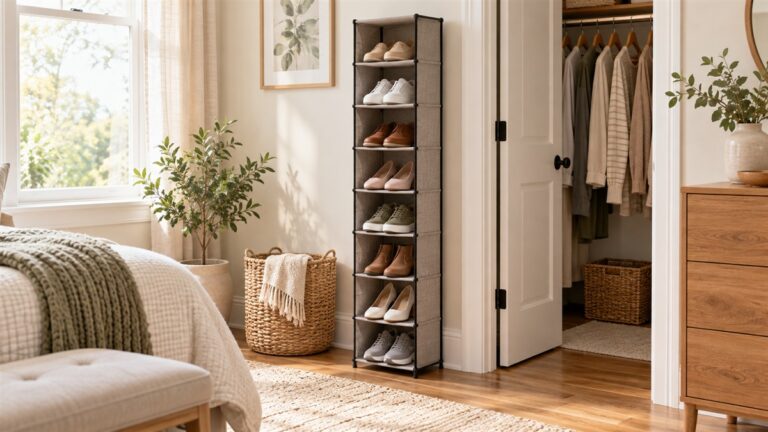
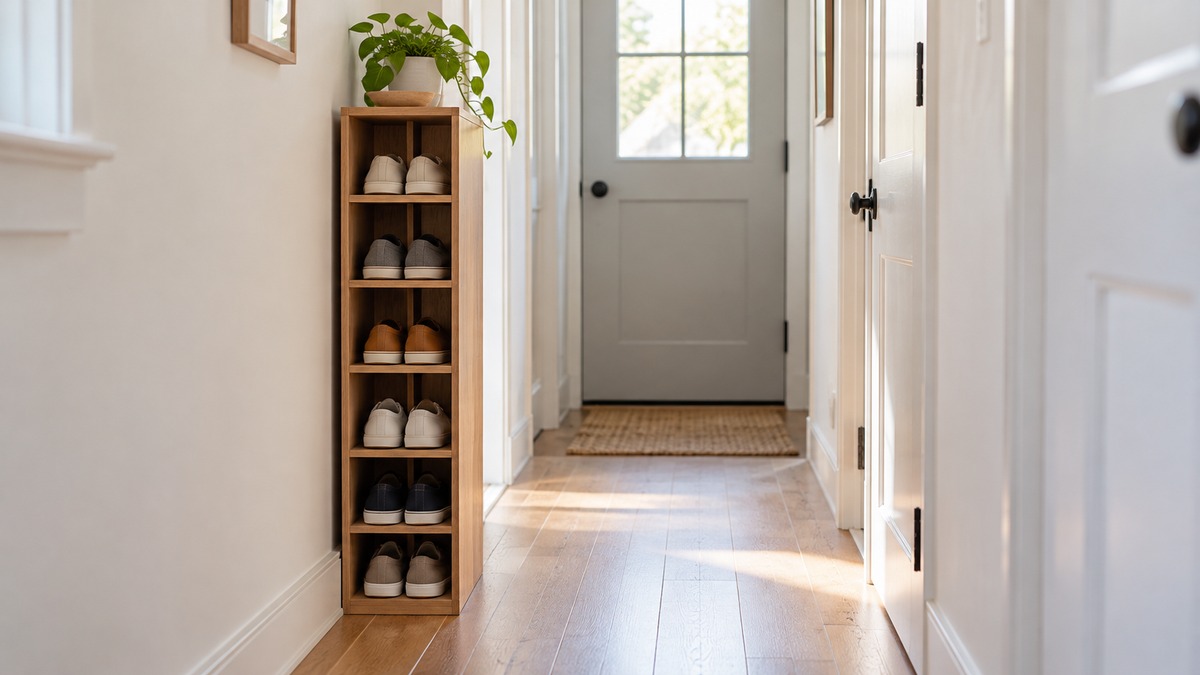
Narrow shoe storage keeps shoes in a slim footprint, so a hallway, entry or closet stays clear. This guide helps you measure the space, choose between open cubbies and a bench, and check the listing details that decide fit. It covers the two shoe-specific options in this group and explains the measurements that matter for any narrow shoe storage you consider. Start with the depth at the widest point, then check the doorway, then compare the height. Narrow hallways often fail on the doorway before they fail on depth.
Quick answer
Choose a stackable cube unit if you need open cubes for low shoes in a closet or entry and the width fits your wall. Choose a bench-style cubby if you need nine cubbies and the doorway clears its listed width. Choose neither if you own tall boots, because the cube unit limits shoes to a set height. Before you buy, measure the depth at the widest point, the doorway width and the height of your tallest shoe. If you mount anything high on the wall, use a stud or a rated anchor.
What changes the choice for narrow shoe storage
Five checks matter more for narrow shoe storage than for a general shoe rack. Each one changes which option fits, so work through them in order.
Depth decides whether shoes fit
Depth decides whether a shoe fits from front to back. The cube unit lists cubes 11 inches deep and 4.5 inches wide, which suits low-profile shoes such as flats and sandals. The bench lists 11.8 inches of depth. Those depths look close, but the cube unit’s opening is the tighter limit. Measure your longest shoe from heel to toe and add a small margin at the front, so the shoe does not press the door.
Height and tall boots
The height limit comes from the cube opening, not from the unit’s overall height. The cube listing limits its cubes to shoes under 5.75 inches high, so tall boots do not fit. The bench lists 17.7 inches of overall height, which suits low shoes, flats and sneakers stacked in cubbies. If your household owns tall boots, plan a separate place for them before you buy any shoe rack.
Doorway and hallway access
The doorway often decides the choice in a narrow hallway. The bench lists a minimum required door width of 27.6 inches, which means the item must clear that opening during delivery and placement. Measure the doorway, any turns in the hall and the clearance at the wall. The cube unit lists a width of 24.09 inches, which needs floor space along the wall. In a narrow hall, that width can block a door swing, so measure the swing before you commit to either option.
Load, material and stability
Few shoe racks state a load figure. The bench lists strong load-bearing capacity without giving a number, and its bullets say the board is high-quality MDF. Medium-density fibreboard is an engineered wood product made by breaking down wood residuals into fibre, combining it with a resin binder and forming panels under heat and pressure. It is generally denser than plywood and stronger than particle board. The cube unit is wood with a laminated finish, so check the finish against the floor and walls where it will sit.
Assembly and included hardware
Both options need assembly, but the included parts differ. The cube unit lists installation and assembly hardware, shoe organizers and stacking hardware, so you can link modules without buying parts. The bench lists assembly instructions, included tools and labeled accessories, and it describes installation as quick. Read the parts list before you order, and check that every fastener you need is included.
How to choose
Use these rules in order. Each one can change which option fits your entry, closet or hall.
- Choose by the doorway first. Measure the narrowest point and the turn before you compare any product.
- Choose open cubes if you want each pair visible and you own low shoes.
- Choose a bench-style cubby if you want nine cubbies and a larger footprint along a wall.
- Choose a stackable unit if you may add rows later, and confirm that the stacking hardware is included.
- Choose a taller unit only with anti-tip hardware and a wall fixing plan.
- A common rule of thumb is to keep the heaviest shoes on the lowest shelf, so the top stays light and easy to reach. Treat that as a rule of thumb, not a figure from either listing.
If you are looking for narrow hallway shoe storage, the doorway and the wall clearance matter more than the cube count. A shoe rack that clears the door but blocks the hall is still a poor fit.
1. ClosetMaid 15 Cube Stackable Storage Organizer for Shoes, Bags, Crafts, Hobbies with Wood Shelves (Stackable 15-cube wood organizer)
Specs from the listing (checked 2026-10-13):
- Material: Wood
- Product Dimensions: 11.63″D x 24.09″W x 19.29″H
- Number of Shelves: 15
- Mounting Type: Floor Mount
- Item Weight: 9.48 kg
Pros
- The bullets say the cubes measure 5.75 inches high, 4.5 inches wide and 11 inches deep, sized for low-profile shoes.
- The bullets say the stacking hardware is included, and all hardware is included for assembly.
Cons
- The bullets limit it to low-profile shoes under 5.75 inches high, so tall boots do not fit.
- The width reads 24.09 inches in the specs and 24.13 inches in a bullet, so confirm the width before you measure the wall.
Best for: A closet, entryway or mudroom where open cubes for low shoes suit the space.
Skip if: You need room for tall boots, or your wall is narrower than 24.09 inches.
View on Amazon (affiliate link)
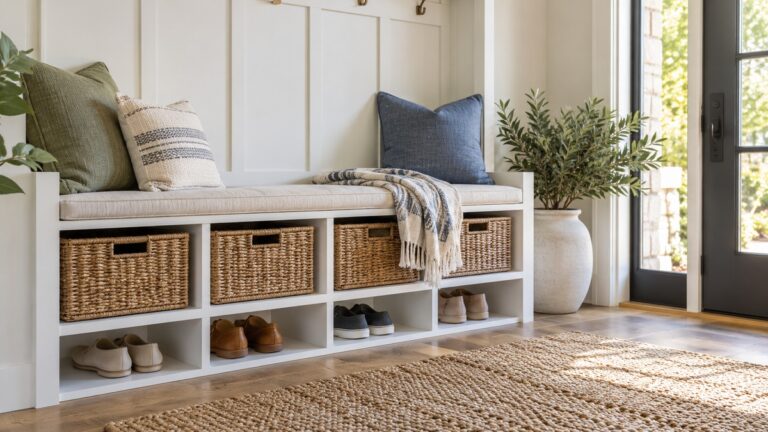
2. Shoe Storage Bench Cubby with 9 Cubbies, Wood Shoe Rack Organizer Cabinet (Nine-cubby shoe bench)
Specs from the listing (checked 2026-10-13):
- Material: Engineered Wood
- Product Dimensions: 11.8″D x 27.6″W x 17.7″H
- Number of Shelves: 9
- Shape: Rectangular
- Item Weight: 18.5 pounds
Pros
- The bullets say the nine cubbies store nine pairs of shoes, and the bench can also hold books, toys or blankets.
- The bullets say the bench includes labeled accessories and tools, and that installation is quick with the included steps.
Cons
- The Minimum Required Door Width field gives 27.6 inches, so check that your doorway clears it before you order.
- The Item Weight field gives 18.5 pounds, so the bench is heavy to move once it is filled, and the listing states strong load-bearing capacity with no figure.
Best for: A hallway or entrance where you want nine cubbies for shoes and a footprint about 11.8 inches deep.
Skip if: Your doorway is narrower than 27.6 inches, or you need a stated load figure.
View on Amazon (affiliate link)
How to measure a narrow spot
Measure three points before you compare any option. First, measure the depth at the widest point of your shoe area, from the wall to the front edge of the spot. Second, measure the doorway and the turn you must make to bring a unit in. Third, measure the height of your tallest shoe, including the heel. Write each number down, then compare it with the listing’s depth, door width and cube opening. Measure twice, because a small error in depth decides whether a shoe stays inside the frame.
Measure the wall run as well. A bench or a cube unit needs a clear strip along the wall, and a radiator, a switch plate or a coat hook can cut that strip short. Note any obstacle that sits at shoe height, since it can block a unit that otherwise fits the depth and width.
Listing conflicts to check before you buy
Both options have points to confirm before you order. When two figures conflict, rely on neither until you check.
- The cube unit’s width reads 24.09 inches in the specs and 24.13 inches in a bullet, so confirm the width before you mark the wall.
- The bench’s Material field says engineered wood, while its bullets say the board is MDF, so confirm the core material if you care about the build.
The rest of each listing is consistent on depth and height, but you should still measure the space yourself. Do not rely on the overall size alone when the doorway is tight.
Mounting and anchoring for wall use
Some narrow shoe storage stacks on the floor, and some is designed to sit against a wall. If you plan to fix a unit to the wall, the wall type decides the hardware. Drywall, also called gypsum board, is a panel of calcium sulfate dihydrate between paper facers, used for interior walls and ceilings. A screw in drywall without a stud behind it is not the same as a screw into framing. Use a stud finder to locate the wood or metal framing before you drill. A magnetic stud finder detects the metal fasteners that hold wallboard to studs, and an electronic model senses changes in wall density.
If you cannot find a stud where you want the unit, use a rated anchor from the maker’s hardware notes, and check the wall type first. Plaster and masonry need different fasteners from drywall. Follow the maker’s mounting instructions in order. The cube unit’s stacking hardware links modules, but the listing does not describe it as a wall fixing, so a tall stack still needs its own anchoring.
Tall units and anti-tip hardware
When the cube unit is assembled, its listing gives a height from 19 to 38 inches. A tall stack of shoes is top-heavy, and the CPSC’s Anchor It! campaign addresses tip-overs of this kind. The CPSC advises that existing furniture can be anchored with anti-tip brackets, and that new furniture is sold with anti-tip devices that should be installed right away. It also advises following the manufacturer’s instructions to secure furniture properly. For a tall narrow shoe storage cabinet, check whether the maker includes anti-tip hardware, and anchor the unit to the wall if the listing allows it. A taller narrow cabinet with doors needs the same check, so compare the best tall narrow shoe cabinet with doors guide before you decide.
Children can climb shoe racks too. The CPSC advises removing tempting objects from the tops of furniture so children are not lured to climb. Keep shoes off the top of any tall unit, and keep the heaviest pairs on the lowest tier.
What this guide leaves out
Narrow bins, under-bed boxes, slim rolling carts and narrow bathroom cabinets are useful for other storage, but they are not shoe racks. This guide leaves them out, so you can compare the options that are built for shoes. If your narrow space needs a bin rather than a rack, read the best hallway shoe storage guide for layouts that use a cabinet or bench instead.
Worked example: fitting pairs into a hallway
Now check the wall. Each bench is 27.6 inches wide, so two units side by side need 55.2 inches of wall. 27.6 plus 27.6 is 55.2, which means a 55-inch run of wall. If your hall wall is shorter than that, you would need to stack one bench on another or choose a unit with a smaller footprint. The example shows that pair counts and wall length must both work before you buy.
Common mistakes
- Measuring only the depth. A shoe rack that fits the wall can still block a door.
- Ignoring the doorway width. Check the minimum listed width before you order.
- Buying a cube unit for boots. The cube opening limits shoes to a set height.
- Mounting a tall stack without anti-tip hardware or a wall fixing.
- Trusting one dimension in the listing. Some listings give width and depth in different fields.
- Forgetting to check the included hardware before assembly starts.
Who may not need one
You may not need a dedicated narrow shoe rack if your household owns only a few pairs. A single tray by the door may hold them. If your closet is the real problem, read the best shoe storage for small closet guide before you buy a cube unit. For an entry with more traffic, the best entryway shoe storage guide covers other layouts.
FAQ
How deep should narrow shoe storage be?
Measure your longest shoe from heel to toe, then add a small margin at the front. The cube unit lists 11 inches of depth, and the bench lists 11.8 inches. A common rule of thumb is to leave about a finger’s width at the front, so the door still closes.
Will a shoe bench fit through my doorway?
Check the minimum required door width on the listing. The bench lists 27.6 inches, so measure the doorway and any turns in the hall before you order. Measure the tightest point on the route, not only the door itself.
Can a cube shoe organizer hold boots?
Not tall boots. The cube listing limits its cubes to shoes under 5.75 inches high. For tall boots, look at a boot-specific storage option instead of a low cube unit.
Is wood or engineered wood better for a shoe rack?
Choose by stability, finish and the wall you have. The bench’s bullets describe MDF, and medium-density fibreboard is generally denser than plywood and stronger than particle board. The cube unit is wood with a laminated finish. Check the finish against the floor and walls where it will sit.
Can I mount a narrow shoe rack on the wall?
Yes, if the listing allows wall fixing and you can locate a stud. Use a stud finder, identify the wall type, and use the hardware in the maker’s notes or a rated anchor. Follow the mounting steps in order, and check the wall again if the unit moves.
How many pairs does a shoe bench hold?
The bench’s bullets say nine cubbies hold nine pairs of shoes. Those are the listing’s figures, so measure your own shoes before you buy. The bench lists 18.5 pounds of item weight, so plan its position before you fill it.
Do these shoe racks need assembly?
Both need some assembly. The cube unit includes assembly hardware and stacking hardware.
Bottom line
For a closet or entry with low shoes, a stackable cube unit fits when its width suits the wall. For a hallway with nine pairs, a bench-style cubby suits if the doorway clears its listed width. Measure first, then decide. If your household owns tall boots, look past both options, because neither is built for them.
Sources
- CPSC Anchor It! campaign: anti-tip brackets, manufacturer instructions and removing tempting objects from furniture tops
- Stud finder: how stud finders locate framing and wallboard fasteners
- Drywall: what drywall is and where it is used
- Medium-density fibreboard: what MDF is and how it compares with plywood and particle board