Best Bath Corner Shelf: How to Choose One for Your Bathroom
As an Amazon Associate we earn from qualifying purchases. Details
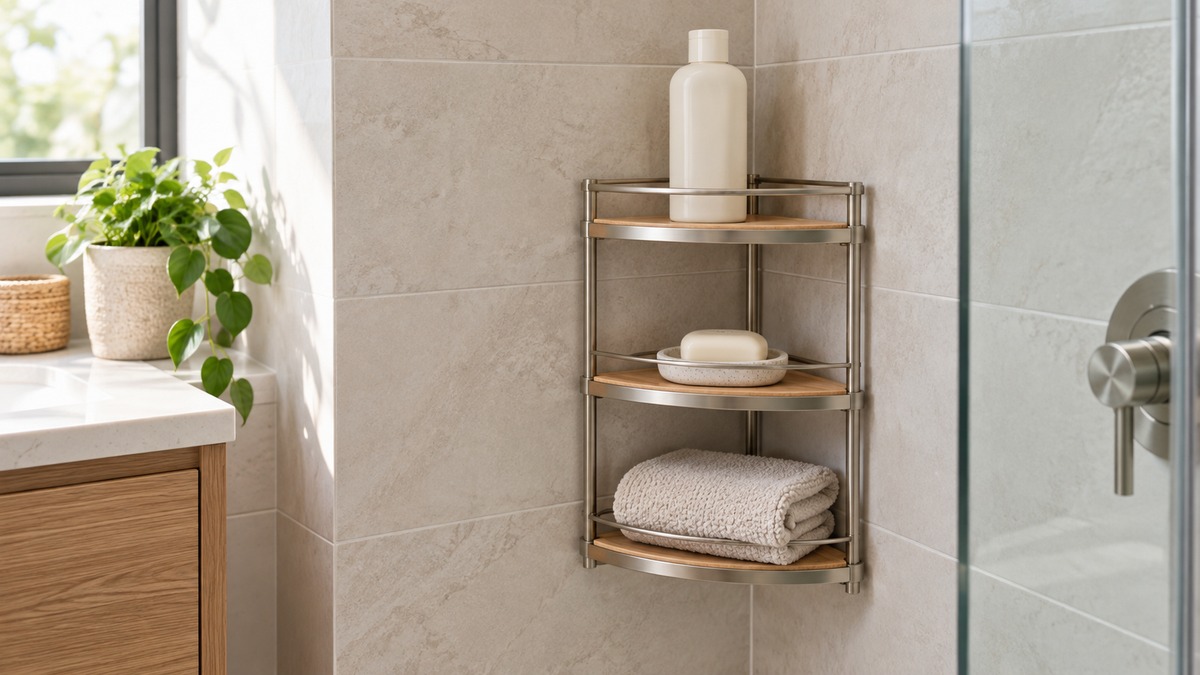
A bath corner shelf uses a dead corner to hold shampoo, soap, and small bathroom essentials without taking floor space. This guide helps you decide between an adhesive caddy and a screw-fixed corner stand, and it shows what to check on a listing before you order. Start with three questions: what the wall is made of, whether you can drill into it, and how many bottles the corner must hold. Corner products in this category differ on mounting, shelf count, and load figures, so the guide shows you where to look. Where a listing stays silent on a detail that matters, we say so instead of guessing.
Quick answer
Choose an adhesive corner caddy when the wall is smooth tile or glass, you cannot drill, and the load is light to moderate. Choose a screw-fixed corner stand when you can find solid wall support and want a shelf that does not depend on adhesive. Before you buy, check the mounting method, the wall surfaces the listing supports, and the load figure. If the listing gives no load figure, plan the shelf for light bottles only, and confirm the shelf count in the photo.
What to check before you buy a bath corner shelf
Mounting method: adhesive or screws
Adhesive caddies stick to the wall with tapes or pads, and they need no drilling. Screw-fixed stands rely on fasteners into the wall, and they need a solid surface behind the mount. Each method has a different failure point. Adhesive fails when the surface is wrong, the wall is wet, or the cure time is skipped. Screws fail when they land in hollow drywall with no framing behind it. Pick the method that matches your wall, not the one that looks easier in the photo.
Wall surface and what the listing supports
Walls differ. Drywall is a panel of gypsum board used in interior walls, and tile, glass, and sealed wood are different surfaces again. Read the surface list in the bullets before you buy. One listing in this set says it suits all smooth surfaces, including glossy ceramic tile, tempered glass, and lacquered cabinets, and it says it is not recommended for textured walls. A surface the listing does not name is a surface you should test with a small trial load before you rely on the mount.
Load and bottle count
Load figures tell you what the shelf can hold. A listing may give a load in pounds for the whole set, or it may give none. Count the bottles you keep in the corner, and compare that count with the shelf count and the load figure. A large shampoo bottle and a bar of soap do not weigh the same, so a bottle count alone is only a rough guide. If the listing gives no load, plan for light items and keep the heavy bottles on the lower tier if the unit has one. A common rule of thumb is to place the heaviest item where your hand reaches it without stretching, so you do not lean the shelf out of its mount when you lift a bottle.
Shelf count and the photo
Shelf counts in titles and specs do not always match. A listing can state one shelf in the number of shelves field while the bullets describe several. Count the shelves in the photo and in the bullets, and rely on the product page if they disagree. A single shelf and a multi-tier unit serve different needs, so the count changes your choice.
Size and corner fit
Corner units must fit the angle of the wall and the space above the tub or shower floor. Measure the corner from wall to wall, and check the height you need from the floor or the tub edge to the spot you want to reach. A listing that gives a footprint in inches lets you compare the depth with your corner. Leave room to rinse the shelf and wipe it down, because a crowded corner collects residue. A corner unit with a square footprint suits a square corner, and a shaped caddy suits an angled one. Check that the front edge does not block the shower door swing, the tap, or the path to the tub edge.
Material, moisture, and finish
Bathroom corner shelves are made of stainless steel, plastic, bamboo, or engineered wood. Stainless steel and powder-coated metal resist rust, and the listing will name the grade or coating. Bamboo and wood need more care around water, and the listing may say the bamboo resists moisture without giving a time frame. Particleboard is described as the lightest and weakest type of fiberboard, and MDF is generally denser than plywood and stronger than particleboard. Read the material field, and assume a claim is a claim until you see the finish.
Drainage and cleaning
Look for drainage holes, open wire, or a hollow frame. These features let water run off instead of pooling on the shelf. Cleaning matters too, because a shelf that holds soap and shampoo collects residue. Some listings say the surface wipes clean, and others name a drainage hole only. Wipe the shelf after each use, and check the mount for mold where the adhesive or screws meet the wall. Water that sits behind a shelf can leave marks on the wall, so look at the back edge of the mount every few weeks and dry the area if you see moisture.
Anti-tip and tall corner units
Most corner shelves are wall-fixed, but a freestanding corner stand that is tall can tip if it is top-heavy. The U.S. Consumer Product Safety Commission advises securing top-heavy furniture, and it says existing furniture can be anchored with inexpensive anti-tip brackets. If a corner stand is tall and freestanding, check the listing for anti-tip hardware, and follow the maker’s instructions to anchor it to the wall. The advice applies most to freestanding units. A wall-fixed corner shelf still depends on a sound wall, so the wall check matters more than the tip-over check.
How to choose between your options
Use these rules to narrow the choice.
Choose an adhesive caddy if you rent, if the wall is smooth tile or glass, and if your load is light. Choose a screw-fixed stand if you own the bathroom, if you can find solid support behind the wall, and if you want a shelf that does not rely on tape. Choose a unit with a drainage hole if the corner is in the shower and gets wet every day. Choose a unit with a stated load if you keep heavy bottles in the corner.
Before you drill, use a stud finder to locate framing behind the wall, and check whether the wall is drywall, plaster, or tile on backer board. A stud finder helps you find framing, while a magnetic model detects metal fasteners and an electronic one senses changes in wall density. For a broader look at bathroom corners, the bathroom counter corner shelf guide covers countertop options, and the bathroom corner shelving unit guide covers taller units. If the corner is outside the shower and you want a wall shelf instead, the small bathroom wall shelf guide is the closest match.
The two corner shelves
1. YASONIC Corner Shower Caddy Adhesive, 100% Rustproof Shower Organizer, No Drill Shower Shelf (Adhesive corner caddy pair)
Specs from the listing (checked 2026-10-13):
- Capacity: 40 pounds
- Product Dimensions: 8.6″D x 4.63″W x 2.56″H
- Mounting Type: Wall Mount
- Material: 304 Stainless Steel Grade
Pros
- The listing gives a capacity of 40 pounds for the caddies.
- Each caddy is listed at 8.6 inches deep, 4.63 inches wide and 2.56 inches high, so each piece stays shallow.
- The bullets say the set includes two large caddies and four adhesive mounting tapes.
Cons
- The bullets say the adhesive needs 24 hours to cure before loading, and the mount is not reusable.
- The bullets limit the wall to smooth surfaces, so textured walls are not supported.
Best for: Shower walls with glossy tile or glass that you cannot drill.
Skip if: Skip it if the wall is textured, since the listing does not recommend textured walls.
View on Amazon (affiliate link)
2. Bamboo Corner Shower Caddy Corner Shelf Stand (Bamboo screw-fixed corner stand)
Specs from the listing (checked 2026-10-13):
- Material: Bamboo
- Product Dimensions: 11.8″D x 11.8″W x 27.5″H
- Number of Shelves: 1
- Installation Type: Corner Mount
Pros
- The bullets say the bamboo resists moisture and holds up well in humid shower environments.
- The listing gives 11.8 inches by 11.8 inches by 27.5 inches, a corner footprint of 11.8 inches on each side.
- The special feature field lists a drainage hole.
Cons
- The number of shelves field says 1 while the bullets describe multiple shelves, so count the shelves in the photo before you buy.
- The listing does not state a load rating or weight limit.
Best for: Corners where you can screw into solid support behind the wall.
Skip if: Skip it if you cannot fix screws to the wall, since the listing relies on the included hardware for mounting.
View on Amazon (affiliate link)
How the two shelves differ
The YASONIC is an adhesive corner caddy sold as a pair. The listing gives a capacity of 40 pounds and a footprint of 8.6 inches deep, 4.63 inches wide and 2.56 inches high for each caddy. It includes four adhesive mounting tapes, and the bullets say the adhesive needs 24 hours to cure before you load it. The mount is not reusable, so plan one placement only. Because the bullets limit the wall to smooth surfaces, check the wall before you buy, and skip this unit on textured walls.
The bamboo stand is a corner stand that mounts with screws and included hardware. The listing gives a footprint of 11.8 inches by 11.8 inches and a height of 27.5 inches. The special feature field lists a drainage hole, and the bullets say the bamboo resists moisture. The number of shelves field says one, while the bullets describe multiple shelves, so count the shelves before you buy. The listing does not state a load rating.
Neither unit will hold every item in a crowded corner. Measure your own bottles and bars against the footprints above, and decide where the items that do not fit will go.
Mistakes that make a bath corner shelf fail
- Choosing adhesive for a textured wall. The surface decides whether the mount holds.
- Skipping the cure time. The listing says the adhesive needs 24 hours to cure before loading.
- Assuming a load rating. If the listing gives none, plan for light items only.
- Trusting the shelf count in the title. Count the shelves in the photo.
- Mounting into hollow drywall without support. Find framing before you screw into the wall.
- Ignoring a corner that does not fit. Measure the angle and the height before you buy.
FAQ
Can I put a bath corner shelf on a tiled shower wall?
Yes, if the listing supports the tile surface. Some adhesive caddies name glossy ceramic tile and tempered glass as suitable, and they say textured walls are not recommended. Check the surface list before you buy.
Do I need to drill for a corner shelf in the bathroom?
Not always. Adhesive caddies need no drilling. Screw-fixed stands need fasteners into the wall, and the listing says the mount uses included hardware. Find framing before you drill.
How much weight can a bath corner shelf hold?
Read the listing for a load figure. One adhesive caddy lists 40 pounds. Some listings give no figure at all. If the listing is silent, keep the shelf for light items.
How long should adhesive cure before I load the shelf?
The listing for one adhesive caddy says to wait 24 hours for full curing. Follow the maker’s time, and do not load the shelf early.
Is bamboo a good material for a shower corner?
The listing says bamboo resists moisture, but it does not give a time frame for water exposure. Wipe the shelf after use, keep it dry between showers, and check the mount for signs of moisture.
Can I use a corner shelf in a rental?
An adhesive caddy suits a rental if the wall allows it, because it needs no drilling. Check your lease, and test the mount on a small area before you commit.
What should I check on a corner shelf listing before I buy?
Check the mounting method, the wall surfaces the listing supports, the load figure, the shelf count in the photo, and the corner footprint. Confirm any field that conflicts with the bullets.
The corner clearance
The adhesive caddy is 8.6 inches deep, and the corner stand’s footprint is 11.8 inches on each side, so the difference is 3.2 inches (11.8 – 8.6). The listing gives 40 pounds for the caddies, so keep the load check per caddy and do not double the figure without confirming it.
Bottom line
If your wall is smooth and you cannot drill, an adhesive caddy with a stated load and a cure time you can follow is a practical choice. If you can find solid support, a screw-fixed corner stand with a drainage hole gives you a shelf that does not rely on tape. Either way, confirm the wall surface, the load, and the shelf count before you buy.
Sources
- Drywall: a panel of calcium sulfate dihydrate between paper facers, used for interior walls and ceilings
- Stud finder: how magnetic and electronic stud finders locate framing behind walls
- CPSC Anchor It! campaign: securing top-heavy furniture with anti-tip brackets
- Particle board: particleboard is the lightest and weakest type of fiberboard