QEEIG Bathroom Floating Shelves for Wall Review
Source note: every specification in this review comes from the product data for this model.
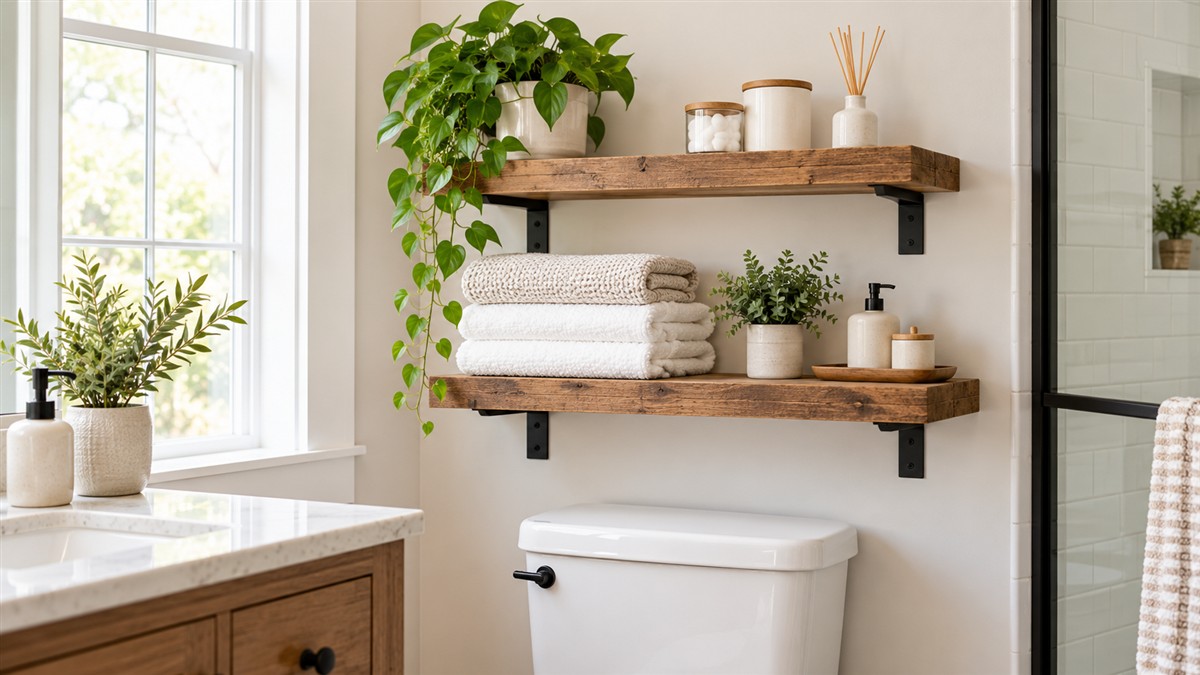
Some bathroom walls have one awkward strip of space beside a sink or above a toilet, and a shelf that is too deep can make it feel crowded. The QEEIG Bathroom Floating Shelves for Wall come as a set of two. Each board is 15.7 inches wide, 6.7 inches deep and 1.5 inches thick, and the product data describes a wall mount with the bracket hidden behind the board. This review turns those listed figures into everyday decisions and sets out the checks to make before you buy. You can see the QEEIG shelves on Amazon to compare the photos with the details below.
What the set contains
The product data lists the full contents of the box: two MDF boards, two metal brackets, one hardware kit and one instruction sheet. The set count is two, and the unit count is also two. That matters because a pair of shelves needs a pair of brackets. Count the parts before you start any drilling, so you know whether a missing bracket is a problem that needs fixing before you begin.
The product name in the data reads “Bathroom Shelves, Wall Shelf,” and the model name and model number both read “mounted-bathroom-shelves.” The brand and manufacturer are both listed as QEEIG. The item highlight calls the set a “16 inch Small Shelf Over Toilet for Farmhouse Home Decor, Rustic Plant Display, Towels Organizer.” The highlight uses 16 inches, while the dimension fields read 15.7 inches, so plan the wall with 15.7 inches and check the size printed on the box.
Who these shelves suit
- Anyone with a short run of blank wall in a bathroom, bedroom or living room who wants two compact shelves rather than one wide unit.
- Buyers who want a farmhouse look. The style field reads Farmhouse, and the style name matches.
- People who keep small, lightweight items on a wall shelf. The recommended bathroom use is toiletries such as shampoo, conditioner and shower gel. The specific uses list also includes books, decorative items, kitchen utensils and plants.
- Anyone who wants the shelf to sit above a toilet, desk, fireplace or vanity. The product data names all four placements in its feature bullets.
Who should look at other shelves
- Anyone planning to store heavy items. The listed maximum is 25 pounds, and the data gives no load figure beyond that.
- Anyone who needs solid wood. The data states “Not solid wood,” and the materials are engineered wood and MDF.
- Anyone who needs a deep shelf. At 6.7 inches deep, these suit narrow items, not large bins or wide bottles.
- Anyone who needs a visible bracket as a design feature. The data calls the bracket invisible, which is the opposite of an exposed-bracket look.
Specifications in plain terms
| Listed detail | Listed value | What it means for you |
|—|—|—|
| Size per shelf | 15.7 in wide, 6.7 in deep, 1.5 in thick | A narrow footprint for a short wall run. Measure the width you actually have. |
| Count | Two shelves; unit count 2 | Two levels, or one shelf used alone if the wall takes one board. |
| Weight capacity | 25 lb maximum | The only load figure given. The data does not say whether it applies per shelf or per set. |
| Material | FSC-certified wood board in one field; MDF and engineered wood in others | All fields point to engineered board, not solid wood. |
| Finish | Laminated, color A. Brown | A laminate surface. Care instructions are not stated in the listing. |
| Mounting | Wall mount; L-shaped bracket | Plan the fixings before you drill. |
| Included parts | Hardware kit, instructions, two MDF boards, two metal brackets | The hardware kit is named, but the data does not say which wall anchors it contains. |
| Minimum door width | 15.7 in | Matches the shelf width. Confirm the route if you carry the boxed set through a door. |
| Room types | Bathroom, bedroom, living room | Bathroom is the first recommended use. |
| Set weight | 3.8 lb | Light enough to hold in one hand while you mark the wall. |
Reading the material and finish fields
Several of the material fields use different terms for the same board, so it helps to know what each word means before you compare.
FSC-certified wood board. One field names this. FSC stands for Forest Stewardship Council, a forest certification body. The certification describes how the wood was sourced. It does not describe how strong the shelf is, so it should not change your load plan.
MDF. Medium-density fiberboard is a manufactured board made from wood fibers bonded with resin. The detailed material field reads MDF, and the included components list describes the two boards as MDF.
Engineered wood. This is the broad category. The shelf type and furniture finish fields both read engineered wood. The data also flags the product as “Not solid wood,” which means the shelf is a manufactured board, not a single piece of timber.
Laminated. The finish type and finish types fields both read laminated. Laminate is a printed or coloured layer bonded to the board surface. The data gives no information about scratch resistance or cleaning products, so treat the finish as a surface to protect rather than one that resists every spill.
Taken together, these fields mean you should buy the QEEIG set expecting a light, decorative engineered board with a laminated face. That fits its listed uses, which focus on toiletries, plants, books and decorative items.
Load: what 25 pounds means in practice
The product data gives a maximum weight capacity of 25 pounds in two fields. A third field, weight capacity, reads “Minimum weight: 25 pounds,” and the feature bullets say “up to 25 lbs capacity.” The wording varies, but every field gives the same figure, and none of them divides the figure by shelf or by set.
With that uncertainty, plan for the lower reading: keep each shelf to a load you could carry comfortably in one trip. In practice, that means toiletry bottles, a small plant, folded hand towels and a few decorative objects. It excludes a full set of cookware, a stack of hardcover books or a bulky basket of supplies.
The 6.7-inch depth also shapes what fits. Items that sit close to the front edge can tip outward, so arrange bottles toward the back and keep taller objects against the wall. The product data’s own storage advice says the depth suits “books, baskets, toilet paper, or towels,” so those are the items the listing expects you to store.
Two other figures help you plan. The set weighs 3.8 pounds in total, which means the boards themselves are light and the load allowance sets the real limit. The shelf thickness of 1.5 inches also matters when you stack the two boards at a set distance, because the board takes up vertical space.
Mounting, fit and wall planning
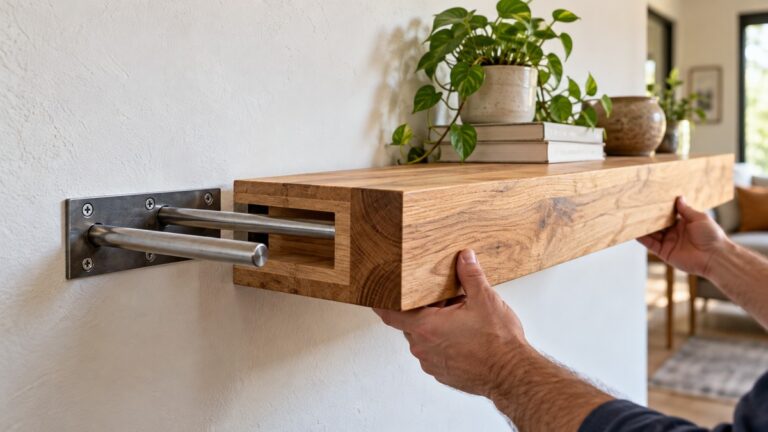
Because these are wall-mounted shelves, the fixings matter more than the board. The product data describes “enhanced steel brackets” that support up to 25 pounds, and it says the shelf has a 2.5-degree upward angle that keeps items steady and sag-free. Those are the listed claims. The data does not describe the wall anchors in detail, so the mounting result will depend on your wall.
Work through these checks before you drill:
- Wall type. Plaster, drywall, tile and masonry each need different fixings. Compare the hardware kit contents against the wall in front of you.
- Level line. Mark a level line first. Two shelves spaced apart need matching brackets at the same height.
- Clearance. Make sure the shelf clears a towel bar, a light fixture or a toilet tank lid if it sits above one.
- Cables and pipes. Confirm there are no pipes or cables behind the marked spot before you drill.
The product data names four placements for the invisible bracket: above toilets, desks, fireplaces and vanities. Those are placement ideas, not a guarantee that each location suits your wall. Check the clearance above each spot before you decide.
Assembly and what is in the box
The product data describes “detailed instructions” that make solo assembly “a breeze, done in just a few minutes.” Those are the listed claims, and the data does not give a step count. Lay out the parts before you start: two boards, two metal brackets, the hardware kit and the instruction sheet.
Check the bracket count first. If any part is missing, the listing directs buyers to contact the seller through Buyer Message before you begin fixing anything to the wall. That is the only support route the data mentions.
Good uses in a bathroom and beyond
Above a toilet. A narrow shelf can hold a small basket, a hand-towel roll or a plant. The data lists toilet paper and towels as items that suit the 6.7-inch depth. Keep the shelf clear of the tank lid and any fixture above the toilet.
Beside a sink. The shelf suits soap, a toothbrush holder or a small cup. The recommended uses name toiletries, so shampoo, conditioner and shower gel are the bottles the data expects. Keep bulky bottles off it, given the load ceiling.
A bedroom or living room. The room types field lists both rooms, and the specific uses list names books, decorative items and plants. Two shelves suit a small plant, decorative objects and a few lightweight books. Heavy hardcovers belong on a floor unit.
The kitchen question. The specific uses list includes kitchen utensils, but the room types list does not include a kitchen. If you want the shelf in a kitchen, plan around the load and keep the items light, and do not assume the room-type field covers that room.
Finish and care
The laminate surface is the finish to keep in mind. The data gives no care instructions, so treat the surface gently and wipe spills promptly rather than leaving them to sit. The product data also notes that “slight color differences may occur due to lighting and screen settings.” Judge the brown tone under your own light before you decide the shade matches your fixtures.
Limits to weigh
- The boards are engineered wood, not solid wood. The data says so directly.
- The 25-pound figure is the only load limit in the data, and it is not split by shelf.
- The shallow depth limits what the shelves can hold. Large bins and wide bottles will overhang.
- Wall fixings are not fully described, so the mounting result depends on your wall.
- Care instructions are not stated in the listing, so the laminate’s cleaning tolerance is unknown.
- The data gives no warranty information. Not stated in the listing.
Checks to make before you buy
- Measure the wall space: at least 15.7 inches wide for each shelf, plus clearance on each side.
- Identify your wall material and check whether the hardware kit suits it.
- Confirm that nothing sits behind or above the marked spot: pipes, cables, fixtures or a tank lid.
- Decide whether you need one shelf or two, and check the set count.
- Plan the load: light items, arranged toward the back.
- Compare the brown tone against the photos under your own lighting.
- Confirm the route for the boxed set: the minimum door width is 15.7 inches.
Buying the QEEIG shelves by situation
- A narrow wall beside a sink. The 15.7-inch width fits a short blank run, and the 6.7-inch depth keeps the shelf shallow enough for soap, a toothbrush holder or a small cup. Keep bulky bottles off it, given the 25-pound listed maximum.
- Above a toilet with a tank lid. The product data names toilets as a placement. Check the clearance above the tank before you choose the height, then use the shelf for toilet paper, folded towels or a small plant.
- A bedroom or living room with a short blank wall. The listing names both rooms and lists books, decorative items and plants among the specific uses. Two shelves suit a small plant, decorative objects and a few lightweight books.
- A wall with room for only one board. The set holds two shelves, two brackets and one hardware kit. If the wall takes one board, decide where the spare will go before you open the box.
- A room with a farmhouse scheme. The style field reads Farmhouse, and the finish is laminated in a brown tone. If your room leans toward a different style, compare the color with your existing fixtures before you buy.
Measure before you buy
| Check | How to measure | Listed figure to compare |
|—|—|—|
| Blank wall width | Measure at the height where the shelf will sit, not only near the floor | 15.7 in per shelf |
| Shelf projection | Mark 6.7 in out from the wall on the floor or on paper | 6.7 in depth |
| Spacing between two shelves | Add the 1.5 in board thickness to the gap you want | 1.5 in thickness |
| Clearance to fixtures | Measure from the bracket line to the nearest light, towel bar or cabinet | Not a listed figure; set by your room |
| Door route for the box | Measure the narrowest doorway on the delivery path | 15.7 in minimum door width |
| Load plan | Estimate the heaviest item you plan to place | 25 lb maximum; per shelf or per set not stated |
Category comparison criteria
When you compare any wall shelf, the same criteria apply. Width, depth, thickness, load rating, mounting method, finish, included parts and room type all change how the shelf works in a real room. A different floating shelf appears in the same category research, from the AMADA HOMEFURNISHING listing, and it shows the contrast clearly. That model is not the QEEIG set, and its figures apply only to itself.
The AMADA model lists a depth of 5.5 inches, a width of 15.7 inches and a thickness of 1.2 inches. Its maximum weight is 22 pounds, and its color is white. Its recommended uses include corner, home decor, over the toilet and storage. The QEEIG set is deeper, at 6.7 inches, and thicker, at 1.5 inches, and its listed maximum is 25 pounds. If you want more depth for toiletry bottles, the QEEIG figures give you more room. If you want a white board for décor, the other model’s figures are the ones to compare on color and listed uses.
Questions buyers ask
Does the shelf sit flat? The product data describes a 2.5-degree upward angle that keeps items steady and sag-free. The data does not explain the mechanism behind that claim.
Is the bracket visible? The data describes an invisible bracket. It names enhanced steel brackets, and the set includes two metal brackets.
Which size applies: 15.7 or 16 inches? The item highlight uses “16 inch,” while the dimension fields read 15.7 inches. Plan the wall with the 15.7-inch figure, and check the size printed on the box.
Is there a warranty? Not stated in the listing.
Are the shelves solid wood? No. The data says “Not solid wood,” and the materials are engineered wood and MDF.
What color is it? The color field reads A. Brown. The product data notes that slight color differences may occur because of lighting and screen settings, so check the finish in your own light.
Does it include the wall anchors? The data lists a hardware kit but does not say whether wall anchors are part of it. Not stated in the listing.
What is the minimum door width? The data lists 15.7 inches, which is the same as the shelf width.
How the listed figures work together
The set weighs 3.8 pounds for two shelves, and the listed maximum is 25 pounds. The board weight is light, so the load allowance sets the practical limit. Sort what you plan to place before you choose the wall. Put the heaviest items on the lower shelf of a pair and keep the upper shelf for decorative or light pieces. The depth, width and thickness figures then tell you how much room each item needs, and the bracket and clearance checks tell you where the shelves can go.
Final verdict
The QEEIG Bathroom Floating Shelves for Wall suit buyers who need two compact, wall-mounted shelves for toiletries, light décor or small plants, and who can confirm their wall type before drilling. They are not a fit for heavy storage, solid-wood expectations or deep bins. For a bathroom, the set works best above a toilet or beside a sink on a clear wall. Before you buy, check the load plan, the wall type and the clearance. You can check the current QEEIG listing on Amazon for the details that apply to the set you are buying.