Best Storage Ideas for House with No Closets
As an Amazon Associate we earn from qualifying purchases. Details
Storage ideas for house with no closets have to replace hanging space, folded-clothes space, and shoe space without cutting into walls. This guide helps you decide which mix fits your room, your rental rules, and the clothes you own. You will compare freestanding wardrobes with rods and shelves, cube units for folded items, hanging organizers for a rod or doorway area, rolling shoe boxes for the floor, and tension rods for no-drill hanging.
You learn how much floor space each type needs, what weight limits the listings state, what assembly each needs, and what to check before you buy. Specs below come from the product listings. Always follow the maker mounting instructions and anchor tall units to the wall.
Quick answer
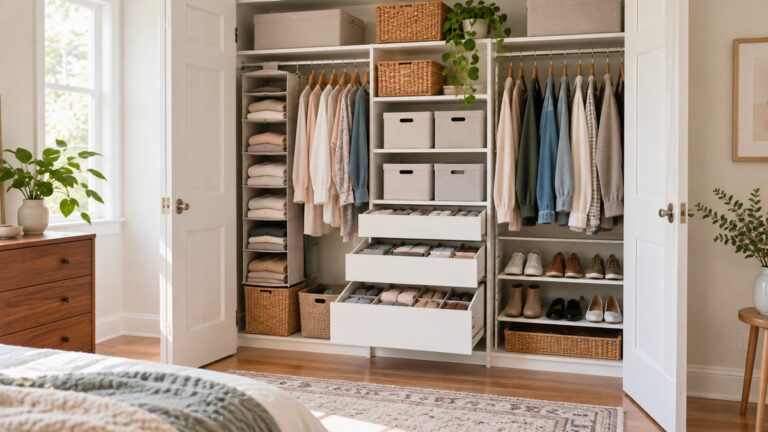
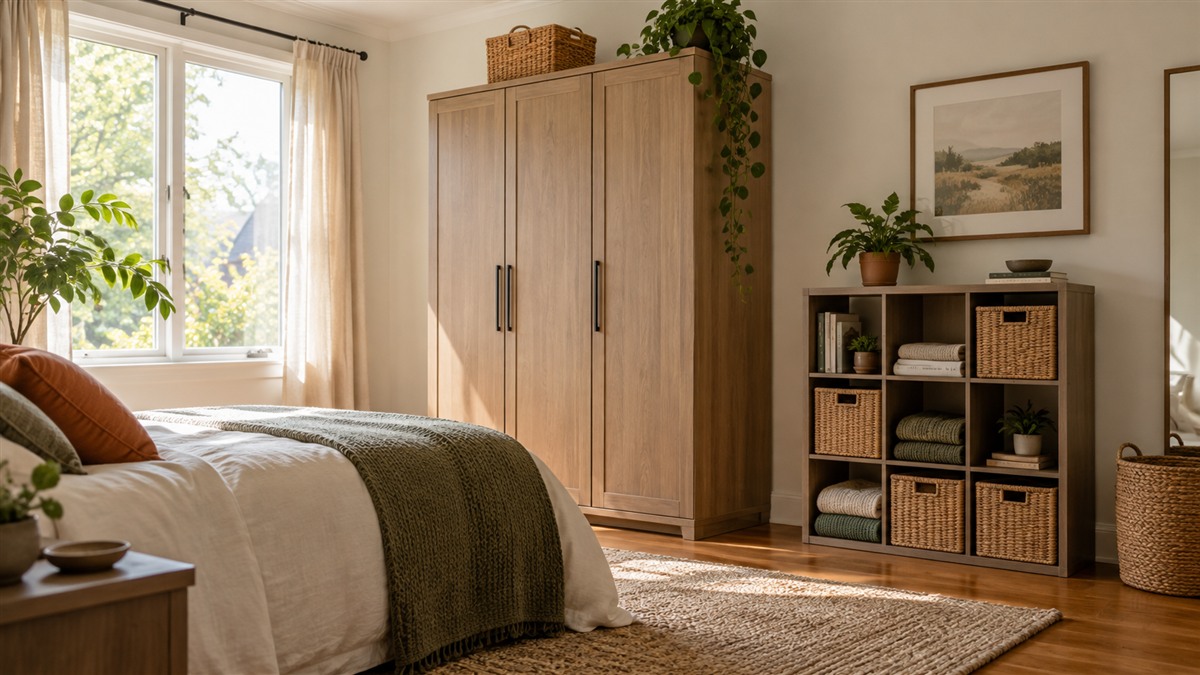
For a house with no built-in closet, start with one main clothes station plus one small-space helper. A freestanding wardrobe with hanging rods and shelves covers dresses, coats, and folded stacks in one footprint. A 12-cube unit works when you own mostly folded clothes, books, bins, and shoes and want to split storage across rooms. Hanging shelf organizers add four tiers of folded storage to any existing rod with no tools. Rolling shoe boxes with dividers keep 12 to 24 pairs visible under or beside the wardrobe. Cascading hanger connectors multiply rod space vertically. A tension rod adds hanging space between two walls with no drilling.
If you rent, choose no-drill and freestanding pieces first. If you own heavy coats and suits, check each rail and shelf limit in the listing and install the included anti-tip kit. Measure doorways, wall length, and ceiling height before you order.
What matters for storage ideas for house with no closets
1. Hanging space vs folded space
Count your hanging clothes and folded clothes separately. Long coats and dresses need a full-height rod zone. T-shirts, jeans, sweaters, and towels do better on shelves or cubes. A portable wardrobe with 2 hanging rods suits mixed wardrobes. A 12-cube unit with 11.8-inch cubes suits folded stacks and bins. A hanging organizer with 4 shelves suits a small hanging zone where floor space is tight. Match the unit to the larger pile first, then add the other type.
2. Floor footprint and height
Houses without closets often lose a wall to a freestanding unit. The listings state footprints such as 34.5 x 17.5 x 65.7 inches, 34.6 x 17.7 x 66.1 inches, and 65 x 15.8 x 76 inches. Measure width, depth, and height at the exact spot, plus 24 to 30 inches of clear space in front for doors, zippers, and pulling out clothes. Tall units need wall anchoring. Leave clearance for baseboards, vents, and light switches. Check that the unit fits through a 30-inch doorway path if stated as a requirement.
3. Stated weight limits and frame materials
Quote the listing limit and note whether it is per shelf, per rail, or total. Do not guess beyond it. One garment rack listing states each rail can hold up to 55 lb, each shelf 143 lb, and 765 lb total weight capacity. One cube listing states each cube holds up to 15 lbs. One hanger connector listing states up to 6 lbs horizontally and up to 8 lbs vertically. Frame materials in the listings include alloy steel, iron tubes with PP plastic connectors, metal tubes with non-woven fabric covers, bamboo, and coated carbon steel. Heavier outerwear needs steel or iron frames. Light shirts and accessories can use fabric or hanging organizers. Reduce load when a shelf is fully extended.
4. Mounting, rental rules, and wall type
Freestanding wardrobes stand on the floor and usually include an anti-tip kit for the wall. Tension rods use spring pressure between two walls with rubber end caps and need no tools. Adhesive-mount expandable shelves add a layer inside a cabinet or wardrobe without screws. Hanging organizers hook over a standard closet rod. For any wall mount, check wall type such as drywall, plaster, or masonry, use studs or rated anchors, and read the hardware notes. Do not promise a load for a generic anchor. Renters should keep the no-drill option and save the instruction sheet for move-out.
5. Assembly, covers, and daily access
Some units need full assembly with tubes and connectors. Some state 0-screw, 0-tool assembly with cone sleeves. Some hanging organizers need no assembly beyond hooks. Covers matter in dusty rooms. Non-woven fabric covers with zippers keep dust off clothes but add a daily zip step. Open racks give fast access but collect dust. Clear-cover shoe boxes with two-way zippers show shoes while keeping dust out. Wheels help cleaning under a shoe unit. Side pockets hold socks and small items without another bin.
How to choose for your rooms
Walk room by room. In the bedroom, place the main wardrobe where doors or curtains open fully. In a spare room, use cubes for linens, off-season clothes, and bins. Near the entry, use rolling shoe storage and a tension rod inside an alcove for coats. In a laundry corner, use a hanging organizer for supplies and folded towels. For more bedroom layouts, see Best Storage for Small Bedroom Without Closet and Best Ideas for Bedroom with No Closet. For clothes-only planning, see Best Clothing Storage Options for Small Spaces and Best Creative Clothes Storage for Small Spaces.
If two people share one room, give each person a rod zone or a set of cubes rather than sharing shelves. If the room is narrow, see Best Small Room with No Closet Ideas before you choose a deep unit. For shoes in tight rooms, compare Best Shoe Storage for Small Closet and Best Shoe Organizer Ideas for Small Space.
1. SONGMICS Closet Organizers and Storage, Clothes Rack with Shelves (Best overall)
Specs from the listing (checked 2026-10-11):
- Color: Ink Black
- Size: 65"L x 76"H
- Item Weight: 26 pounds
- Number Of Shelves: 4
- Included Components: 1 x Portable Closet, 1 x Accessory Kit, 1 x Anti-Tip Kit, 1 x Instructions
- Item Dimensions: 65 x 15.8 x 76 inches
- Material Type: Alloy Steel
Pros
- 65 x 15.8 x 76 inch frame with 3 rails, 4 shelves and 8 hooks
- Adjustable shelves and lower rail in 1-inch increments
- Alloy steel frame with adjustable feet and anti-tip kit
Cons
- 76-inch tall frame needs wall anchoring and clear floor space
- Style line says Without Fabric Cover so confirm cover parts in listing
Best for: Main bedroom wardrobe replacement for mixed hanging and folded clothes
Skip if: You rent a narrow room or cannot anchor a tall unit to the wall
View on Amazon (affiliate link)
2. Wardrobe Closet, Quick and Easy Assembly, Black Portable Closet (Best narrow wardrobe)
Specs from the listing (checked 2026-10-11):
- Color: Black
- Size: 34 Inch
- Item Weight: 6.6 pounds
- Item Dimensions: 34.5 x 17.5 x 65.7 inches
- Included Components: Metal Tube, Non-woven Fabric, Plastic connector
- Material Type: Metal, Non-woven Fabric, Plastic
Pros
- 34.5 x 17.5 x 65.7 inch size fits narrow walls and rentals
- 2 hanging rods plus 4 shelves for mixed clothes
- Nonwoven cover plus 8 side pockets for small items
Cons
- Listing does not state a numeric weight capacity, so keep loads moderate
- 16mm tubes with plastic joints suit daily clothes, not dense book loads
Best for: Renters and dorm rooms needing one compact covered wardrobe
Skip if: You need stated per-rail limits for heavy wool coats
View on Amazon (affiliate link)
3. HOMIDEC Closet Organizers and Storage, 12 Cube Storage Organizer, White (Best cubes)
Specs from the listing (checked 2026-10-11):
- Product Dimensions: 11.8"D x 11.8"W x 11.8"H
- Number Of Shelves: 12
- Weight Capacity Maximum: 15 pounds
- Installation Type: Freestanding
- Assembly Instructions Description: Yes, assembly is required.
- Item Weight: 15.2 pounds
Pros
- 12 cubes at 11.8 inches each for folded clothes and bins
- Each cube holds up to 15 lbs per listing
- Modules rebuild into different shapes for different rooms
Cons
- Assembly is required and every connector must be fully locked
- 15-lb cube limit rules out dense book or tool storage
Best for: Folded clothes, toys and bins that can split across rooms
Skip if: You need long hanging space for dresses and coats
View on Amazon (affiliate link)
4. HOUSE AGAIN Shoe Organizer for Closet, 2 Pack Shoe Storage Organizer with Wheels, Foldable Shoe (Best shoe storage)
Specs from the listing (checked 2026-10-11):
- Color: Gray
- Material: Polyester Blend
- Frame Material: Polypropylene (PP)
- Item Dimensions D x W x H: 17"D x 12.5"W x 13.5"H
- Included Components: wheel
- Item Weight: 2.96 kg
Pros
- 2-pack rolling boxes with adjustable dividers for boots
- Clear cover with two-way zipper keeps dust out
- PP base plate plus 3 handles for push, pull or lift
Cons
- Bullet and spec table label length and width differently, so confirm footprint
- Needs floor space for 13.5-inch height plus wheel clearance
Best for: Shoe piles that need contained, movable floor storage
Skip if: You need hanging or folded shirt storage instead
View on Amazon (affiliate link)
5. Hanging Closet Organizer and Storage with Bamboo Shelves – Foldable Storage for Clothes, Towels (Best hanging shelves)
Specs from the listing (checked 2026-10-11):
- Material: Bamboo
- Number Of Shelves: 4
- Color: Beige
- Item Weight: 16 ounces
- Size: 4 Tiers-Closet Hanging
- Additional Features: Foldable, Lightweight, Portable, Stackable
Pros
- 4 bamboo shelves add folded storage with no floor footprint
- Woven bamboo surface allows air circulation
- Folds flat and hangs with no tools
Cons
- Listing dimensions show 1 x 1 x 1 inches, so confirm true shelf size
- Needs an existing rod or rail to hang from
Best for: Small rooms where floor space is gone but rod space exists
Skip if: You have no rod, rail or door frame to hang it from
View on Amazon (affiliate link)
6. No Drilling Closet Rod, Adjustable Black Closet Rod, 28-98 Inches Closet Tension Rods for Hanging (Best no-drill rod)
Specs from the listing (checked 2026-10-11):
- Brand: Womnwomn
- Color: Black
- Material: Metal
- Mounting Type: Tension Mounted
- Included Components: Closet Tension Rods
- Material Type: Metal
Pros
- Adjusts from 28 to 98 inches for alcoves and laundry walls
- Tension mount with rubber end caps protects walls
- Metal build for daily shirts, dresses and jackets
Cons
- Listing warns to avoid heavy loads beyond 78 inches
- Tension hold depends on two solid facing walls
Best for: Renters adding hanging space between two walls with no drilling
Skip if: You need a long heavy-coat rod or have no facing walls
View on Amazon (affiliate link)
Why these types work with no built-in closet
A house with no closets lacks three things: a rod, shelves at folded-clothes depth, and doors that hide clutter. Freestanding wardrobes replace all three in one rectangle. Cubes replace shelves and can form a low dresser, a tall tower, or two separate stacks. Hanging organizers replace shelves inside any rod you create. Tension rods create the rod itself between walls, inside an alcove, or inside a wide wardrobe frame when the listing allows it. Shoe boxes with wheels replace the closet floor.
You may not need to buy every type. If you already own a sturdy garment rack, add cubes and shoe boxes. If you already own dressers, add one hanging solution and one shoe solution. Choose the main piece for the bulkiest category you own, then fill gaps.
Detailed fit notes by situation
If you need a full wardrobe replacement
Pick a unit with both rods and shelves, a stated footprint that fits your wall, and an anti-tip kit. Check whether the cover is included. Some listings describe a model without fabric cover while the bullets mention a fabric cover option, so read the included-components line. Check rod height for dresses. Check whether shelves adjust in 1-inch increments or stay fixed. Install the anti-tip device right away and keep heavy items low.
CPSC’s Anchor It! campaign warns that children like to climb on furniture and that unsecured furniture is a hidden hazard in every room. Secure top-heavy furniture with anti-tip brackets and follow the maker instructions. Remove tempting objects from the top so children are not lured to climb.
If you need folded storage that can move later
Cubes break into modules. Each 11.8-inch cube fits folded jeans, bins, books, or small shoes. The listing states 15 lbs per cube maximum, so keep books and dense items spread across cubes. Assembly is required and the listing includes hardware. Lock each sheet fully into the connector for stability. Wipe with a dry cloth. This type suits renters because it disassembles flat and rebuilds in a new layout.
If you have a rod but no shelves
Hanging organizers add vertical shelves without floor space. One bamboo option lists 4 shelves and metal hooks for a standard rod. Another lists 10.24 x 12.2 x 47.24 inches with 4 detachable bins and 8 hooks. Check the listing for overall dimensions versus shelf interior dimensions, because hanging fabric shelves sag inward when full. Keep heavy denim low and light shirts high. Fold fully flat for moving.
If shoes cover the floor
Rolling shoe boxes contain pairs in stacked compartments with a clear cover. One listing describes adjustable dividers, 4 casters, and Oxford cloth with a PP base plate. Another bullet line states 20.5-inch length by 17-inch width by 13.5-inch height while the spec table states 17-inch depth by 12.5-inch width by 13.5-inch height, so the two width and length labels contradict and you should rely on neither number until you confirm the listing. Measure your shoe length and boot height. Remove a divider for tall boots. Lock the wheels once placed.
If you cannot drill
Tension rods and adhesive-mount shelves help. One tension rod adjusts from 28 to 98 inches and warns against heavy loads beyond 78 inches. Keep spans short for coats and use longer spans for light shirts or curtains. One expandable shelf adjusts from 14.96 to 24.41 inches and lists 10.63 inches wide. Measure inside width before buying. Clean the surface before adhesive mounting and reduce load at full extension.
Planning example for a bedroom with no closet
Small-bedroom storage planning example
This is our planning estimate for one adult wardrobe in a 10 x 11 foot bedroom with no closet. It shows how footprint and stated limits guide the choice. Numbers below are assumptions we define here, not listing claims.
Assume the free wall is 72 inches wide and 96 inches tall. Assume you own 30 hanging items, 24 folded items, and 10 pairs of shoes. Assume the main wardrobe footprint is 65 inches wide by 15.8 inches deep. Assume each cube is 11.8 inches wide.
Step 1: Check wall fit. Subtract unit width from wall width. 72 inches minus 65 inches equals 7 inches. Result is 7 inches of side clearance. That is tight but workable if the door opens elsewhere.
Step 2: Check depth plus access. Add unit depth plus standing space. 15.8 inches plus 28 inches equals 43.8 inches. The unit plus you needs 43.8 inches from the wall. Verify this leaves a walk path.
Step 3: Split clothes by type. Put 30 hanging items on 3 rails. 30 divided by 3 equals 10 items per rail. Check each rail limit of 55 lb in that listing. Ten shirts at about 0.8 lb each would be about 8 lb per rail in this estimate, well under the stated rail limit, but weigh your own coats because wool coats weigh more.
Step 4: Check folded storage. Put 24 folded items into 4 shelves. 24 divided by 4 equals 6 stacks per shelf. Check each shelf limit of 143 lb in that listing. Six cotton stacks at about 1.2 lb each would be about 7.2 lb per shelf in this estimate. Confirm with your own items.
Step 5: Check re-verification. Re-add width: 65 inches plus 7 inches equals 72 inches, which matches the wall. Re-add depth: 15.8 inches plus 28 inches equals 43.8 inches. Re-divide hanging: 10 items times 3 rails equals 30 items. Re-divide folded: 6 stacks times 4 shelves equals 24 items. All arithmetic checks twice.
Decision: if the 65-inch unit leaves only 7 inches, a 34.5-inch wardrobe plus a separate cube stack may fit better and leave room for shoe boxes on wheels. Measure twice and choose the narrower main unit if doors, vents, or switches crowd the wall.
5 common mistakes in houses with no closets
1. Buying depth that blocks doors
A 17.5-inch or 17.7-inch deep wardrobe plus an open cover zipper can hit a bedroom door swing. Map the swing with tape on the floor. Leave the full arc clear. Choose a shallower spot or reverse the door if allowed. Do not force a deep unit into a narrow entry wall.
2. Overloading one rod or cube
Listings state limits per rail, per shelf, or per cube. A cube rated at 15 lbs will sag or pop connectors if filled with books. A tension rod past 78 inches can bend or detach under heavy loads. Spread weight across rails and cubes. Put coats on the shortest strong rod. Put books across several cubes, not one.
3. Skipping wall anchoring for tall units
Tall wardrobes and shelf towers can tip when a child climbs or when one side is loaded. One listing includes an anti-tip kit with accessory kit and instructions. Use it. CPSC advises anchoring top-heavy furniture with inexpensive brackets and installing the devices that come with new furniture right away. Anchor into studs or rated anchors suited to your wall type.
4. Mixing overall size with usable space
Overall dimensions include frames, covers, and wheels. Usable rod length and shelf interior are smaller. A 68.5-inch tall unit may have less hanging height after shelves and rods are installed. A 12.2-inch deep hanging shelf holds less than a 17.5-inch deep wardrobe shelf. Quote both when the listing gives them and test with your longest dress before loading.
5. Forgetting dust, moisture, and access
Open racks show clothes but collect dust near vents. Covered wardrobes protect clothes but need daily zipping. Non-woven fabric wipes clean but does not stop damp air. Keep units off wet basement floors, leave air space behind the cover, and use clear covers or labels so you find items fast. If you hate zippers, choose open storage plus washable bins.
Care and upkeep by material
Metal and alloy steel frames wipe with a dry or damp cloth per the listing. Powder-coated carbon steel resists daily scuffs but chips if dragged; touch up chips to slow rust in damp rooms. Non-woven fabric covers wipe clean and should stay dry; air them if the room feels humid. Bamboo shelves need dry dusting and good airflow; do not soak them. ABS connectors and polypropylene boxes wipe clean and should be fully locked after each move. Check connectors, hooks, wheels, and anti-tip straps every few months. Tighten or re-seat parts after moving the unit. For closets you add later, see Best Tips for Organizing Your Closet.
What to check on the listing before you buy
Read the included-components line for cover, rods, wheels, hardware, and anti-tip kit. Confirm assembly needs and whether tools are included. Confirm color, finish, and material. Confirm overall dimensions and, when given, shelf interior size. Confirm whether a stated capacity is per shelf, per rail, per cube, or total, and whether it assumes stud mounting or floor standing. The listing does not state a capacity for some fabric wardrobes, so check the listing and keep loads moderate. If width and depth labels conflict, ask the seller for the true footprint before you plan the room.
FAQ
How do I store clothes with no closet at all?
Start with one hanging station and one folded station. Use a freestanding wardrobe with rods and shelves for daily clothes, then add cubes, hanging shelves, or shoe boxes for overflow. Measure wall width, depth, and door swing first. Anchor tall units and keep heavy items low.
Do I need a covered wardrobe or an open rack?
Choose a cover if dust, pets, or sunlight hit the clothes. Non-woven covers with zippers block dust and give privacy. Choose open storage if you dress fast and hate zippers. Open units need more dusting and bins or dividers to look neat.
What weight can a portable wardrobe hold?
Only the listing can answer. One heavy-duty rack states 55 lb per rail, 143 lb per shelf, and 765 lb total. Many fabric wardrobes do not state a numeric limit and describe thickened tubes and reinforced connectors instead. If the listing does not state a limit, keep loads moderate and check the listing.
Are tension rods strong enough for clothes?
They suit light to medium loads on short spans. One listing adjusts from 28 to 98 inches but warns against heavy loads beyond 78 inches. Use short spans for coats, long spans for light shirts. Rubber end caps protect walls but do not replace studs for heavy loads.
How do I store shoes without a closet floor?
Use stackable shoe boxes with dividers and a clear cover. Adjust or remove dividers for boots. Rolling boxes with locking casters pull out for cleaning. Measure shoe length first. Keep daily pairs at the front and seasonal pairs higher or in another room.
How do I keep a tall wardrobe from tipping?
Install the anti-tip kit that comes with the unit and follow the maker instructions. CPSC advises securing top-heavy furniture to the wall and removing tempting objects from the top. Place heavy folded items low, do not let children climb, and check straps after moving. Source: CPSC Anchor It! guidance.
Can I build storage without drilling as a renter?
Yes. Choose freestanding wardrobes, cubes, hanging organizers that hook over a rod, tension rods, and adhesive-mount shelves. Confirm the adhesive surface, weight guidance, and removal steps in the listing. Save instructions and hardware for move-out.
How deep should shelves be for folded clothes?
Many folded stacks need about 12 inches of depth. Cubes at 11.8 inches fit T-shirts and jeans folded small. Wardrobe shelves near 17.5 inches hold deeper stacks and bags but take more floor space. Match depth to your fold size and leave front clearance to pull items out.
Bottom line
Measure the wall, then buy for your largest clothes pile. Choose a wide steel wardrobe with rods, shelves, and an anti-tip kit if hanging clothes dominate and the wall fits 65 inches. Choose a 34.5-inch portable wardrobe plus 12 cubes if you need to split storage between rooms or keep the footprint small. Add a 4-tier hanging organizer for no-floor-space shelves, rolling shoe boxes for the floor, and a tension rod only for short, light spans. Check per-rail, per-shelf, and per-cube limits in the listing before you load.
Sources
- CPSC Anchor It!: tip-over risk, anchoring top-heavy furniture, installing anti-tip devices