closet-door-ideas-that-combine-style-and-function
As an Amazon Associate we earn from qualifying purchases. Details
A closet door is often the only part of a closet anyone sees, and it also decides how much floor space the closet takes. This guide sorts closet door ideas by what they do: how the door moves, what it hides or shows, and how its finish fits the room. The examples come from design galleries and articles, so the designers’ names and details are the sources’ own. The door types are described as the sources present them, and we do not recommend products. Check the swing, the track, and the hardware against your own opening before you order anything.
Quick answer
Choose the door type by clearance first: how much room the door needs to open or slide. Then choose the finish that matches the rest of the room. If the closet holds something you want to show or hide, such as a bar, glassware, or shoes, decide that before you pick the door, because the door must suit the storage behind it.
Door types that save floor space
Pocket doors
One designer quoted in a closet door gallery suggests opting for pocket doors that slide open instead of swinging. A pocket door needs empty space inside the wall for the door panel to disappear into, so it is a job for a carpenter in an existing wall. Once installed, it frees the full width of the opening for furniture and walking.
Louvered doors
Louvered doors are an inexpensive option, and the gallery notes they tuck away neatly without taking floor space. In one bedroom, the designer chose them for a child’s room for exactly that reason. Painting a louvered door the same color as the wall makes it blend in, and a wood tone adds warmth if you want the door to read as furniture.
Bifold doors
A bifold door folds into the opening, so it needs less clearance than a swinging door, but it still needs room for the folded panels. The source suggests adding built-in storage to bifold doors. Before you do, check that the panels and hardware can carry the weight you plan to add.
Curtains instead of doors
A fabric panel can replace a door or glass panels. In one kitchen, the designer used shirred fabric panels made from a remnant the client already had. Fabric is light, cheap to change, and easy to clean, but it does not block sound or light the way a solid door does.
Style choices that read as intentional
- Molding and gold hardware. Applied molding and brass or gold hardware emphasize an Art Deco look on bedroom closet doors.
- Brass on plain knobs. Upgrading basic knobs to brass hardware is a low-cost way to change the look without replacing the door.
- Skip the handles. Integrated pulls give a clean line, but they need a recessed edge or a finger groove to work.
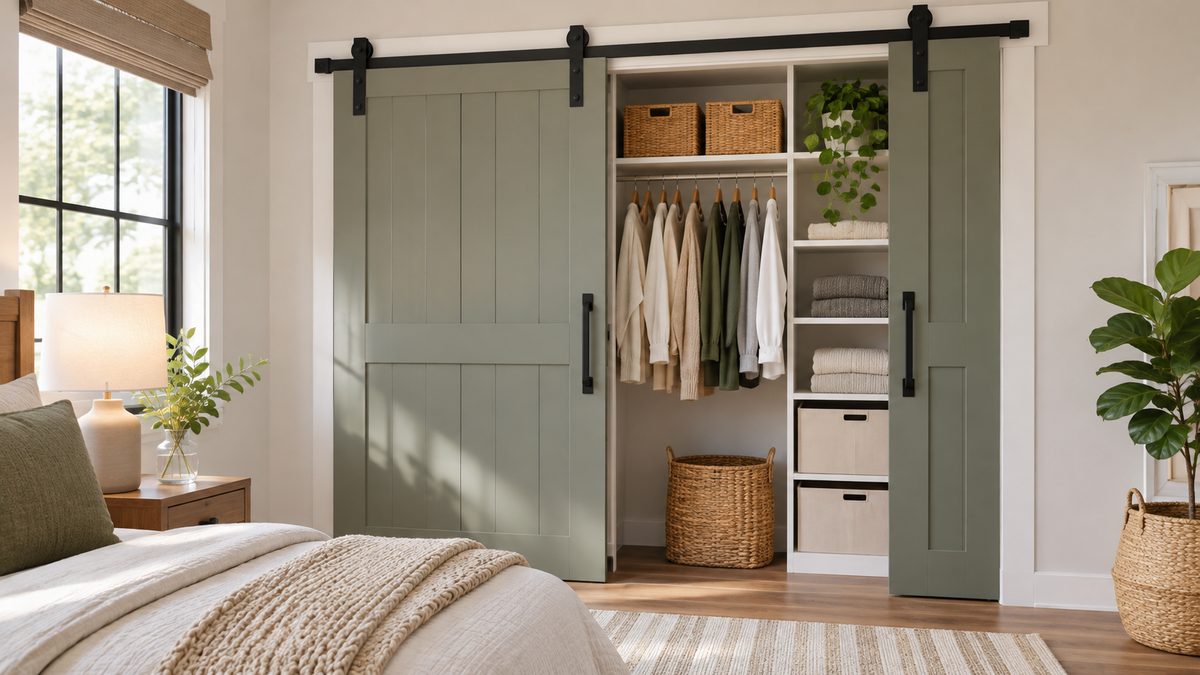
- Mix old and new. A restored antique door or a modernized barn door adds character. The source notes that a mix of old and new materials can feel more visually interesting.
- High-gloss finish. A high-gloss lacquer reflects light and makes a small closet feel brighter, but it shows fingerprints and dust.
- Glass panels. Glass lets you display special pieces, but it shows the contents too.
Make the door do a job
A closet door can hide a bar, a wine rack, or shelving. In one San Francisco dining room, designers Emily Stegner-Schwartz and Lisa Odyniec used closet doors to hide a bar. Built-in shelving for wine glasses adds storage in a closet that would otherwise hold only clothes. A door that holds storage needs hinges, a track, or a frame that can carry the load, so check the rating before you add anything.
Worked example: a 24-inch opening with bifold doors
For example, a hypothetical 24-inch opening with bifold doors uses two panels of about 12 inches each. A rack on the back of each panel must be checked for the panel’s weight rating, and the panels must still fold without hitting the frame. If the rack pushes the panel out, choose a slimmer rack or a pocket door.
Mistakes to avoid
- Choosing the finish before you check the swing or the track.
- Hanging storage on a light door without checking its rating.
- Using glass panels in a closet you want to keep dark or private.
- Ordering a door by its photo instead of its measured opening.
Frequently asked questions
Which door saves the most floor space?
Pocket doors save the most swing space, because the panel slides into the wall. Bifold doors need less clearance than a swinging door. Louvered doors are light, but they still swing unless they are sliding or folding.
Can a closet door hold shelves?
Some can, but the sources do not give load ratings for these doors. Check the door’s and hardware’s rating before you add shelves, and fix the storage to the frame if the maker’s instructions allow it.
Are louvered doors a good choice for a closet?
They are inexpensive and light, and they keep floor space clear. They also show the shapes inside, so they suit a closet you do not mind seeing into.
Can I change the look without replacing the door?
Yes. Paint, hardware, and trim changes do not need structural work. A new door style, such as a pocket door or a bifold, needs a change to the opening.
Measure the opening before you choose a door
Measure the width of the opening at the top, middle and bottom, because an older frame can be out of square. Measure the height from the floor to the header, and note whether the floor slopes or has a threshold. A sliding or bifold door needs a clear track above the opening, so check the height of the ceiling or the head casing before you choose one.
Measure the space each door type needs to open. A swinging door needs a clear arc in front of the closet, and a pocket door needs empty wall space on one side. A bifold door stacks at the side of the opening, so check that the stack will not block a dresser, a radiator or a light switch. Write each measurement down and compare it with the door type you are considering.
Keep the door working over time
Sliding and bifold doors depend on their tracks and guides. Clean the track every few months, because dust and small debris can stop a door from running level. Tighten the screws on the hinges and the guides once a year, and check that the door does not rub on the frame or the floor after a change in humidity.
Plan for the door’s weight as well as its look. A heavy solid door puts more load on its hinges or track than a light louvered panel, so match the hardware to the door. If a door sags, stop adding weight to it until the hardware is checked.
How we chose
The door types and style ideas in this guide come from Architectural Digest’s closet door coverage and its related gallery pages, as listed in the sources. Each type is kept because the source describes it in a way that a reader can plan an opening around. We do not name a brand or a product, and we do not give prices.
What we could not verify
The sources do not give the cost of any door type, the install time, or the load rating of the doors and hardware they show. They also do not say how long a track, a hinge or a finish lasts. No source we opened gives a noise rating for a sliding or pocket door, so this guide makes no claim about noise. Ask the installer or the maker for those figures before you buy.
Related guides
Before you choose a door, check your space with standard reach-in closet depth, then plan the inside with closet organizing ideas for small spaces. For a door that opens into a coat area, see under-stairs coat closet ideas.
Sources
- Architectural Digest: closet door ideas that combine style and function. Competitor gallery; facts captured 2026-10-14.
- Architectural Digest: pantry door ideas. Competitor gallery; facts captured 2026-10-14.
- Architectural Digest: small closet storage ideas. Competitor gallery; facts captured 2026-10-14.
- Architectural Digest: best closet systems. Competitor article; facts captured 2026-10-14.