How to Store Cookbooks: Spacing, Weight and Depth
As an Amazon Associate we earn from qualifying purchases.
How to Store Cookbooks: Spacing, Weight and Depth
Learning how to store cookbooks comes down to three things: spacing the books so their covers support each other, matching the shelf to the weight and size of the books, and keeping the shelf out of heat, damp and direct sun. Most cookbooks should stand upright on a solid, level shelf. The largest and heaviest volumes should lie flat. A tall or heavy bookcase should be anchored to the wall. This guide covers those points in room order, starting with a quick answer.
Quick answer
- Shelve cookbooks upright, snugly, with books of similar height together, so the covers support one another.
- Store oversized or very heavy volumes flat. Never store a book spine-up.
- Keep the shelf away from heaters, windows in direct sun, and damp rooms. The Library of Congress suggests 70 degrees Fahrenheit or below and 30 to 55 percent relative humidity.
- Anchor a tall or heavy bookcase to the wall, and do not hang a cookbook shelf without studs or rated anchors.
Spacing: keep books upright and supported
The Library of Congress guidance on shelving is direct: “Keep shelved books upright. They should not lean.” It also says to “Shelve books of similar size together, so that the covers are supported by the neighbors on each side.” The National Archives makes the same point from a different angle, warning that volumes of mixed sizes “will become distorted and covers will lose their shape.”
In practice, that means you should fill a shelf enough that each book stands on its own, but not so tightly that you have to force a volume out by pulling on its top edge. Pulling a book by the spine or the top of the cover can damage the binding. If a short row sits beside tall books, the short ones will slump. Either move them to a shelf of their own or add a bookend.
Bookends are the simplest fix for leaning rows. The Library of Congress says to “Support with book-ends if necessary, to keep books from leaning or slumping.” Choose bookends with a flat, smooth base that will not gouge the lower edge of the book.
Depth and height: measure your books first
The sources we opened do not give cookbook dimensions, so you need to measure your own collection. Measure the tallest book, the deepest book, and the widest hardcover. Then check the shelf’s interior height and depth, not only the outside dimensions of the unit. Overall dimensions and interior dimensions often differ.
This assumes most cookbooks are standard hardcover or paperback sizes that fit a shelf with a little clearance above. Leave a finger’s width or more above the tallest book so you can slide it out without tipping its neighbors. A deep shelf with shallow books wastes space and invites stacking books two deep, which hides titles and makes heavy books harder to lift out.
Weight: check the shelf’s stated capacity
Cookbooks, especially large hardcovers with thick pages, add up quickly. A shelf that looks sturdy can still sag under a full row of heavy books over time. Before you load a shelf, read the listing or the manufacturer’s page for its stated capacity. Check whether the number is per shelf or total for the whole unit, and whether it assumes the shelf is fixed into studs. If none of that is stated, treat the capacity as unknown rather than guessing.
Keep the heaviest volumes on the lower shelves. This is a general stability precaution, not a figure taken from our sources. It also means a wall shelf is not the place for the biggest atlas-style cookbook you own.
Oversized and heavy books: store them flat
Some cookbooks are too large to stand upright. The National Archives says to “Store large volumes, such as atlases, flat (horizontally),” and explains why: “This will keep the covers flat and the text from separating from the covers.” A flat stack on a solid shelf is the safer choice for these books.
If a large book must stand, the Library of Congress guidance is specific: “If the book must be shelved vertically, always place the spine of the book downward on the shelf. Books should never be stored spine up. Over time, gravity will cause the text block to loosen or detach from the cover.” Standing a heavy book spine-down on a shelf is a compromise, so use it only when flat storage is not possible.
The sources we opened do not give a maximum stack height for cookbooks. Keep any flat stack low, stable and no taller than you can lift safely with both hands.
Shelf choice: solid is better than open
The Library of Congress says that “All shelves should be completely flat and not have any protrusions such as splinters or nails. They should have a solid surface, not latticed or slatted.” A solid shelf gives the bottom edge of every book full support. Open wire or slatted shelves can let the spine of a heavy book drop between the wires, which is one reason to choose solid boards for cookbooks.
Placement: heat, sun and damp
Where you put the shelf matters as much as how you load it. The Library of Congress recommends a “cool (70 degrees Fahrenheit or below) and relatively dry (30-55% relative humidity) environment,” and advises avoiding “areas with frequent extreme swings in temperature or humidity.” It also says not to store valued books in “poorly- or non-insulated areas such as basements, attics, or garages.”
Light is the other concern. The National Archives notes that “Light can cause book covers to fade, especially the spines of books exposed to sunlight for years,” and advises positioning bookcases “so that sunlight does not fall on books you want to preserve.” Keep cookbook shelves away from a window that gets direct afternoon sun, and away from a radiator or heating vent.
Wall-mounted cookbook shelves: anchor them properly
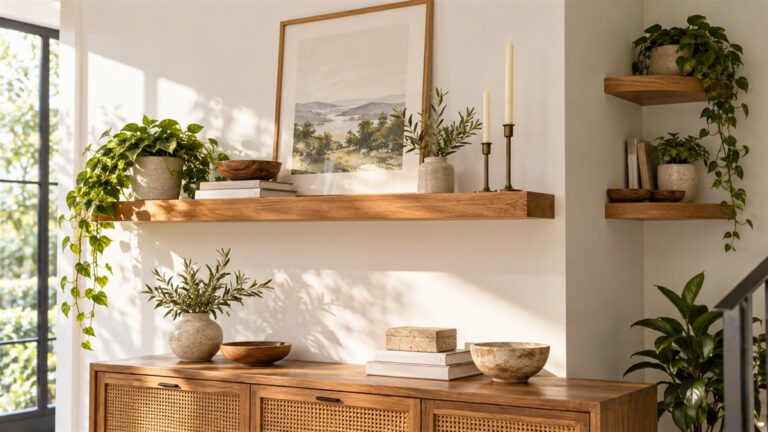
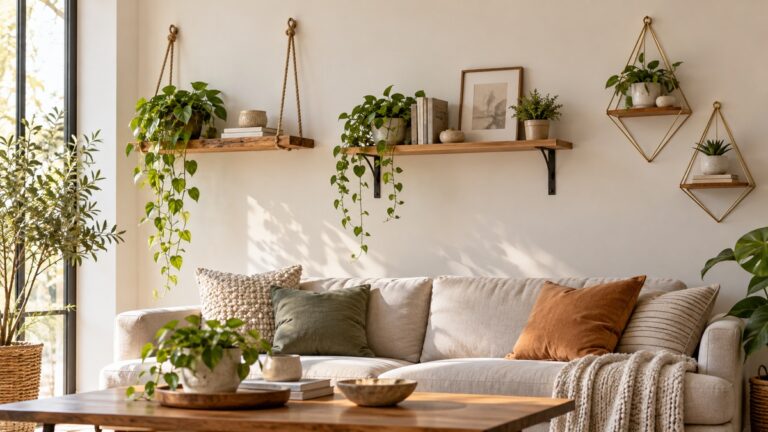
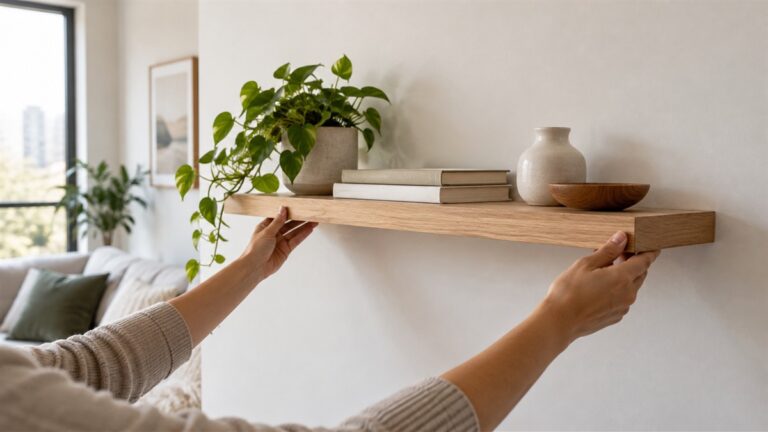
A floating or wall-mounted cookbook shelf is only as secure as its fixing. Mount brackets into studs where you can. If you cannot reach a stud, use anchors rated for the load and follow the hardware notes that come with the shelf. Before drilling, identify the wall type: drywall, plaster or masonry each takes a different fixing. Do not assume that a generic anchor will hold a full row of heavy books.
Tall bookcases need anchoring too. The CPSC’s Anchor It! campaign says that furniture such as bookcases and dressers should be secured to the wall, and it promotes anti-tip devices as an inexpensive way to do that. A bookcase full of heavy cookbooks on the top shelves is exactly the kind of unit that can tip, so anchor it even if it looks stable.
How we chose
We limited this guide to storage advice that changes what happens to the books or the shelf. We used three sources that are not retailer pages: the Library of Congress preservation guide, a National Archives article on preserving books, and a CPSC news release on furniture tip-over prevention. We opened each one on 2026-10-27. We quoted only sentences we found in the page text we retrieved, and we paraphrased the CPSC release because its text could only be read through a summarising tool. We did not rank any products, and no product is recommended in this post.
What we could not verify
- Cookbook dimensions and weights. The sources do not give them, so the depth and clearance advice above is an assumption about typical books.
- A load capacity for any shelf, bracket or anchor type. Check the listing or manufacturer page for your own product.
- A maximum stack height for flat cookbooks.
- Two pages that would have helped were not available to us. The NEDCC storage leaflet returned an access error, and a University of Chicago Library care page returned a bot-check screen instead of content.
Setup checklist
- Measure your tallest and deepest cookbook and the shelf’s interior height and depth.
- Group books of similar size together on each shelf.
- Choose solid shelves over open wire or slatted ones.
- Put the largest and heaviest volumes on lower shelves or flat in a stack.
- Add bookends wherever a row leans.
- Find a spot away from heat, direct sun, and damp walls.
- Identify the wall type and fix brackets into studs or rated anchors.
- Anchor any tall or heavy bookcase to the wall.
Mistakes to avoid
- Packing shelves too tightly. Forcing books in can distort covers and break bindings when you pull them out.
- Storing books spine-up. The Library of Congress warns that the text block can detach from the cover over time.
- Keeping cookbooks in a garage or attic. The Library of Congress advises against those areas.
- Letting shelves sit in direct sun. The National Archives notes that light can fade covers.
- Hanging a shelf without finding studs. A generic anchor does not carry a promised load, so check the hardware notes and the wall type.
- Leaving a tall bookcase unanchored. The CPSC release says bookcases should be secured to the wall.
FAQ
Should cookbooks be stored upright or flat?
Store most cookbooks upright on a solid shelf, grouped with books of similar size. Store the largest or heaviest volumes flat. The National Archives says large volumes such as atlases should be stored flat.
How do I stop cookbooks from leaning on the shelf?
Keep books of similar size together so their covers support each other. Add a bookend if books still lean or slump, as the Library of Congress recommends.
Is a garage or attic a good place to keep cookbooks?
No. The Library of Congress advises against poorly insulated areas such as basements, attics and garages because of temperature and humidity swings and leak risk.
Does a bookcase holding cookbooks need to be anchored?
Yes, if it is tall or heavy. The CPSC Anchor It! campaign names bookcases among the furniture that should be secured to the wall.
Can I put a heavy cookbook collection on floating shelves?
Only if the shelf’s stated capacity covers the load and the brackets are fixed into studs or rated anchors. The sources we opened do not give a load figure for cookbooks or for generic anchors.
Should I stack cookbooks flat?
Flat storage suits oversized volumes. The sources we opened do not give a maximum stack height, so keep stacks low and stable.
Bottom line
Shelve cookbooks upright and snug on a solid shelf, store the oversized ones flat, keep the shelf away from heat, sun and damp, and anchor anything tall or heavy to the wall.
Related guides: guide to floating shelves that can hold weight, wire shelf weight limit guide, and decorative floating wall shelves for the living room.
Sources
- Library of Congress, “Storing Your Books,” Preserving Your Books research guide. https://guides.loc.gov/preserving-your-books/storing (opened 2026-10-27)
- National Archives, “Preserving Books,” Prologue, Summer 2015. https://www.archives.gov/publications/prologue/2015/summer/preserving-books.html (opened 2026-10-27)
- U.S. Consumer Product Safety Commission, “CPSC Anchor It! Campaign Marks 10 Years: Fewer Furniture Tip-Overs Lead to Safer American Households,” news release, 2025. https://www.cpsc.gov/Newsroom/News-Releases/2025/CPSC-AnchorIt-Campaign-Marks-10-Years-Fewer-Furniture-Tip-Overs-Lead-to-Safer-American-Households (opened 2026-10-27; paraphrased)