Easy Shelving Hacks That Look Built-In
As an Amazon Associate we earn from qualifying purchases. Details
Someone searching for easy shelving ideas usually wants a shelf that looks good, costs less than a store-bought unit, and stays up. This guide covers eight do-it-yourself shelving ideas from The Spruce and from the makers and bloggers it quotes, then explains how to size, mount, and anchor them. We have not built or tested any of these projects ourselves, so the descriptions below report what the sources say. The two listings further down are described from their specs only. The sections below cover the project ideas first, then sizing, mounting, and safety.
Quick answer
Choose a standard size: The Spruce says shelves are typically 10 to 12 inches deep and 24 to 36 inches wide. Space shelves about 12 inches apart if you plan to style items on top. Install shelves into studs where you can, and use hardware that suits the wall and the material. Soft wood such as pine may not carry heavy items, and tall shelving units need anti-tip protection.
Eight shelving ideas to try
1. A peg rail shelf for the kitchen
A Beautiful Mess made a simple DIY peg rail shelf that holds mugs, kitchen towels, and similar items. The source presents it as a way to keep everyday items visible and accessible in the kitchen.
2. Plywood floating shelves for small containers
Most Lovely Things built plywood floating shelves to hold a collection of essential oils. The source says the shelves make everything easy to find while creating a display. The Spruce notes that shelves can also be built from MDF, plastic, metal, and glass, not only wood.
3. A narrow shelf from a stretched canvas
The Merrythought repurposed a stretched art canvas as a narrow shelf for lightweight objects, small postcards, or photos. Keep it to light display items for that reason.
4. A wooden box planter on the wall
The blogger Ursula Carmona made a wooden box planter for a kitchen wall. She says the project came together in about an hour, and it creates a focal point that could work in any room.
5. Acrylic sides on laminate shelves
Carmona also added acrylic sides to white laminate shelves to give them a modern look at low cost. This is a finishing step for shelves you already own, not a full build.
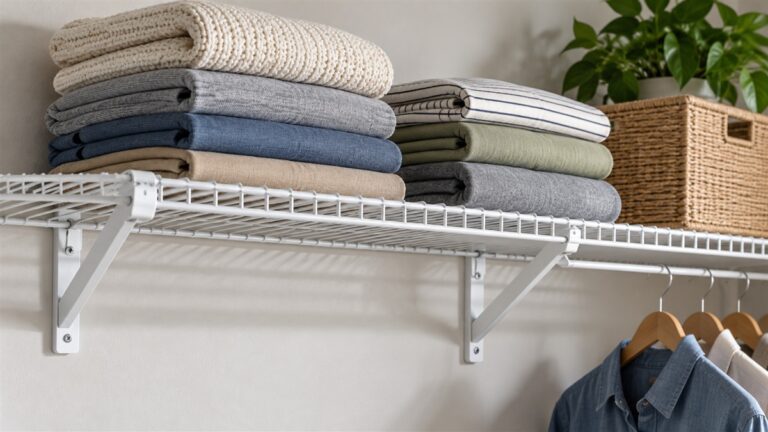
6. Wood covers for wire shelving
The Spruce’s method for wooden covers uses an L-shaped board that sits over the wire. It is based on 4 ft by 8 ft sheets of 1/2 inch plywood, though solid boards also work.
- Cut each board to the shelf depth plus the height of the lip, plus 3/4 inch.
- Set the saw blade to 45 degrees and rip the lip off the board.
- Flip that piece over and match the 45-degree cuts to form the L-shaped cover.
- Place the cover on the wire with the angled edge facing down over the lip. Most wire shelving has clips along the back wall that stand about 1/2 inch above the wire, so check the fit against them.
The Spruce notes that wire shelving varies greatly, so adjust the dimensions to your own layout before you cut.
7. A shelf in place of an old medicine cabinet
If a bathroom has a dated medicine cabinet, The Spruce suggests replacing it with simple DIY wood shelves.
8. A magazine shelf from paper
Recycle Nation shows a shelf made from 80 National Geographic magazines connected with a paper mâché technique. The source presents it as a decorative piece.
Products worth checking
These two shelves fit the floating-shelf and wall-shelf ideas above. Specs come from listing data we stored on 2026-10-11. We have not mounted either one.
Fun Memories picture ledge shelves (set of 2, 16 inches)
Listing specs: 16 x 5.2 x 1.7 inches; 1.5-inch shelf thickness; walnut color; listed weight capacity up to 40 lb; mounting holes 16 inches apart for stud mounting; screws, wall anchors and a small level included. The title says solid wood but the included-components line says engineered wood, so the listing is inconsistent on material.
Who it suits: a narrow ledge for frames, small containers or children's books. Not stated on the listing: the anchor load in drywall, or the finish's moisture rating for a bathroom or kitchen.
View on Amazon (affiliate link)
Harwaya 5-tier wall shelf unit (dark brown)
Listing specs: 8.6 x 11.8 x 32.7 inches; five shelves about 11.8 inches wide and 8 inches deep; engineered wood with a metal frame; listed weight capacity 25 lb; screws and plastic anchors included; assembly required.
Who it suits: a tall, narrow stack for magazines or small containers. Not stated on the listing: whether the 25 lb figure applies to the whole unit or to one shelf, a tip-over rating, or whether the plastic anchors suit your wall. Mount to studs where you can.
View on Amazon (affiliate link)
Choose the right size and material
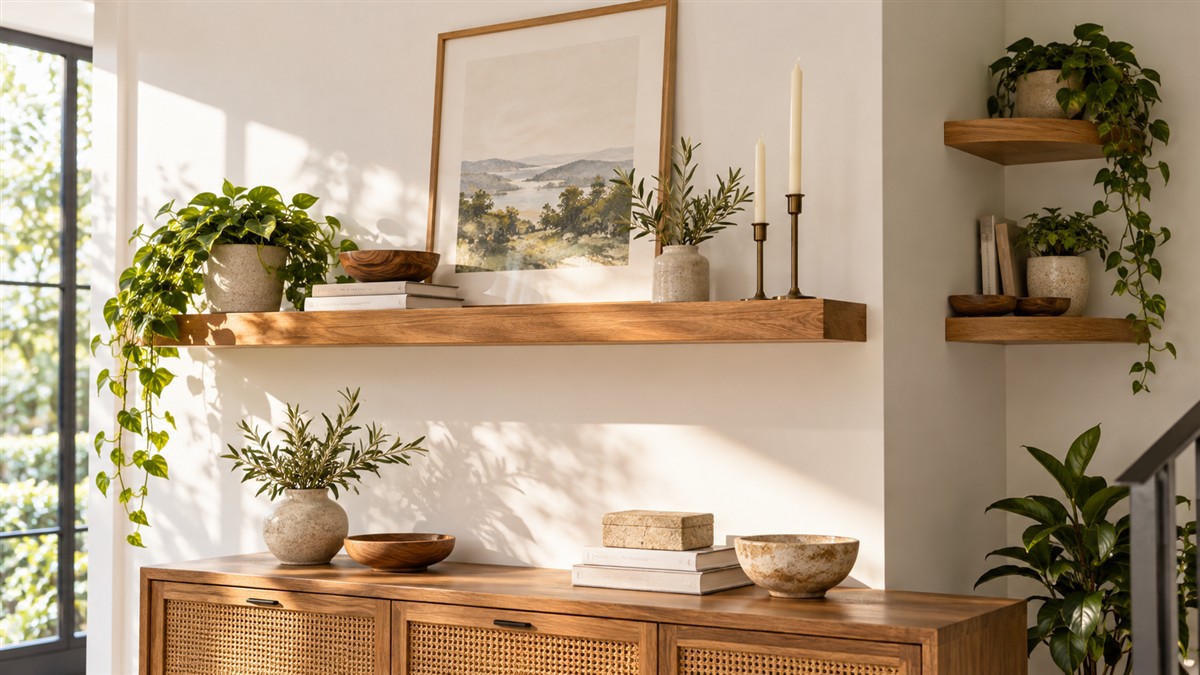
A standard depth and width make mounting easier. The Spruce says shelves are typically 10 to 12 inches deep and 24 to 36 inches wide, and it recommends spacing shelves about 12 inches apart to leave room for items on top.
Material choice affects strength. The Spruce warns that a soft wood such as pine may not withstand the weight of the items placed on it. Pick the hardware based on the material, because brackets, screws, and fasteners differ between wood, metal, and glass.
Mounting: studs, anchors, and the wall
The Spruce advises installing shelves on studs so they have the support they need, even when items are stored on top. DIY shelves can be hung with brackets, French cleats, screws, rope, or adhesive strips, depending on the weight, according to the same source.
When a stud is not where you need one, use an anchor suited to your wall. The Spruce’s wall anchor guide describes plastic hollow wall plugs for light-duty jobs in drywall or plaster, which need a pilot hole. It describes hollow wall anchors, often called molly bolts, for medium-duty jobs such as light decorative shelves. Wing-style toggle bolts give heavier holding power in drywall and also need a pilot hole.
This guide does not give a shelf load limit or a stud spacing. Both depend on your wall, your hardware, and the shelf, so read the manufacturer’s notes and check the wall type before you mount anything. Do not assume a generic anchor will hold the weight you plan to store.
Tall units and tip-over risk
A tall shelf or storage unit can tip. The U.S. Consumer Product Safety Commission says existing furniture can be anchored with inexpensive anti-tip brackets. It also says new furniture is sold with anti-tip devices that should be installed right away, and that you should follow the manufacturer’s instructions to secure furniture properly. CPSC also advises removing tempting objects such as toys and remote controls from the top of furniture, because they can encourage a child to climb.
Sizing a 96-inch wall
This example uses only the sizes above. For example, a wall 96 inches wide with a shelf 36 inches wide centered on it leaves 30 inches on each side. Stacked 12 inches above the first shelf, a second shelf gives room for items on top of each one. Check the wall type for each fixing before you mark the holes.
Mistakes to avoid
- Choosing a soft wood for a heavily loaded shelf. The Spruce warns that pine may not carry the weight.
- Mounting into drywall with no anchor or stud. Match the anchor to the wall type and read the hardware notes.
- Spacing shelves so close that you cannot store anything on top. The Spruce suggests about 12 inches apart.
- Leaving a tall unit unanchored. Use the CPSC guidance above.
Related guides
For a clearer idea of what a shelf can carry, read floating shelves that can hold weight. If you are mounting shelves on a wall with brackets, see white shelves for a wall with brackets. For a living room project, read decorative floating wall shelves for a living room, and for a small bathroom, see small bathroom wall shelf.
Sources
- Easy shelving hacks that will beautify your home (The Spruce)
- How to make wooden covers for wire shelving (The Spruce)
- Wall anchor types and uses (The Spruce)
- AnchorIt! campaign (U.S. Consumer Product Safety Commission)
Frequently asked questions
How deep and wide should a DIY shelf be?
The Spruce says shelves are typically 10 to 12 inches deep and 24 to 36 inches wide. Choose a standard size, since it makes mounting easier.
How far apart should DIY shelves be?
The Spruce suggests spacing shelves about 12 inches apart, which leaves room to style and store items on top.
Do floating shelves need studs?
The Spruce advises installing shelves on studs for support. Where there is no stud, use an anchor rated for your wall type and read the hardware notes. This guide does not give a load figure for any anchor.
Can I hang a shelf with adhesive strips?
The Spruce lists adhesive strips among the options, depending on the weight the shelf will carry. Follow the strip maker’s instructions and check its rating for the weight you plan to store.
How do I cover wire shelving with wood?
Cut an L-shaped cover from plywood or solid boards. Cut each board to the shelf depth plus the lip height plus 3/4 inch, rip the lip at 45 degrees, and fit the cover over the wire so the angled edge rests on the lip.
Can a tall shelf tip over?
Yes. The CPSC says existing furniture can be anchored with inexpensive anti-tip brackets, and that new furniture should have its anti-tip devices installed right away.
Conclusion
Pick a standard size, mount into studs or the right anchor for your wall, and anchor any tall unit. Use the simpler ideas above, such as a peg rail or a canvas shelf, for light items, and save the wall-mounted options for storage you have checked against the wall.