Best Over the Toilet Storage Black Metal Rack for Small Bathrooms
As an Amazon Associate we earn from qualifying purchases. Details
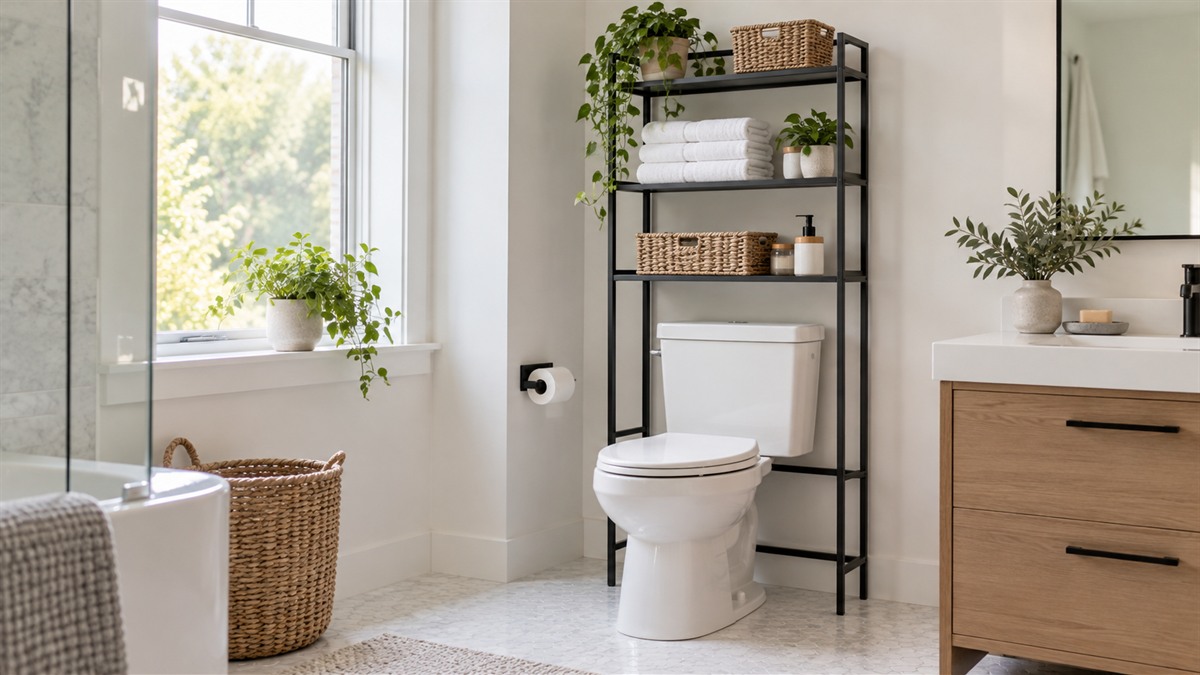
Over the toilet storage in black metal is a freestanding rack that stands behind the toilet and holds towels, tissue and toiletries on several tiers. The key decision is clearance. The bottom shelf must sit above your toilet, and the unit must stay steady against the wall. This guide looks at one black carbon steel rack from the listings in this group and explains how to judge whether it fits your bathroom. Under-sink organizers and other storage types belong to a different product family, so they are out of scope here.
Quick answer
Choose this black carbon steel rack if your toilet and lid clear a bottom shelf that sits 39 inches off the floor, your wall can take adhesive anti-tilt kits, and you want three tiers in a 26-inch width. Its listing gives 64 inches as the height, so check the ceiling first. The weight figures conflict: the bullets say 150 pounds and a spec field says 60 pounds. Plan around the lower figure until you confirm it, and keep heavy items on the lower tier.
What matters for over the toilet storage black metal
Five checks decide whether a black metal over-toilet rack works in your bathroom:
- Floor clearance. The bottom shelf sits 39 inches off the floor. The toilet tank, the lid and the seat all have to move freely under it.
- Footprint. The rack is 11.8 inches deep and 26 inches wide. Its wide base has rear feet that extend toward the wall, which helps it sit on uneven floors.
- Height. At 64 inches tall, the top tier can meet a fan, a light fixture or a window trim. Measure the ceiling and the nearest obstacle.
- Load and anchoring. Two weight figures appear, and the mounting relies on adhesive anti-tilt kits. Both affect how much you can load and how safe the unit feels in a home with children or pets.
- Finish and frame. The rack is listed as black, painted, with a carbon steel frame and welded mesh tiers. The finish is designed to fit modern, industrial or minimal decor.
At a glance: the GloTika rack’s own listing fields
| Specification | Listed value | Flag |
|---|---|---|
| Dimensions | 11.8″D x 26″W x 64″H | — |
| Weight capacity | 150 lbs (bullets) vs. 60 lbs (spec field) | Not confirmed — the two figures conflict |
| Ground to item distance | 39 inches | Bottom shelf clears bidet and elongated toilets, per the listing |
| Material | Carbon steel, corrosion-resistant coating | — |
| Mounting | Adhesive anti-tilt kits (4 included) | Adhesive is the only mounting option — no supported wall surfaces named |
Specs are from the product’s Amazon listing, checked 2026-10-11. The 150-lb vs. 60-lb weight conflict is large enough that this guide does not pick either — confirm the figure with the seller before loading the rack, and check ceiling clearance for the 64-inch height before ordering.
1. GloTika 3-Tier Over Toilet Storage Cabinet, No Drilling, 64″ H, Black (Only black carbon steel over-toilet rack)
Specs from the listing (checked 2026-10-11):
- Product Dimensions: 11.8″D x 26″W x 64″H
- Weight Capacity Maximum: 60 pounds
- Ground To Item Distance: 39 inches
- Material: Carbon Steel
Pros
- Four anti-tilt kits that the listing says anchor it to the wall with adhesive.
- Bottom shelf at 39 inches off the floor, which the listing says clears bidet and elongated toilets.
- Carbon steel frame with a corrosion-resistant coating, per the bullets.
Cons
- Two weight figures conflict: 150 lb in the bullets and 60 pounds in a spec field, so neither is confirmed.
- The adhesive kits are the only mounting option, and the listing names no supported wall surfaces.
- At 64 inches tall, the top tier needs a ceiling and fan clearance check.
Best for: A black, freestanding rack behind a standard or bidet toilet with clearance under the bottom shelf.
Skip if: Skip it if your ceiling is shorter than 64 inches or the wall cannot take adhesive kits.
View on Amazon (affiliate link)
What the rack does well, and where it falls short
The rack’s strongest point is clearance. The listing says the bottom shelf clears standard, elongated, comfort-height and bidet toilets, with the lid free to lift fully. That figure is more useful than the overall height, because most bathroom racks fail on the toilet first. The frame is carbon steel with a corrosion-resistant coating, and the listing says it resists humid air. Its three tiers give enough room for towels and a tissue box without crowding the lower shelf.
The rack’s weak point is the weight data. The bullets and the title highlight say it holds 150 pounds, while a spec field lists 60 pounds. Those two figures cannot both describe the same limit, so this guide relies on neither. The bullets also advise putting heavy items on the lower tier, which is a sensible rule regardless of the final figure. The listing describes an assembly that takes about 20 minutes with the included tools, which is a short job for a rack this size.
Checking your bathroom before you buy
Take these steps with a tape measure and a helper. Then compare each result with the rack’s listed size.
- Measure from the floor to the top of the toilet tank, and again to the top of the lid when it is raised. The larger figure is the number to clear.
- Compare that figure with the 39-inch bottom shelf. The gap between them is your margin, and a small gap leaves little room for cleaning underneath.
- Measure the wall behind the toilet for depth and width. The rack needs 11.8 inches of depth and 26 inches of width, plus room for the feet.
- Identify the wall surface. Drywall, plaster and tile take adhesive differently, so test the kit’s grip on an inconspicuous area first.
- Locate studs with a stud finder before you fix anything, because a stud gives a steadier anchor than adhesive alone.
A stud finder locates wood or metal framing behind the wall, which is the first thing to check before any fixing. Follow the maker’s mounting instructions for the adhesive kits, and do not assume a load from the adhesive alone.
Wall types and fixing
Most bathroom walls in homes are drywall, a gypsum board panel used for interior walls and ceilings. Drywall takes adhesive differently from plaster or tile, so test the grip on the surface you actually have. Glossy tile can release adhesive that looks secure on the first day, so check the kit after a week of normal use. Masonry walls need their own fixing method, and the adhesive kit is not designed to replace one. Whatever the wall, the kit grips only as well as the surface beneath it. If you have doubts about the wall, a fixing into a stud gives a steadier result than adhesive alone, so consider that before you rely on the kit. Write down your wall type before you order, so the fixing plan is ready when the box arrives and you are not guessing on a ladder.
Layouts for a small bathroom
Small bathrooms leave three problems to solve: the door swing, the toilet’s distance from the wall, and the reach to the sink. Check that the door opens fully with the rack in place, because a rack that blocks the door costs more than the shelf space it adds. If the toilet sits close to the wall, the rack’s 11.8-inch depth may leave little room behind the tank. A narrow rack is easier to live with than a deep one when floor space is tight, and the 26-inch width sets how much of the wall it covers. Tall units can also crowd a sink that sits beside the toilet, so check how far a towel from the top tier will reach. For cabinet-style storage in the same spot, see Best Over the Toilet Cabinet with Glass Doors or Best Short Over the Toilet Storage Cabinet.
Before you order: a checklist
- Confirm the bottom shelf clears your toilet with the lid up, using your own measurement.
- Write down the ceiling height and any fan, light or window trim the top tier could meet.
- Plan around the lower weight figure until the conflict is resolved on the listing.
- Test the adhesive on a hidden spot of your wall, and identify the wall surface type first.
- Confirm the bathroom door opens fully with the rack in position.
- Keep the box and parts until the rack passes these checks.
If you want a towel bar in the same spot instead, compare Best Above Toilet Cabinet with Towel Bar before you decide.
Worked example: height above the bottom shelf
The bottom shelf sits 39 inches off the floor, and the rack is 64 inches tall. Step 1: 64 minus 39 equals 25 inches of rack above the bottom shelf. Check: 39 plus 25 equals 64. Compare that 25-inch figure with the gap between your bottom shelf and any fan, light or window trim.
Common mistakes
- Trusting the 150-pound figure without checking the spec field. The conflict is in the listing, so verify the number before you load heavy items.
- Hanging heavy towels or bulk paper on the top tier. The listing advises the lower tier for heavy items.
- Relying on adhesive alone on a wall you have not tested. Adhesive grip depends on the surface, and a test strip costs little.
- Skipping the anchoring check on a tall unit. The CPSC’s Anchor It! guidance says tall furniture should be secured, and that anti-tip brackets are an inexpensive way to do it.
- Measuring the wall but not the toilet. The toilet and its lid set the clearance, not the wall.
- Forgetting the cleaning space underneath. A gap of a few inches looks fine until you need to wipe the floor.
Cleaning and upkeep
The listing advises wiping with a dry cloth, which suits a painted finish that is used around humid air. Wipe the tiers every few weeks, and check the adhesive points at the same time. A loose kit is easier to fix when you notice it early. Keep the towels off the lower tier when the toilet is in use, so splashes do not reach them. If the finish chips, touch it up before rust can start on the exposed steel. Dust settles on the top tier first, so include it in routine bathroom cleaning. When you move the rack, lift it instead of sliding it, since sliding can scratch the floor and loosen the rear feet.
FAQ
Will this rack fit over a bidet toilet?
The listing says the bottom shelf clears bidet toilets, with the lid free to lift fully, and it names standard and comfort-height toilets as well. Measure your own toilet anyway, since tank and lid heights vary from model to model.
Do I need to drill into the wall?
The listing says no drilling is needed. The rack uses four anti-tilt kits that attach with adhesive, which suits renters who want to avoid holes. Test the adhesive on your wall surface first, and add a stud-based anchor if your wall allows it.
How much weight can the shelves hold?
The bullets say the rack holds 150 pounds, while a spec field says 60 pounds. Treat the lower number as your working limit until the listing is checked. Put heavy items on the lower tier and keep bulk paper or towels to a light load.
Is this a safe choice for a tall unit?
The CPSC advises that existing furniture can be anchored with inexpensive anti-tip brackets, and that new furniture should have anti-tip devices installed right away. Use the rack’s own anti-tilt kits, follow the maker’s instructions, and check that the wall and adhesive points are sound. Tall units tip most easily when they are loaded high.
How long does assembly take?
The listing describes a setup of about 20 minutes. The box includes labeled components and assembly tools, so you will not need to buy extras. Lay the parts out first, then assemble the frame before fitting the tiers.
Can I use it in a small bathroom with a window?
The rack is 11.8 inches deep and 26 inches wide, so check the window sill and any blinds before you fix it. The listing does not describe window use, so measure the top tier against the sill and the blinds’ swing before drilling or adhering anything.
Can I use it in a rental?
The listing describes no drilling and adhesive anti-tilt kits, which suits many renters. Read your lease before you adhere anything to the wall, and test the adhesive on a hidden spot first. A test strip shows you the grip and the removal before you commit to the whole rack.
How do I clean behind a rack like this?
Pull the rack away from the wall, then wipe the floor and the back of the tiers. The listing advises wiping with a dry cloth, so use a dry cloth for routine dust. Keep liquid cleaners off the finish unless the maker says otherwise.
Bottom line
Choose this rack if your toilet clears a 39-inch bottom shelf, your ceiling clears 64 inches, and your wall can take adhesive kits. Plan around the lower weight figure until the listing resolves the conflict. If your bathroom fails the clearance check, look for a different product type rather than forcing this one into the space.
Sources
- CPSC Anchor It! campaign: tall furniture can be secured with anti-tip brackets, and new furniture should have anti-tip devices installed right away.
- Stud finder (Wikipedia): a stud finder locates framing behind the wall before any fixing.
- Drywall (Wikipedia): drywall is a gypsum board panel used for interior walls and ceilings.