How to Store Magazines at Home: Shelves, Bins and Boxes
As an Amazon Associate we earn from qualifying purchases.
How to Store Magazines at Home: Shelves, Bins and Boxes
Learning how to store magazines mostly comes down to three choices: stand the issues upright on a shelf or in a file, lay them flat in a shallow box or drawer, or keep a few current issues in a wall-mounted rack. The right one depends on how many issues you keep, whether you want to browse them, and how much your shelving can carry. Three rules apply to all of them: keep magazines out of hot, damp, dusty or sunny spots, keep every issue fully supported, and never rely on drywall alone to hold a wall fixing. This guide covers each method room by room and says where the sources we opened stop.
Quick answer
- Stand issues upright in a magazine file, box or shelf section if you want to browse them. Lay oversized or glossy issues flat so they are fully supported.
- Keep them in a cool, dry, dark part of the home. The Library of Congress guide for books gives 70 degrees Fahrenheit or below and 30-55% relative humidity, and advises against basements, attics and garages.
- Mount any wall rack into a stud, or into anchors rated for the load. Check the wall type first.
- For issues you want to keep for years, use boxes labelled acid-free and lignin-free and store them flat or upright in a stable spot.
Quick comparison
| Method | Best for | Main limit |
|---|---|---|
| Upright in a file or box on a shelf | Browsing many issues; a shelf section for one title | Issues slump or bend if the container is too loose or too tight |
| Flat in a shallow box or drawer | Oversized or glossy issues; short stacks | Uses floor or drawer space; stacks get heavy, and the sources do not give a safe stack height |
| Archive boxes (acid-free, lignin-free) | Keepers you want to protect for years | Costs more than a file; labels must match the box |
| Wall-mounted rack | A few current issues in a small room | Needs studs or rated anchors; wrong fixing can pull out |
How we chose
We chose these four methods because each one follows from a source we opened on 27 October 2026, or from a direct application of that source with the assumption stated. The three sources were the Library of Congress guide “Storing Your Books,” its page on works on paper, and a 2015 U.S. Consumer Product Safety Commission report on anchoring furniture without tools. We did not consider product listings, prices or ratings, and this guide does not name any product. The sources are guides and reports, not comparisons of magazine storage products, so the methods are based on storage principles rather than a ranking of options.
Method 1: Stand magazines upright
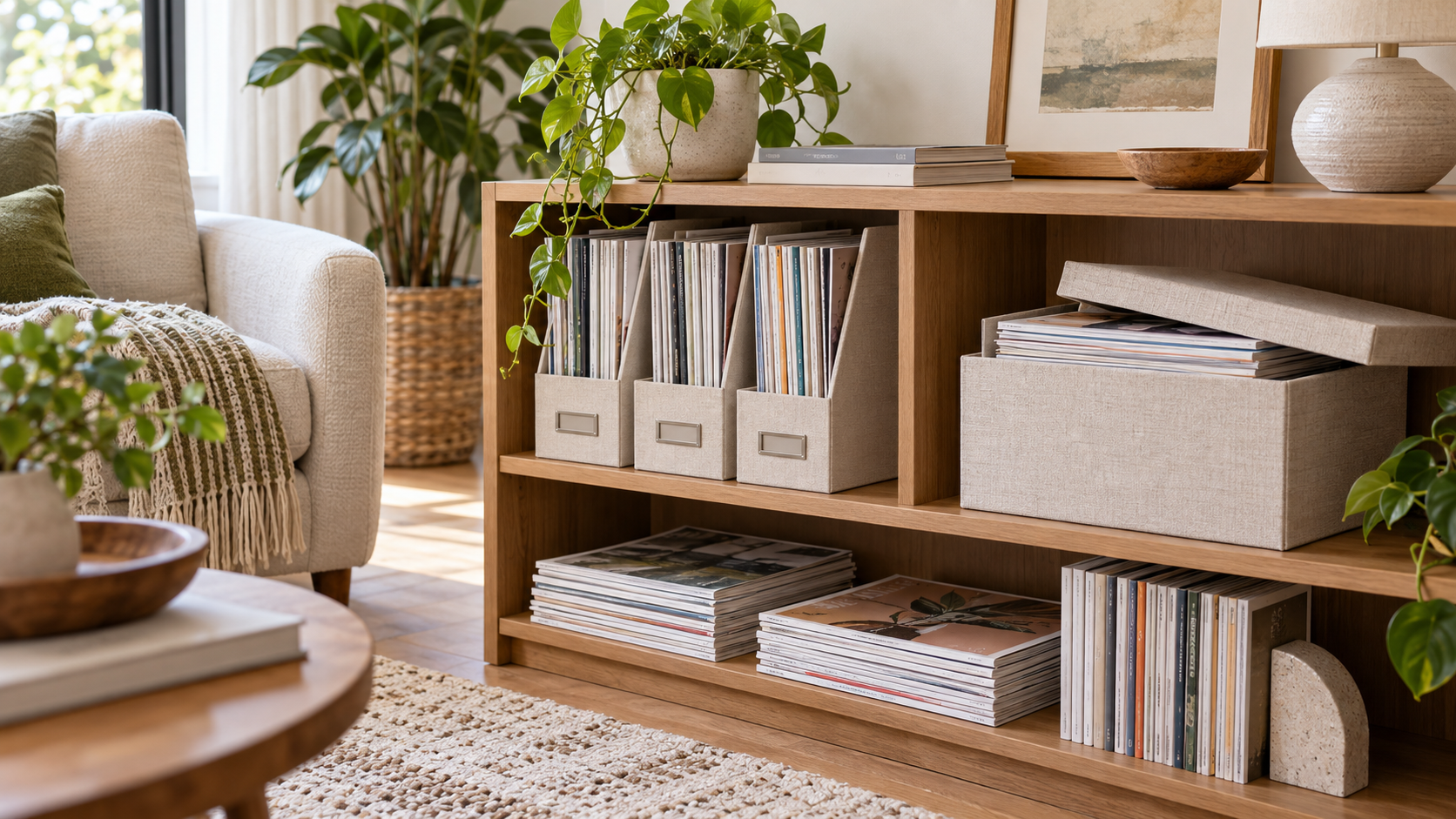
Upright storage is the easiest method if you want to flip through a title. The Library of Congress guide for books gives the same basic rules for shelving: “Keep shelved books upright.” It also says to “Shelve books of similar size together, so that the covers are supported by the neighbors on each side,” and that “Books should never be stored spine up.”
Magazines are not books, so these rules are an assumption for magazines. The practical version is simple. Group issues of similar height together. Use a file or box with a solid base, and keep the issues snug enough to stand without leaning but not so tight that covers bend. The guide also says that shelves should be safe to use: “All shelves should be completely flat and not have any protrusions such as splinters or nails.”
This assumes a typical US glossy magazine of about 8 by 11 inches. Measure your own issues before you buy a file or box, and measure the height of the tallest title, not the average.
Upright on a shelf or in a file: what to check
- The shelf is flat, with no splinters or sharp edges.
- The container’s inside height clears your tallest issue.
- Covers are not pushed against a hot or damp wall.
Method 2: Lay oversized or glossy issues flat
Some issues are too large or too stiff to stand well. The Library of Congress guide for books says that “Books too large to stand upright can be stored flat and horizontal, fully supported by the shelf underneath.” Applying that to magazines is again an assumption, but the principle holds: a flat issue needs full support underneath, not just at the edges.
Flat storage takes more floor or drawer space, so keep the stack to what the shelf is rated to carry. The sources we opened do not give a magazine weight or a safe stack height. Check the stated capacity of the shelf or drawer, and check whether that figure is per shelf or for the whole unit. If the listing does not say, treat the figure as unknown.
Method 3: Use archive boxes for issues you keep
If you want to keep issues for years, for example a run of a title you care about, use protective boxes rather than plastic sleeves. The Library of Congress guide says “Boxes and paper-based housing materials should be labeled acid-free and lignin-free.” It explains why: “Lignin is a naturally occurring component of most papers and when it starts to break down the acidic components can migrate into books and paper and cause deterioration.”
The guide also describes enclosures that suit flat storage: “flat boxes with lids the same depth as the base.” The same guide notes that “polyester sleeves are not buffered,” and that they “carry a static charge that can damage brittle newspapers.” Magazines are not newspapers, so treat that as a caution rather than a rule for magazines.
Archive boxes cost more than a basic file, and the label has to match the box. Read the label rather than trusting the word on a product page. This guide names no product.
Method 4: Wall-mounted racks
A wall rack saves floor space and suits a few current issues in a small room. The fixing is where most problems start. The CPSC report explains why: “Because drywall cannot typically withstand a 50 lb. pull force, as required by the current voluntary standard, drywall anchors are not typically provided. Rather, a wood screw is usually provided and must be installed in a stud.”
The report is about anchoring furniture such as bookcases and dressers, not magazine racks. We apply its point about studs to wall racks as a precaution. In practice:
- Find the studs with a stud finder before you drill.
- Identify the wall type. Drywall, plaster and masonry each need a different fixing, and the hardware notes should say which one the kit is for.
- If the rack cannot reach a stud, use anchors rated for the load and follow the hardware notes. Do not assume a generic drywall anchor will hold a loaded rack.
- Keep the rack empty of heavy items until the fixing is in place, and check it once a month.
The sources we opened do not give a load figure for any particular anchor, so this guide does not give one.
Where to store magazines, room by room
Living room
A file or open shelf near the sofa works well. Keep it away from a sunny window. The Library of Congress guide for books says that “Books should have minimal exposure to all kinds of light and ideally no exposure to direct or intense light.” It also lists “Window shades, curtains or boxes that protect sensitive books” as ways to limit light. Applied to magazines, the same logic means a shaded shelf is better than a sunlit one.
Bedroom or home office
Keep the stack away from radiators and heating vents. The guide warns against “extreme temperatures such as vents and radiators,” and advises avoiding “frequent extreme swings in temperature or humidity.” A room with steady conditions is the best choice.
Bathroom and kitchen
Avoid storing magazines in a bathroom, where humidity swings are common, and keep them off a counter near a stove or dishwasher. Moisture is the main worry. The guide notes that dust “attracts pests and absorbs moisture from the air, which in turn can cause mold to grow,” so keep the storage spot clean as well as dry.
Garage, basement and attic
Do not store magazines you care about in these spaces. The Library of Congress guide says “Do not store objects of value in poorly- or non-insulated areas such as basements, attics, or garages.” If you only read and recycle magazines, the risk is lower, but the same damp and heat still makes them curl and mark.
Related guides on this site
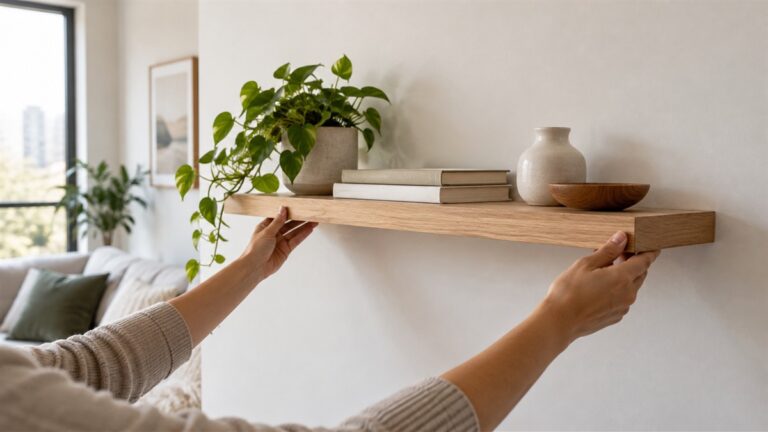
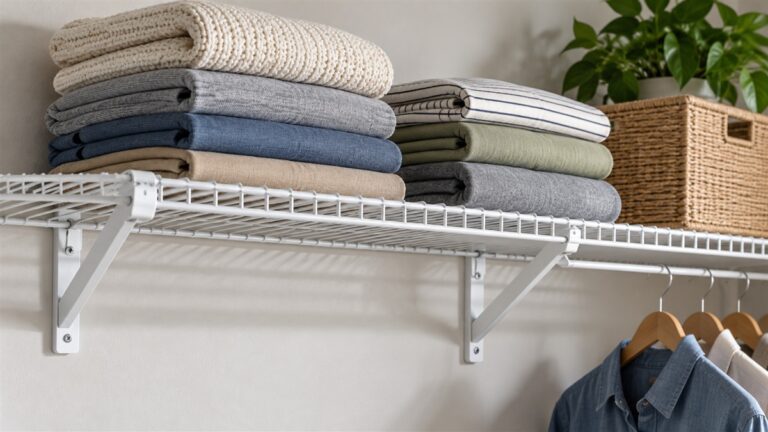
If you plan to hang a magazine shelf on the wall, read our guide to floating shelves that can hold weight before you drill. For a small room with little floor space, see our notes on bookshelves for a small room. If your shelf uses wire and lists a weight limit, our wire shelf weight limit guide explains how to read that figure.
Buying or setup checklist
- Measure the tallest and widest issues you keep.
- Choose a method: upright for browsing, flat for oversized issues, archive boxes for keepers, a wall rack only for a few current issues.
- Check the stated capacity of any shelf or rack, and whether it is per shelf or total.
- Confirm the shelf is flat, with no protrusions.
- For a wall rack, find the studs, identify the wall type, and read the hardware notes.
- Pick a spot away from direct sun, vents, radiators, bathrooms and garages.
- Dust the shelf and container regularly. The guide calls regular dusting “important.”
Mistakes to avoid
- Packing too tightly or too loosely. Covers bend when a container is overfilled, and issues slump when it is not full enough.
- Storing issues spine up. The book guidance says never. Magazines are an assumption, but the same stress on the binding applies.
- Keeping them in a garage or attic. The guide advises against these spaces for objects of value.
- Fixing a wall rack with drywall anchors alone. The CPSC report says a wood screw must be installed in a stud.
- Putting them in sun. The guide says books should have minimal exposure to light.
- Confusing shelf and unit capacity. Check whether a figure is per shelf or for the whole unit before you load it.
FAQ
Should I store magazines upright or flat?
Store magazines upright if you want to browse them and they are similar in size. Lay oversized or glossy issues flat in a shallow box or drawer so they are fully supported.
What temperature and humidity should I aim for?
The Library of Congress guide for books says a cool (70 degrees Fahrenheit or below) and relatively dry (30-55% relative humidity) environment is safe for most books. Magazines are not books, so applying this to magazines is an assumption.
Can I keep magazines in the garage or basement?
The guide advises against basements, attics and garages for objects of value. If your magazines matter to you, keep them in a living area.
Do I need acid-free boxes for magazines?
For issues you want to keep for years, yes. The guide says boxes and paper-based housing materials should be labeled acid-free and lignin-free. Boxes for issues you read and recycle do not need this.
How do I mount a magazine rack on the wall?
Fix it into studs where you can. The CPSC report says drywall cannot typically withstand a 50 lb. pull force, so a wood screw must be installed in a stud. If there is no stud, use anchors rated for the load and read the hardware notes.
Are plastic sleeves a good way to store magazines?
The guide says polyester sleeves are not buffered and can add weight and bulk. It also notes they carry a static charge that can damage brittle newspapers. Sleeves protect against dust and handling, but they do not replace support.
What we could not verify
- The sources we opened are about books, paper and furniture. None covers magazines specifically, so the magazine applications above are labelled as assumptions.
- Typical magazine dimensions and weights are not in the sources. The size used above is an assumption.
- The sources do not give a weight per magazine, a safe stack height, or a load for any anchor or rack.
- We did not check whether the Library of Congress pages have changed since 27 October 2026. The CPSC report is a 2015 preliminary evaluation.
- Whether a given wall rack suits your wall. That depends on the hardware and the wall, and the listing or hardware notes must answer it.
Bottom line
Stand issues upright if you browse them, lay oversized or glossy issues flat, and keep everything cool, dry and out of direct sun. Mount any wall rack into a stud or into anchors rated for the load, never into drywall alone.
Sources
- Library of Congress, “Storing Your Books,” Preserving Your Books research guide. https://guides.loc.gov/preserving-your-books/storing. Opened 2026-10-27.
- Library of Congress, “Care, Handling, and Storage of Works on Paper,” Collections Care (Preservation). https://www.loc.gov/preservation/care/paper.html. Opened 2026-10-27.
- U.S. Consumer Product Safety Commission, “Preliminary Evaluation of Anchoring Furniture and Televisions Without Tools,” CPSC/EXHR/TR-15/001, May 2015. https://www.cpsc.gov/s3fs-public/pdfs/Tipover-Prevention-Project-Anchors-without-Tools.pdf. Opened 2026-10-27.
As an Amazon Associate we earn from qualifying purchases.