Best Cube Shelves: Six Units Compared by Size, Load and Wall Fixing
As an Amazon Associate we earn from qualifying purchases. Details
Best cube shelves are open storage units divided into square compartments, so each opening holds one bin, a short stack of books, or a set of folded clothes. The person typing best cube shelves usually wants to sort a room without buying a full bookcase, and the right unit depends on three measurements: the size of each opening, the load figure the listing gives for each cube or for the whole unit, and whether the unit can be fixed to a wall. This guide works from the listing data for twelve cube-style products. Six earn a card, and the other six are explained, so every listing is accounted for.
By Ken, updated 20 October 2026
Quick answer
- Measure the cube opening before anything else. Only one listing in this set, the Apexa two-cube unit, states that its openings fit 11 by 11 by 11 inch bins.
- Read the load figure as the listing states it. Three of the six picks give a load figure, and the other three give none in their bullets or specification tables.
- Put the heaviest items on the lowest cubes, which is the advice the Furinno assembly instructions give for their bookcase.
- Fix any tall unit to the wall with the hardware the maker includes. The CPSC anchoring report says a wood screw is usually provided and must be installed in a stud.
Cube size comes before style
Cube openings vary more than the titles suggest. The table below uses the overall dimensions from each listing, in the order the listing gives them, together with the cube count from the title, the bullets or the shelf count. Where a figure is missing, the table says so instead of filling the gap.
| Listing (pick) | Dimensions as listed (inches) | Cubes |
|---|---|---|
| Bamjoy 8-tier narrow media unit | 11.8 W x 70.9 H x 9.5 D (specification table) | 8 |
| Apexa 2-cube organizer | 12 W x 23.7 H x 11.7 D | 2 |
| Furinno LUDER 3-cube bookcase, white | 12 W x 31.5 H x 9.3 D | 3 |
| Furinno FANO 6-cube closet unit | 36 W x 15.4 H x 11.7 D | 6 |
| Yuyetuyo 2-pack closet unit | not stated | 4 per unit |
| DAOUTIME 3-pack stackable organizer | 15.7 L x 11.8 D x 12.2 H per cube organizer (bullet) | 1 per organizer |
The Bamjoy unit is the tallest listing in the set. Its specification table gives 70.9 inches of height, and its bullets describe a slim profile for tight corners. The formula is 70.9 divided by 8, which is about 8.9 inches per tier. That figure is only an average. The bullets say four of the shelves adjust, so the listing does not fix a single cube height for every tier.
The Apexa unit gives the clearest check against a bin. Its specification table lists 23.7 inches of height for two cubes, so 23.7 divided by 2 is about 11.9 inches per cube. That average is larger than the 11 inch bin height named in the bullets. The listing does not say whether the 23.7 inches includes the top and base panels, so treat the average as a planning figure rather than a measured opening.
The FANO bullets give an approximate cube size of 11.3 by 8.3 by 7.7 inches, which is not a square cube. The DAOUTIME bullets give 15.7 by 11.8 by 12.2 inches for a single stackable organizer. The Yuyetuyo listing gives no overall size at all, so its footprint has to be measured on the shelf or floor where it will sit.
The LUDER bookcase is the shallowest unit in the table at 9.3 inches deep. A closet layout behaves differently, and the top shelf of a closet guide covers that case. Its bullets describe a closed back panel that keeps items from falling behind the cubes. A shallow depth suits a wall position, but it also means a bin that is deeper than the listing’s depth will not sit flush against the back.
Mounting styles change the job
The specification tables give a mounting type for five of the six picks, and those types decide how each unit is set up. The Bamjoy table lists a wall mount, and its bullets include two anti-falling kits for securing the unit to the wall. The Apexa and LUDER tables list floor mounts. The FANO table lists a tabletop mount, which suits a closet shelf or a low flat surface more than a standing bookcase. The Yuyetuyo table lists a freestanding unit, and its listing names a desktop installation type. The DAOUTIME listing gives no mounting type in its specification table, only its bullets describing stackable bins.
This matters more than the cube count. A floor-standing unit that is tall enough to tip needs a wall fixing in its own right, while a tabletop unit depends on the surface under it. A reader who plans to stand a unit in a corner should confirm the mount before buying, because the same cube count can mean very different setups.
Load figures: what the listings state and what they do not
Load is where the listings disagree most. Three of the six picks give a figure, and each one states it in a different way.
The LUDER bullets give 20 lb on each cube and 20 lb on the top, with a total of 60 lb when the load is spread evenly. Three cubes at 20 lb each would be 60 lb, which matches the total only if the top panel is not added on top of the cubes. The listing does not say which reading applies, so the careful reading is the lower one: plan for 60 lb spread across the whole unit, with no single cube loaded above 20 lb.
The FANO closet unit lists 30 lbs for each shelf, 80 lbs for the top panel and 200 lbs total. Six shelves at 30 lbs each is 180 lbs, and adding the 80 lb top gives 260 lbs. The listing’s 200 lb total is therefore not the sum of its per-shelf and top figures, and the bullets do not explain how the total is made up. The same bullets say the unit is not suitable to hold heavy weight and ask buyers to stay within recommended limits. Read the 200 lb total as a ceiling the maker states, not as a margin for heavy items.
The Apexa specification table gives a 20 pound maximum weight capacity. Its bullets do not add a figure, and the table does not say whether the 20 pounds applies to each cube or to both together. Ask the seller for that detail if the bins will be heavy.
Two picks give no figure at all. The Bamjoy bullets say the particleboard and hardware give better load bearing, but no number appears in the listing. The Yuyetuyo bullet says its wire frame stays stable when fully loaded, which describes how the unit behaves without giving a limit.
The DAOUTIME listing gives an item weight of 16.3 pounds for the three-pack. Dividing that by three gives about 5.4 pounds per organizer: 16.3 divided by 3 is about 5.4. That is a planning average from the set weight, not a figure the listing gives for one organizer, and the listing gives no load limit for its baskets or top board.
A planning example with real numbers
Suppose a reader wants to keep three bins in one cube unit, and each bin with its contents weighs 11 pounds. Three bins at 11 pounds each is 33 pounds in total. Spread across three cubes, that is 11 pounds per cube. The LUDER bullets give 20 lb on each cube, so 11 pounds in each cube sits below that per-cube figure, and the 33 pound total sits below its 60 lb total.
The same three bins would not fit the Apexa unit, which has two cubes. A reader in that position needs a three-cube unit or a taller stack, and the Apexa is the wrong choice even though its bin fit is the clearest in the set. The example shows why the cube count and the load figure have to be checked together, rather than one after the other.
A second example uses the Yuyetuyo pair. Two units give eight cubes in total, because each unit has four. If a reader wants eight bins of folded clothes, the cube count works, but the listing gives no weight per bin or per unit, so the reader has to decide the load from their own bins and not from a figure in the listing. The same logic applies to the DAOUTIME pair of three-packs, where the listing weight applies to the pack and not to any single organizer.
Wall fixing and children
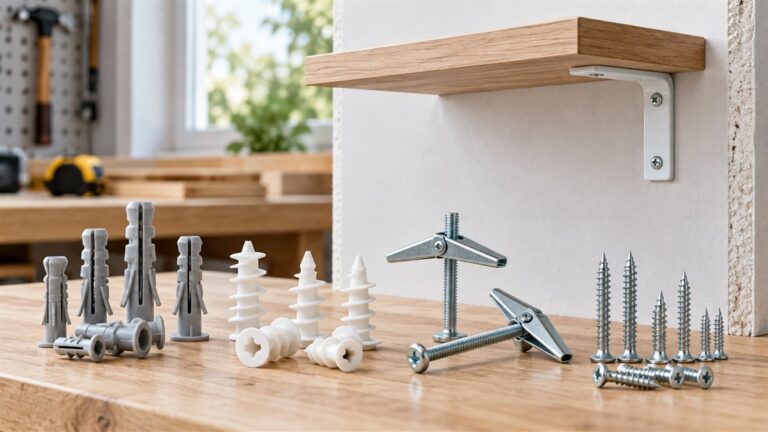
Cube units in this set range from 15.4 inches tall to 70.9 inches tall. The taller units carry the most tipping risk, and the listings that describe anchoring treat it as part of setup rather than an optional extra. The Bamjoy listing includes two anti-falling kits and says they secure the unit to the wall to prevent tipping. The Apexa listing describes anti-toppling elements and wooden dowels. Neither listing gives the installation steps in its bullets, so the instructions in the box decide the method.
The CPSC anchoring report describes the typical anchoring system as one that “consists of screws and fabric straps that affix the furniture to the wall.” It also says that “a wood screw is usually provided and must be installed in a stud.” The report gives that instruction for furniture in general, and it is the reason a wall fixing should be planned before a cube unit is loaded. The report is not about cube shelves in particular, so use it as the reason for a wall fixing, not as a load rating.
The Furinno assembly instructions for a three-tier bookcase carry the model number 11003WH, which is the number the LUDER listing states. Those instructions say, “Exceeding these load limits could cause sagging, instability, product collapse, and/or serious injury.” They also say, “DO NOT allow children to climb on unit.” and “Put heavier items on lower shelves.” These are the maker’s statements for that bookcase. They are not a rating for the other units in this set, but they show what a maker expects its owners to do.
A 2017 CPSC advance notice of proposed rulemaking on clothing storage units is useful here for a different reason. It describes the clothing storage standard it discusses as excluding built-in furniture and shelving furniture, such as bookcases. A cube bookcase therefore sits outside the standard that notice discusses, which means the wall-fixing advice in this article comes from the anchoring report and from each maker’s instructions, not from a clothing storage rule.
Plan the wall fixing before the cubes are loaded, not after. Keep the heaviest items on the lowest cube. The Furinno instructions tell owners not to let children climb on the unit, so a cube shelf is a poor place for a step stool or a stack of boxes that could invite climbing. For a unit that stands on the floor, the fixing is the step that prevents a tip, and no load figure in a listing replaces it.
For a wall-mounted alternative to a freestanding cube unit, the corner wall shelves for a living room guide covers a different layout with its own fixing considerations.
Cube shelves with a card
Each card below uses only the listing’s own bullets, specification fields and fit notes. The pros and cons are written from that data, and the skip-if line names the condition a reader should check before buying.
1. Bamjoy 71 Inches Tall Narrow Bookshelf, 8-Tier Slim CD DVD Media Shelf, Corner Bookcase (Tallest unit with the most cubes)
Pros
- The listing says the unit has eight cubes and four adjustable shelves inside them.
- The bullets include two anti-falling kits to secure the unit to the wall.
Cons
- The listing gives no load figure for the unit or for any cube.
- The width and depth in the bullets do not match the specification table.
Best for: a narrow corner in a living room or office where media and small decor sit in tall cubes
Skip if: you cannot fix a 70.9 inch unit to a wall, since the bullets name the anti-falling kits as the way to secure it
View on Amazon (affiliate link)
2. Homes: Inside + Out Apexa 2-Cube Storage Organizer Shelves, Stackable Wood Bookcase Fits Cubby Bins (Small unit sized for bins)
Pros
- The bullets say the openings fit 11 by 11 by 11 inch cube bins.
- The specification table gives a 20 pound maximum weight capacity.
Cons
- Two cubes give less storage than the taller units in this set.
- The listing does not say whether the 20 pound figure is per cube or for both cubes.
Best for: a bedroom or dorm corner that needs two bins for files, toys or shoes
Skip if: you need more than two cubes or plan to load both cubes close to the maximum
View on Amazon (affiliate link)
3. Furinno LUDER Book Shelf, 3-Cube Bookshelf, Bookcase with Open Shelves, 9.3 x 12 x 31.5, Easy (Three cubes with a closed back)
Pros
- The bullets describe a closed back panel that keeps items from falling behind.
- The bullets give 20 lb on each cube and 60 lb total when the load is evenly spread.
Cons
- The 60 lb total applies only when the load is evenly distributed, according to the bullets.
- The listing does not say whether the top panel's 20 lb is part of the 60 lb total.
Best for: a home office or living room wall where books and frames sit on three open cubes
Skip if: your load will sit on one cube, because the listing limits the total to an even spread
View on Amazon (affiliate link)
4. Furinno FANO Closet Organizers and Storage, 6-Cube Multipurpose Top Shelf Closet Shelf, Stackable (Six-cube closet unit)
Pros
- The bullets describe four closed-back cube shelves and two lower open shelves.
- The bullets give 30 lbs per shelf, 80 lbs for the top panel and 200 lbs total.
Cons
- The same bullets say the unit is not suitable to hold heavy weight.
- The per-shelf and top figures do not add up to the 200 lbs total in an obvious way.
Best for: a closet top or a low bedroom wall where folded clothes, towels and shoes need separate cubes
Skip if: your closet is shallower than the 11.7 inch depth in the listing
View on Amazon (affiliate link)
5. 2 Pack Stackable Closet Organizers and Storage, 4 Cube Closet Shelves with Wood Top Board for Extra (Two bins side by side)
Pros
- The bullets describe two bins side by side with a solid wood top for bags, hats or towels.
- The specification table lists four shelves and a freestanding mount.
Cons
- No weight figure appears in the specifications or the bullets.
- The listing gives no overall size, so the footprint has to be measured.
Best for: a closet floor or shelf where folded clothes and shoes need bins plus a flat top
Skip if: you need a stated load figure for each bin before you load it
View on Amazon (affiliate link)
6. 3 Pack Stackable Closet Organizers and Storage Basket, Closet Shelves with Wood Top Extra Storage (Stackable three-pack with a wood top)
Pros
- The bullets give 15.7 by 11.8 by 12.2 inches for a single stackable organizer.
- The bullets say the stackable baskets will not protrude when placed in a cupboard.
Cons
- The 16.3 pound item weight is for the three-pack, and the listing gives no per-unit weight.
- The listing gives no load figure for the top board or the baskets.
Best for: a closet or cupboard where stacked bins hold clothes and a wood top holds bags or hats
Skip if: your cupboard is shallower than the 11.8 inch depth in the bullets
View on Amazon (affiliate link)
Listings without a card
Six of the twelve listings in this set are not carded. Each one is named here with the reason it was left out.
- WOPITUES floating shelves with a cube shelf: the set is two floating shelves and one cube shelf. The specification table gives one size for the whole set, so the cube piece cannot be sized on its own, and the cube is not the main product.
- Furinno LUDER three-cube bookcase, amber pine: the same model and dimensions as the white card, in another finish. One card covers the model.
- Furinno LUDER three-cube bookcase, blackwood: the same model in another finish, with the same dimensions. One card covers the model.
- Homes: Inside + Out Apexa three-tier stackable bookcase with doors: the bullets are three short lines, and the listing gives no size, weight or specification table. Its bullets say the shelves were checked for strength but give no figures, so nothing in the listing can be used on its own.
- Stowsia 8-pack fabric storage cubes: these are fabric bins that fit cube organizers. They are bins, not shelving units, so they fall outside a cube shelf comparison.
- NaturalCozy 3-pack cotton rope cube bins: rope bins for shelves, the same kind of product as the Stowsia bins. They are bins, not shelving units.
How we chose
This article compares listings, not physical units. The criteria were a clear cube or cubby opening, an overall size in the listing, a stated load figure or an explicit statement that none is given, and an anchoring or anti-tip note where a listing mentions one. A listing was left out when its main product was a bin, a wall-shelf set, or a unit with no cube opening. Where the same model came in several finishes, one card was used for the model.
Price, rating and customer feedback figures were not part of the choice, and none appears in this article. The picks differ in height, width and mount, so the table is the place to compare them, not the card order.
What we could not verify
- The Bamjoy width and depth in its bullets (11.6 by 9.3 inches) do not match its specification table (11.8 by 9.5 inches). The table figures are used above, and the mismatch is not resolved.
- No listing in this article states a load figure per cube for the Bamjoy, Yuyetuyo or DAOUTIME units.
- The FANO total of 200 lbs does not reconcile with its per-shelf and top figures, and the listing does not explain the total.
- Whether the LUDER 60 lb total includes the top panel, which the bullets list separately at 20 lb.
- Whether the Apexa 20 lb maximum applies to each cube or to both cubes together.
- The installation steps for any wall kit. The listings describe the kits, but the anchoring procedure in the CPSC report is written for furniture in general.
- How any finish wears over time. No listing states durability beyond general wording.
- Whether the Yuyetuyo and DAOUTIME organizers fit a particular cupboard depth, since neither listing gives an overall size that a reader can compare directly.
FAQ
Are cube shelves safe in a child’s room?
They can be, provided the unit is fixed to a wall as its instructions direct and heavy items stay on the lower cubes. The Furinno instructions say not to let children climb on the unit, and the CPSC anchoring report describes a screw set into a stud as the usual fixing for furniture of this kind. None of the listings in this set says a cube shelf is child-proof, so treat the wall fixing as part of the purchase rather than an extra.
How do I check whether a cube fits my bins?
Compare the bin’s outside size with the opening the listing gives. Only the Apexa listing states a bin size, which is 11 by 11 by 11 inches. The FANO bullets give an approximate cube size of 11.3 by 8.3 by 7.7 inches, and the DAOUTIME bullets give 15.7 by 11.8 by 12.2 inches for one organizer. For every other unit, measure the opening yourself, because the overall size and the cube count do not give you the internal dimensions.
Can a cube shelf hold books?
Yes, and several listings name books as a use. The LUDER bullets name books and photo frames, and the Apexa bullets say its cubes hold letter-sized books and documents upright. The load figure is the limit that matters. The LUDER gives 20 lb on each cube and 60 lb in total when the load is evenly spread. Books add weight quickly, so weigh a single filled cube before you fill the whole unit.
Does a short cube unit still need a wall fixing?
The listings in this set do not give a height rule for when a fixing is needed. The Apexa is 23.7 inches tall, and the Yuyetuyo and FANO listings are shorter than the Bamjoy. If a listing includes a kit or an anti-tip element, follow the maker’s instructions for it, and if the listing includes neither, check the instructions before loading the unit.
What should I do when a listing gives no load figure?
Assume a lower load than you would for a unit with a stated figure, and keep heavy items on the lowest cube. The Bamjoy, Yuyetuyo and DAOUTIME listings give no per-cube or total figure, so plan those units with light items and ask the seller for a rating before you rely on them for anything heavy.
Bottom line
One rule covers most purchases here: measure the bin, read the load figure the listing actually states, and fix any unit tall enough to tip to the wall with the hardware in the box. The Apexa is the only unit with a bin size stated in its bullets, the LUDER gives a clear per-cube figure, and the Bamjoy is the only card whose bullets name anti-falling kits for the wall. Choose the unit that matches the bins you own, not the one with the most cubes.
Sources
- U.S. Consumer Product Safety Commission, “Preliminary Evaluation of Anchoring Furniture and Televisions Without Tools” (2015): anchoring system of screws and straps, wood screw in a stud, opened 2026-10-20
- Furinno, assembly instructions for the 3-Tier Open Shelf Bookcase, model 11003WH: load-limit warning, no child climbing, heavier items on lower shelves, opened 2026-10-20
- U.S. Consumer Product Safety Commission, advance notice of proposed rulemaking, “Clothing Storage Unit Tip Overs” (2017): scope excludes bookcases and shelving furniture, opened 2026-10-20