
Best Hyper Tough 5 Shelf Metal Storage Rack Options
As an Amazon Associate we earn from qualifying purchases. Details
If you searched for hyper tough 5 shelf metal storage rack, you want a freestanding metal unit with five levels for garage, pantry, closet, or utility storage. This guide helps you compare that style across current listings by stated total capacity, stated per-shelf capacity, footprint, height, adjustability, mobility, and included stability parts. You will learn what those numbers assume, how to measure your space, and when a smaller or larger rack makes more sense. The listings below describe similar 5-tier metal racks in different sizes and capacities, so you can match one to bins, tools, or pantry goods without guessing about fit.
Quick answer
For a hyper tough 5 shelf metal storage rack style unit, choose by load and footprint first. If you store paint cans, tools, and totes in a garage, look for listings that state both per-shelf and total capacity and a wider frame around 35.43 inches wide and 72.05 inches high. If you need pantry or closet storage, a narrower unit around 24 inches wide and 61 inches high fits tighter walls and still lists 750 pounds total. If you need to move the rack for cleaning, choose a listing that includes wheels and leveling feet. Always follow the maker mounting instructions and anchor tall units to the wall.
What matters for a 5-shelf metal rack
A five-level metal rack sounds simple, but listings differ in ways that change what you can store. Use these five checks before you decide.
1. Stated per-shelf capacity versus stated total capacity
Listings should be read as two separate limits. Per-shelf capacity controls how much weight one level can hold. Total capacity controls the whole unit. A listing can state 500 pounds per shelf and 2,500 pounds total, which lines up across five levels. Another listing states 173 pounds per level and 865 pounds total. Quote both numbers from the listing you consider, note whether the listing says per shelf or total, and do not add extra load because the frame looks strong. If the listing does not state a capacity, check the product listing and do not assume one.
2. Footprint and height against your wall
Measure width, depth, and height where the rack will stand, plus door swing and walking space. A compact unit listed at 11.8 inches deep by 24 inches wide by 61 inches high needs far less wall than a garage unit listed at 15.75 inches deep by 35.43 inches wide by 72.05 inches high. Depth matters for totes and paint cans. Height matters for ceilings, garage door tracks, and overhead storage. For ideas about pairing floor racks with ceiling space, see overhead garage storage for bins before you crowd one wall.
3. Adjustability and shelf style
Most metal racks in this group list adjustable shelf height. That helps when bottom levels hold tall totes and upper levels hold smaller boxes. One listing describes an extra-tall 17.7 inch bottom shelf and 13 inch clearance on upper shelves. Another listing describes wire mesh levels that help dust fall through and improve air flow for pantry or laundry use. Check whether the listing describes solid utility shelves or wire mesh, and check whether split-into-two or workbench layouts are stated. Do not assume a rack splits unless the listing states it.
4. Mobility, feet, and stability parts
Some racks list four leveling feet for uneven garage floors. Others list four wheels with locks plus leveling feet for mixed use. Wheels help in a kitchen, office, or laundry area where you pull the rack out to clean. Locks matter because a rolling rack can drift. One listing in this group includes a wall anchor kit to reduce tipping risk. Tall freestanding furniture should be anchored, especially where children may climb. The CPSC Anchor It! campaign warns that unsecured furniture is a hidden hazard and advises anchoring top-heavy furniture with anti-tip brackets.
5. Material, finish, and assembly needs
Listings in this group describe iron, alloy steel, cold-rolled steel, or metal with powder-coated or polished finishes. Finish affects rust and scratch resistance in damp garages and laundry rooms, but the listing wording is the only promise you can rely on. Check whether assembly tools are included. One listing states that assembly tools are included. Another states that a mallet and gloves are included. Another states no tools are needed. If you are organizing a small closet as well as a garage, compare finishes and sizes with small closet floor ideas so damp shoes and bins do not end up on bare metal.
How to choose a hyper tough 5 shelf metal storage rack style unit
Start with use. Garage tool storage needs higher stated per-shelf limits and deeper shelves than bedroom or pantry storage. Kitchen and pantry storage needs the right depth for cereal boxes, small appliances, and bulk cans. Closet storage needs narrow width and rust-resistant wording if laundry moisture drifts nearby.
Next, measure. Record wall width, depth from wall, ceiling height, baseboard thickness, outlet locations, and the size of the largest tote. Compare those notes to Product Dimensions and to Item Dimensions D x W x H when both appear. Overall dimensions and usable shelf space often differ, so quote both when the listing gives them and leave clearance for hands and labels.
Then read capacity wording closely. One listing below states 120 lbs per shelf in the title and Maximum weight: 750 pounds in the specifications, which do not align across five levels, so check the product listing for which number controls your plan and do not rely on either number alone for heavy loads. Another listing states each shelf supports up to 500 lbs with a robust 2,500 lbs capacity, which is clearer for heavy garage goods. When per-shelf and total numbers disagree or only one appears, plan to the lower safe reading and ask the maker.
Finally, check stability and wall type. These picks list Freestanding or Floor Mount installation, not wall-mounted shelves. Use studs or rated anchors where an anchor kit is supplied, check whether your wall is drywall, plaster, or masonry, and read the product hardware notes. Do not promise a load for a generic anchor. If you also use wall shelves in living areas, review why a floating shelf gaps from the wall to understand how wall shape affects mounting.
1. Storage Shelves, 5-Tier Metal Shelving Unit with 120 lbs Per Shelf, Leveling Feet, Storage Rack (Best overall)
Specs from the listing (checked 2026-10-10):
- Material: Iron, Metal
- Product Dimensions: 11.8"D x 24"W x 61"H
- Weight Capacity Maximum: 750 pounds
- Installation Type: Freestanding
- Included Components: Hardware, Rod
- Item Weight: 12.3 pounds
- Finish Type: Powder Coated
Pros
- Listed 11.8"D x 24"W x 61"H fits tight pantry and closet walls
- Lists 17.7" bottom shelf and 13" upper clearance for tall totes
- Lists wall anchor kit plus four adjustable leveling feet
Cons
- Title 120 lbs per shelf and specs 750 pounds maximum do not align across five levels — confirm limit
Best for: Narrow pantries, closets, and laundry walls needing vertical storage
Skip if: Skip if you store wide garage totes side by side — 24 in. width is limiting
View on Amazon (affiliate link)
2. 5 Tier Storage Shelves with Wheels, Heavy Duty Metal Garage Shelving Unit and Adjustable Feet (Best for mobility)
Specs from the listing (checked 2026-10-10):
- Material: Alloy Steel
- Product Dimensions: 17.7"D x 23.6"W x 72"H
- Weight Capacity: Minimum weight: 173 pounds
- Installation Type: Freestanding
- Included Components: Installation Kit
- Item Weight: 23 pounds
- Number of Shelves: 5
Pros
- States 173 pounds per layer and 865LB total for clear planning
- Lists four 360 degree rollers with two locks plus leveling feet
- Lists adjustable layer height with no-tools assembly described
Cons
- Wheeled frame and 173 pounds per level suit lighter loads, not heavy shop tools
Best for: Renters and laundry rooms that roll the rack out to clean
Skip if: Skip if you need fixed heavy garage storage without movement
View on Amazon (affiliate link)
3. 72" H Garage Shelving 2500 LBS Heavy Duty Storage Shelves, Adjustable 5 Tier Metal Shelving Unit (Best for heavy garage loads)
Specs from the listing (checked 2026-10-10):
- Material: Metal
- Product Dimensions: 15.75"D x 35.43"W x 72.05"H
- Weight Capacity Maximum: 2500 pounds
- Item Weight: 45.2 pounds
- Included Components: Hardware, Rod
- Shelf Type: Utility Shelf
- Finish Types: Steel
Pros
- States up to 500 lbs per shelf and 2,500 lbs total capacity
- Lists 15.75"D x 35.43"W x 72.05"H with 45.2 pounds frame weight
- Lists split-into-two or workbench conversion and adjustable heights
Cons
- Large footprint and 45.2 pounds frame need space and two-person handling
Best for: Garages and workshops storing tools, paint, and large totes
Skip if: Skip if your wall is narrow or ceiling is low — measure first
View on Amazon (affiliate link)
4. 72" H Heavy Duty Garage Shelving, Metal Storage Shelves, 5 Tier Adjustable Storage Shelves (Best convertible utility pick)
Specs from the listing (checked 2026-10-10):
- Material: Metal
- Finish Type: Powder Coated
- Installation Type: Freestanding
- Included Components: Caster
- Number of Shelves: 5
- Weight Capacity: Minimum weight: 400 pounds
- Color: Black
Pros
- States 400lbs per shelf for tools and bins
- Lists adjustable levels with split or workbench option described
- Lists instructions, videos, gloves, and small hammer support
Cons
- Height fields contradict — Size says 72"H while dimensions list 31.5"H, confirm before buying
Best for: Utility rooms wanting adjustable levels and bench option
Skip if: Skip if you need certain height for under-pipe or low ceilings until maker confirms
View on Amazon (affiliate link)
5. 5 Tier Wire Metal Shelving Rack Garage Storage Rolling Shelves with Wheels (Best tall rolling rack)
Specs from the listing (checked 2026-10-10):
- Material: Metal
- Product Dimensions: 14"D x 36"W x 75"H
- Weight Capacity Maximum: 1750 pounds
- Included Components: Caster, Hardware, Rod
- Item Weight: 10.2 pounds
- Installation Type: Freestanding
- Finish Type: Powder Coated
Pros
- States 350 lbs per shelf and 1,750 lbs total capacity
- Lists 14"D x 36"W x 75"H with locking swivel casters
- Lists leveling feet, shelf hooks, and fully adjustable heights
Cons
- 75 in. height and 36 in. width need wide doors and high ceilings
Best for: Kitchens and garages needing tall rolling overflow storage
Skip if: Skip if hallways are narrow — Minimum Required Door Width lists 36 inches
View on Amazon (affiliate link)
Picks for this style
Compact 24-inch wide rack for pantry and closet walls
This pick is a 5-tier metal shelving unit listed at 24 inches wide with an 11.8 inch depth and 61 inch height. The listing states Material as Iron, Metal, Finish Type as Powder Coated, and Installation Type as Freestanding. The specifications list Maximum weight: 750 pounds and the title phrases one level as 120 lbs Per Shelf. Those two capacity statements do not align across five equal levels, so check the product listing and do not rely on either number alone for heavy garage loads. You get details that help in tight rooms.
The listing describes an extra-tall 17.7 inch bottom shelf for larger totes or small appliances and 13 inch clearance on upper shelves. It also lists four adjustable leveling feet for uneven floors and a wall anchor kit to reduce tipping risk. Included Components are listed as Hardware, Rod, and the listing states assembly tools are included. Item Weight is listed as 12.3 pounds, which helps one person position the frame before loading. Room Type includes Closet and Dorm Room as well as Bathroom and Bedroom.
Who should skip it: skip if you need wide garage shelves for large totes, because 24 inches wide and 11.8 inches deep limits bin size. For closet-top planning alongside a floor rack, see top shelf of closet ideas.
Rolling wire rack with wheels and leveling feet
This pick is a 5 Tier Storage Shelves with Wheels unit listed at 23.6 inches wide, 17.7 inches deep, and 72 inches high. The listing states Material as Alloy Steel, Mounting Type as Freestanding, and Shelf Type as Tiered Shelf. The bullets state each layer can carry 173 pounds and the total load weight can reach 865LB. That pairing is useful because both numbers are stated together and 173 pounds times five levels equals 865 pounds. Item Weight is listed as 23 pounds.
The listing includes four 360 degree rollers, two of which can be locked, plus adjustable leveling feet. That mix suits renters and laundry rooms where you roll the unit out to clean and then lock it. Height of each layer can be adjusted according to needs, and assembly is described as no tools required with an Installation Kit included. Room Type includes Garage, Kitchen, Laundry Room, Bathroom, and Closet. The wire mesh design is described as helping with rust and corrosion resistance, but the exact coating life is not stated.
Who should skip it: skip if you need a fixed heavy garage rack, because wheels add movement even with locks and the stated 173 pounds per level is lower than wider garage units. If you want wire shelving background, read Hyper Tough wire shelving notes.
Wide garage unit with high stated total capacity
This pick is a 72 inch high garage shelving unit listed at 35.43 inches wide and 15.75 inches deep. The listing states Material as Metal, Shelf Type as Utility Shelf, and Finish Types as Steel with a powder-coated finish. The bullets state a robust 2,500 lbs capacity, with each shelf supporting up to 500 lbs. The specifications also list Weight Capacity Maximum as 2500 pounds and Weight Capacity as Minimum weight: 2500 pounds. Item Weight is listed as 45.2 pounds, which signals a heavier frame than compact picks.
The listing states an adjustable design that allows you to modify the height of each shelf, and it also states you can split the unit into two separate racks or convert it into a workbench. Included Components are listed as Hardware, Rod, and the listing states a mallet and gloves are included for assembly. The bullets describe interlocking assembly without bolts or nuts. Recommended Uses For Product is listed as Tools, and Room Type is listed as Garage.
Who should skip it: skip if your wall is narrow, your ceiling is low, or you must carry the frame upstairs alone, because the width, height, and 45.2 pounds frame weight need space and help. To compare welded steel options, see welded steel garage shelving ideas.
Convertible utility rack that can split or form a bench
This pick is listed as a 72 inch high heavy duty garage shelving unit with five tiers and an Industrial style. The Size field states 72 inch H by 35 inch W by 16 inch D, while Product Dimensions and Item Dimensions D x W x H in the same listing state 15.8 inch D by 35.4 inch W by 31.5 inch H. The height values contradict each other, so check the product listing for the correct assembled height and do not rely on either height number alone when measuring for ceiling clearance. The bullets state each shelf boasts an impressive load capacity of 400lbs.
The listing states Metal material, Powder Coated finish, and Freestanding installation. It describes adjustable shelf levels and states you can split the unit into two separate racks or convert it into a workbench. Included Components are listed as Caster, and the listing states instructions, videos, gloves, and a small hammer are provided. That support helps first-time assembly. Color is listed as Black.
Who should skip it: skip if you need exact height certainty before ordering, because the height contradiction means you must confirm dimensions with the maker. Do not order for under-window or under-pipe walls until that is clear. For plastic utility alternatives, see plastic garage shelving ideas.
Tall rolling wire rack for kitchen and garage overflow
This pick is a 5 Tier Wire Metal Shelving Rack listed at 36 inches wide, 14 inches deep, and 75 inches high including wheels. The listing states Material as Metal, Shelf Type as Metal, and Finish Type as Powder Coated. The bullets state each shelf has a maximum load capacity of 350 lbs, with a total capacity of 1,750 lbs. Item Weight is listed as 10.2 pounds. The listing states Freestanding installation and Floor Mount mounting type.
The unit includes four 3-inch swivel casters with two locking casters, plus four leveling feet and two shelf hooks. That mix lets you roll it for pantry restocking or garage cleaning, then swap to feet for fixed use. Shelf heights are described as fully adjustable. Assembly is described as taking 15 minutes with clear instructions. Room Type includes Bathroom, Garage, Kitchen, and Laundry Room. Minimum Required Door Width is listed as 36 inches, so measure hallways before moving it assembled.
Who should skip it: skip if your ceiling is low or your doorway is narrow, because 75 inches high and 36 inches wide needs clear paths and headroom. Check the listing for wheel load notes before rolling it loaded. For pantry layout help, see pantry under stairs storage.
Comparison table built only from listing data
| Pick style | Listed footprint and height | Stated capacity | Mobility and stability | Assembly notes |
|---|---|---|---|---|
| Compact 24 in. rack | 11.8 in. D x 24 in. W x 61 in. H; 12.3 pounds frame | Title: 120 lbs per shelf; Specs: Maximum weight: 750 pounds | Four adjustable leveling feet; wall anchor kit listed | Assembly tools included |
| Rolling 72 in. wire rack | 17.7 in. D x 23.6 in. W x 72 in. H; 23 pounds frame | Each layer 173 pounds; total 865 pounds | Four rollers, two lockable; leveling feet | No tools required; Installation Kit included |
| Wide garage rack | 15.75 in. D x 35.43 in. W x 72.05 in. H; 45.2 pounds frame | Each shelf up to 500 lbs; total 2,500 lbs | Freestanding; reinforced double-layer legs described | Mallet and gloves included; no bolts or nuts described |
| Convertible utility rack | Size: 72 in. H x 35 in. W x 16 in. D; other fields list 31.5 in. H — check listing | Each shelf 400lbs stated | Caster listed; freestanding | Instructions, videos, gloves, small hammer stated |
| Tall 75 in. rolling rack | 14 in. D x 36 in. W x 75 in. H; 10.2 pounds frame | Each shelf 350 lbs; total 1,750 lbs | Four swivel casters, two locking; leveling feet, shelf hooks | 15 minutes described; instructions included |
Use this worked check before you buy.
Suppose your garage wall offers 80 inches wide, 20 inches deep, and 84 inches high. Suppose you own eight plastic totes, each 16 inches wide, 12 inches deep, 11 inches high when closed, and each weighing 28 pounds loaded. Suppose the rack you consider lists 35.43 inches wide, 15.75 inches deep, and 72.05 inches high with 500 lbs per shelf stated.
Step 1 — width fit. Two totes side by side need 16 inches + 16 inches = 32 inches. The shelf width is 35.43 inches. Subtract: 35.43 inches − 32 inches = 3.43 inches left for hands and labels. The width fits.
Step 2 — depth fit. Tote depth is 12 inches. Shelf depth is 15.75 inches. Subtract: 15.75 inches − 12 inches = 3.75 inches spare. The depth fits and leaves a small front lip.
Step 3 — height fit. Rack height is 72.05 inches. Room height is 84 inches. Subtract: 84 inches − 72.05 inches = 11.95 inches of top clearance. The height fits. Correct.
Step 4 — load per shelf. Put two totes on one level: 28 pounds + 28 pounds = 56 pounds per shelf. Compare to stated 500 lbs per shelf. Spare: 500 − 56 = 444 pounds. The shelf load fits the stated limit.
Step 5 — total load. Eight totes at 28 pounds each: 8 × 28 = 224 pounds. Break down: 10 × 28 = 280, minus 2 × 28 = 56, so 280 − 56 = 224 pounds. Compare to stated 2,500 pounds total. Spare: 2,500 − 224 = 2,276 pounds. The total fits.
Per-shelf math: 28 + 28 = 56. Total math: 224 pounds across four used levels leaves one level open for light goods. Tote count per level still needs adjustable height for 11 inch tall totes plus hand space.
This kind of step-by-step check changes the decision because width and tote math often rule out a narrow 24 inch rack for wide totes, while load math rules out piling paint and tools on one level even when the total looks large. Repeat the same math with your own tote size and the exact per-shelf number in the listing you choose. If either capacity field is missing or unclear, check the product listing and keep loads light until the maker confirms.
Five common mistakes with 5-tier metal racks
1. Reading only the total capacity
A 2,500 pounds total sounds endless, but one overloaded shelf can still bend or tip. Read per-shelf wording first, then keep the heaviest cans low and spread weight across levels. If a listing states only one number, treat the missing number as unknown.
2. Measuring the wall but not the tote
A 24 inch wide rack fits many closets, yet two 16 inch totes will not sit side by side on it. Measure tote width, depth, and lid height, then compare to shelf spacing like 13 inch clearance or 17.7 inch bottom clearance where stated. Leave two to three inches for hands.
3. Ignoring doorways and ceiling pipes
A 75 inch high rack on wheels needs hallway width and ceiling clearance. Minimum Required Door Width is listed as 36 inches on one pick and 35.4 inches on another. Measure doors, garage tracks, lights, and pipes before you assemble in another room.
4. Leaving tall racks unanchored
Freestanding metal racks can tip if children climb or if heavy goods sit high. One listing includes a wall anchor kit. Use the kit where supplied, follow the maker instructions, remove tempting items from top levels, and follow CPSC advice to anchor top-heavy furniture and place only suitable items on furniture designed for them. For background, the CPSC Anchor It! page explains why anchoring matters.
5. Assuming all five levels adjust the same way
Some listings describe fully adjustable levels, while others list fixed tall bottom space. One listing describes splitting into two racks or a workbench, but not every listing states that. Read Included Components, Special Feature wording such as Adjustable, and the manual before cutting shelves or forcing clips.
Care, finish, and safe use notes
Wipe frames with a dry cloth where the listing states Wipe with Dry Cloth, and avoid soaking wire joints. Powder-coated and polished finishes are described as resisting rust, scratches, or corrosion in these listings, but none promises lifetime protection in wet garages. Keep racks away from standing water, dry spills quickly, and check feet and casters for loosening.
Do not exceed stated per-shelf or total limits, do not climb the rack, and do not place a television on a utility rack unless the maker states that use. CPSC advises that televisions should only be placed on furniture designed to hold a television and that flat-screen TVs should be mounted or anchored. Keep top levels free of toys or remotes that invite climbing, secure the unit with supplied anti-tip parts, and read the hardware notes for your wall type. If assembly wording is unclear, ask the maker before loading.
Wire mesh vs solid utility shelves: which holds up better long term
Two shelf styles appear across this comparison: wire mesh (the rolling rack) and solid utility shelving (the two garage-focused picks). Wire mesh lets dust and small debris fall through rather than accumulate, and it dries faster after a damp mop or a wet boot is set down, which matters in a laundry room or a garage with seasonal moisture. Solid utility shelving holds small, loose items without a liner and gives a flatter surface for paint cans or small parts bins that could otherwise tip on a wire grid’s gaps. Neither style is simply “better” — a garage storing mostly bins and totes does fine with either, while loose hardware or small parts favor a solid shelf or a wire shelf with an added liner.
Understanding the per-shelf vs total capacity conflicts in this group
The comparison above already flags that the compact 24-inch unit’s title (120 lbs per shelf) and spec sheet (750 pounds maximum) do not multiply out consistently across five shelves, and that one convertible pick shows conflicting height figures. This kind of internal inconsistency is common enough in budget metal shelving listings that it is worth a general rule: when a listing’s own numbers disagree, use the lower, more conservative reading for your planning, and treat the higher number as unconfirmed marketing language rather than a tested rating you can rely on.
By contrast, the rolling wire rack’s 173 lb per layer and 865 lb total figures are internally consistent (173 × 5 = 865), which is itself a useful signal of a more carefully specified listing, independent of which actual capacity number is higher or lower.
A worked example: loading the compact pantry/closet rack
Take the compact 24-inch by 11.8-inch by 61-inch rack, whose title states 120 lbs per shelf against a spec-sheet maximum of 750 pounds — numbers that do not align across five shelves (120 × 5 = 600, not 750).
Step 1: treat the more specific, per-shelf figure as the one to plan around rather than the total, since a per-shelf number constrains any single level regardless of what the total implies. Planning target: 120 pounds per shelf.
Step 2: estimate a pantry load for one shelf — 20 canned goods at 1 pound each, 2 boxed appliances at 8 pounds each. 20 × 1 = 20 pounds; 2 × 8 = 16 pounds; combined = 36 pounds.
Step 3: compare to the 120-pound per-shelf planning target: 120 − 36 = 84 pounds of margin.
Step 4: even with that margin, do not then assume all five shelves loaded this way is automatically fine against the 750-pound total, since 36 × 5 = 180 pounds, which is well under 750 anyway in this specific case — but always re-run both the per-shelf and total check separately, since on a different listing one number could be the binding constraint while the other has plenty of margin.
Rust, corrosion, and finish care specific to metal racks
Powder-coated and polished finishes resist surface rust under normal indoor humidity, but a garage or an uninsulated laundry area sees bigger temperature and humidity swings than a living room, which accelerates wear on any chip or scratch in the coating. Inspect coated metal shelving twice a year for chips, especially at corners and where bins repeatedly scrape the shelf edge during loading and unloading. A chip caught early and touched up with a matching appliance-grade paint pen costs little; a chip ignored for a season in a damp garage can spread into a visible rust patch that is much harder to fully remove.
In a basement or a garage prone to flooding or standing water, keep the lowest shelf’s load off the floor-level base plate where possible, and consider a rack with the included leveling feet raised to their maximum where the design allows, since standing water reaching the frame’s base is the single fastest route to corrosion on an otherwise well-finished unit.
Room-by-room notes for a 5-tier metal rack
Garage
Favor the higher per-shelf and total ratings in this comparison (the 500 lb per shelf / 2,500 lb total pick, or the 350 lb per shelf / 1,750 lb total rolling rack) for tools, paint, and dense storage, and anchor the unit regardless of its freestanding design, since a garage rack is often loaded unevenly as items come and go.
Pantry
The compact 24-inch unit’s tall 17.7-inch bottom shelf suits bulk bins or small appliances, while its narrower footprint fits a pantry’s typically tighter wall space better than a full-width garage unit.
Laundry room
The wheeled option’s ability to roll out for cleaning behind and underneath it is a genuine practical advantage in a laundry room specifically, where lint, spilled detergent, and dropped socks accumulate behind fixed furniture more than in most other rooms.
Basement
Basements combine garage-like storage needs with higher moisture risk than an attached garage in many homes; prioritize finish quality and consider raising the lowest shelf height using leveling feet, as noted above, over simply picking the highest capacity number.
Comparing anchoring needs for a freestanding metal rack
Every pick in this group lists a freestanding or floor-mount installation type, not a wall-mounted shelf, which means the base footprint and the feet or casters are the primary resistance to tipping, with wall anchoring as an additional safety layer rather than the main support. The compact unit’s included wall anchor kit is worth using even though the unit is designed to stand on its own, following the same CPSC-backed logic already cited in this guide: a tall, freestanding, metal-framed rack is exactly the kind of furniture that benefits from anchoring, especially in a household with children who might climb on lower shelves to reach something stored up high.
Troubleshooting common metal rack problems
A shelf level sags under a moderate load
This usually means the load has concentrated at the center of a wide span rather than spreading toward the corner posts, which bear the weight more directly. Redistribute bins toward the corners and edges of a wide shelf like the 35.43-inch garage unit rather than stacking everything in the middle.
The rack rocks on an uneven garage floor
Use the adjustable leveling feet included on every pick in this comparison; garage floors in particular are rarely perfectly flat, and a rack set up without adjusting the feet to compensate will rock under load even if it looked stable empty.
Locking casters still let the rack creep when pushed
Confirm all casters are actually engaged, not just the ones nearest you — a rack with four wheels and only two lockable, as the wheeled pick here describes, can still creep if the two unlocked casters are on the downhill side of even a slightly sloped floor.
Interlocking shelf clips will not seat fully
Tool-free interlocking designs, like the hardware-free assembly described on one pick here, depend on frame posts being fully vertical and square before clips seat correctly; recheck that the frame is not slightly racked out of square before forcing a shelf clip into place.
Glossary of metal shelving terms
- Per-shelf vs total capacity: whether a stated weight maximum applies to one level or the sum of all levels combined; this comparison shows listings that state one, the other, both consistently, or both inconsistently.
- Utility shelf vs wire shelf: a utility shelf is a solid metal panel; a wire shelf is an open grid, trading loose-item containment for better airflow and faster drying.
- Leveling feet: adjustable threaded feet at the base of each post, used to compensate for an uneven floor rather than to add height for storage purposes.
- Interlocking assembly: a tool-free connection method where shelf clips or boss-and-slot joints hold the frame together without separate screws or bolts.
A few more frequently asked questions
Can I use these racks outdoors on a covered patio?
None of the five listings in this comparison are marketed for outdoor use, and powder-coated indoor shelving is not the same as a weatherproof outdoor rating; sustained outdoor exposure, even covered, will likely shorten the finish’s effective life well below what indoor use would give it.
Is a heavier frame always a sign of a stronger rack?
Generally yes within this comparison — the 45.2-pound garage frame and the 2,500-pound rating correlate, while the 10.2-pound rolling rack frame carries a lower, though still substantial, 1,750-pound rating. Frame weight is a reasonable rough proxy for material gauge, though it is not a guarantee on its own.
Should I buy based on total capacity or per-shelf capacity?
Per-shelf capacity, in almost every real use case, since you load one shelf at a time and rarely distribute a single heavy item evenly across all five levels. Total capacity matters mainly as a sanity check against the sum of your planned per-shelf loads.
FAQ
What size is a typical 5 shelf metal storage rack?
Sizes vary. This group lists widths from 24 inches to 36 inches, depths from 11.8 inches to 17.7 inches, and heights from 61 inches to 75 inches where stated. Measure your wall and largest tote, then compare to both Product Dimensions and Item Dimensions D x W x H in the listing you choose.
How much weight can one shelf hold?
It depends on the listing. These listings state 120 lbs per shelf in one title, 173 pounds per level in another set of bullets, 500 lbs per shelf on a wide garage unit, 400lbs on another utility unit, and 350 lbs per shelf on a tall wire unit. Always quote whether the number is per shelf or total and follow the maker instructions.
Do I need to anchor a freestanding metal rack?
Yes, plan to stabilize tall units. One listing includes a wall anchor kit to reduce tipping risk. CPSC advises anchoring top-heavy furniture with anti-tip brackets, following maker instructions, and keeping tempting objects off top surfaces so children are not lured to climb.
Are wire shelves or solid utility shelves better for pantries?
Wire mesh suits airflow and dust fall-through and is listed on several picks for kitchen, pantry, and laundry rooms. Solid utility shelves suit small cans and tools that could tip through mesh. Check Shelf Type in the listing and use bins where mesh gaps are wide.
Can I split a 5-tier rack into two smaller racks?
Only if the listing states it. Two listings in this group state you can split the unit into two separate racks or convert it into a workbench. Do not cut posts or reorder parts unless the manual describes that layout.
Should I choose wheels or leveling feet?
Choose wheels if you clean behind the rack or move goods between rooms, and use the locks when parked. Choose leveling feet for uneven garage floors and heavier fixed loads. One tall pick includes both casters and leveling feet, so you can set it up for fixed use after moving it.
What should I check in the listing before buying?
Check Number of Shelves, Product Dimensions, Item Dimensions D x W x H, Item Weight, Material, Finish Type, Installation Type, Included Components, Weight Capacity Maximum, Weight Capacity wording, and whether assembly tools are included. If height fields disagree, as they do on one pick here, confirm with the maker before measuring doors and ceilings.
Metal rack vs other garage and pantry storage options
Metal rack vs plastic resin shelving
Plastic resin shelving units resist rust entirely, which matters in a consistently damp basement or an uninsulated garage in a humid climate, but they generally carry lower per-shelf weight ratings than the metal options compared here and can become brittle over years of temperature swings in an unheated space.
Metal rack vs built-in wood garage cabinets
Built-in wood cabinetry gives a more finished look and can be designed around an exact space, at a cost many times higher than any freestanding metal rack in this comparison, and wood is more vulnerable to the moisture and pest issues that make metal and wire shelving common choices for garages in the first place.
Metal rack vs wall-mounted track shelving
A wall-mounted track system frees the floor entirely, which matters in a tight garage where parking clearance is the limiting factor, but it requires solid wall anchoring into studs capable of carrying the full load, rather than letting a floor-standing frame bear its own weight the way every pick in this comparison does.
Matching shelf count and spacing to what you actually store
Five adjustable levels sound flexible, but the real question is how much vertical clearance your tallest stored item needs on its shelf. A 17.7-inch bottom shelf, as the compact unit lists, comfortably fits a small appliance box or a tall tote, while a shorter 13-inch upper clearance limits that same level to flatter bins or lighter stacked items. Walk your actual largest items — the tallest tote, the biggest paint can, the bulkiest small appliance box — against each listing’s stated per-level clearance before assuming “adjustable” solves every sizing question on its own.
A final few frequently asked questions
Do these racks work well for storing power tools?
The higher-capacity garage-focused picks here, rated at 400 to 500 lbs per shelf, suit most power tool storage, but check that your heaviest single tool does not exceed what one shelf can bear on its own, since tools concentrate weight in a small footprint compared to a spread-out tote.
Should I line wire shelves to stop small items from falling through?
A simple shelf liner or mat solves this cheaply, and is a reasonable addition to any wire-style pick in this comparison if you plan to store loose hardware, small boxes, or anything narrower than the wire grid’s gap.
Is it worth buying the tallest rack to maximize vertical storage?
Only if your ceiling height and door path actually clear it comfortably — the 75-inch rolling rack needs both a tall room and a door wide enough for its stated 36-inch minimum door width, so confirm both before assuming more height is simply better.
Bottom line
Measure totes first, then match the rack to the load. Choose the compact 24 inch wide rack with 61 inch height for closets and pantries where the listing states 750 pounds maximum and leveling feet plus an anchor kit. Choose the wide 35.43 inch garage unit with 72.05 inch height where the listing states 500 lbs per shelf and 2,500 lbs total for tools and totes. Choose a rolling 72 inch or 75 inch wire unit where wheels and adjustable levels matter more than peak load. If no listing clearly states both per-shelf and total capacity for your heaviest goods, keep loads light, anchor the frame, and check the product listing before you buy.
Sources
- CPSC Anchor It!: furniture tip-over hazards and anti-tip anchoring advice
Related products
Listings checked against the Amazon Creators API. Prices and availability change; confirm on the Amazon page before you buy.
ZEUKMXOO Plastic Storage Shelves, Heavy Duty Shelving Units, 700LBS | 17" D x 35.5" W x 72.5" H, 5-Tier Storage Shelves, for Kitchen, Bathroom, Garage, Basement, Pantry & Laundry, Easy Assembly

Price: $62.99
View on Amazon Affiliate link
Garage shelving,Adjustable Storage Shelves,MDF 71.2”H*35.4”W*15.7”D | 5T Shelving unit Heavy Duty Garage Storage Shelves, Quick-Install Metal Shelving Unit Utility Rack Black

Price: $39.99
View on Amazon Affiliate link
Garvee 71" Wide Storage Shelves Metal Shelving Units 5 Tier, 1325LBS | Heavy Duty & Adjustable Wire Shelving Rack, Standing/L-shaped, Use for Garage Kitchen Pantry Warehouse, Black

Price: $101.60
View on Amazon Affiliate link
Amazon Basics 5-Shelf Heavy Duty Garage Shelving Storage Rack with 4" Wheel Casters, Adjustable Metal Wire Organizer, 300 lbs Per Shelf, 30" x 14" x 64.75", Black
Price: $49.34
View on Amazon Affiliate link
Amazon Basics 5-Shelf Adjustable Heavy Duty Steel Wire Rack, Space Saving Storage Shelving Organizer for Kitchen, Garage, No-Tool Assembly, 350 lbs Weight Capacity, 36" x 14" x 72", Chrome

Price: $54.59
View on Amazon Affiliate link
Sakugi Storage Shelves – 5 Tier Shelf Organizer, Heavy Duty Garage Shelving Unit with Leveling Feet, Stable Metal Shelves Organizer for Pantry, Kitchen and Closet, 33.0" W x 12.6" D x 72.0" H, Black

Price: $44.98
View on Amazon Affiliate link
ZEUKMXOO 62" W 3050LBS Storage Shelves Unit,5 Tier Heavy Duty Metal Shelving Unit and Storage Large Rack,72" H x62 W x24 D Adjustable Metal Shelving Unit,Garage Shelves for Basement,Warehouse
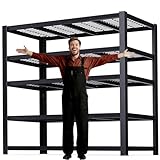
Price: $159.99
View on Amazon Affiliate link
Garage Storage Shelves Heavy Duty Garage Shelving Units 60" x 28" x 12"in Metal Shelving 5 Tier Adjustable Rack Shelfs 2000LBS Suitable For Garage Basements, Warehouses, Kitchens, and Storage Rooms

Price: $39.99
View on Amazon Affiliate link
36.4" W Storage Shelves, 5-Tier Metal Shelving Unit with Leveling Feet | Storage Rack and Utility Shelf Organizer for Garage, Pantry, Kitchen, Closet and Laundry Room, 36.4" x 11.8" x 68.3", Black
Price: $49.99
View on Amazon Affiliate link
Sakugi 5-Tier Storage Shelves with Hooks, 18.1" x 12.4" x 56.8", Black | Heavy-Duty Metal Frame, Space-Saving Shoe Rack & Bookshelf, Adjustable Leveling Feet, Ideal for Bedroom, Bathroom and Garage
Price: $31.99
View on Amazon Affiliate link
Amazon Basics 5-Shelf Adjustable Heavy Duty Steel Wire Storage Shelves for Garage, Kitchen, Easy Assembly, 36" x 14" x 72", Black

Price: $79.19
View on Amazon Affiliate link
Sakugi 5-Tier Storage Shelves 33.1" x12.6" x73.5" Black with Wheels | Two Ways To Use, Flexible Movement & Stability,Kitchen, Closet, Pantry, Garage, Adjustable Feet, Metal Construction

Price: $52.99
View on Amazon Affiliate link
RackBro 48" W Garage Shelving 1875LBS Heavy Duty Wire Shelving Unit, Metal 5-Tier Adjustable Steel Storage Rack with Liners, Storage Tote Rack, 48" W x 18" D x 72" H for Garage Commercial, Black

Price: $128.99
View on Amazon Affiliate link
Amazon Basics 5-Shelf Adjustable, Heavy Duty Storage Shelving Unit on 4" Wheel Casters, Easy to Move Portable Wire Shelving, No Tools Needed for Easy Assembly, 30" x 14" x 64.8", Chrome

Price: $62.83
View on Amazon Affiliate link
Amazon Basics 3-Shelf Adjustable Heavy Duty Steel Wire Rack Storage Shelving Organizer with Storage Space, Versatility and Ease of Use for Kitchen, Garage, 23.2" L x 13.4" W x 30" H, Black

Price: $35.07
View on Amazon Affiliate link
GH Heavy Duty Garage Shelving, 2000LBS Storage Shelves Heavy Duty, 5-Tier Adjustable Metal Shelving Unit, Utility Garage Organizer Rack for Warehouse Basement Pantry Kitchen, 12"D x 28"W x 59"H, Black

Price: $32.99
View on Amazon Affiliate link
REIBII 3200LBS Storage Shelves 55.5" W Garage Shelving Heavy Duty 5 Tier Adjustable Wire Shelving Unit Metal Shelving for Garage Pantry Commercial Basement,55.5" W X 18”D X 71" H
Price: $135.99
View on Amazon Affiliate link

