Best DIY Spice Cabinet Organization for Narrow Cabinets
As an Amazon Associate we earn from qualifying purchases. Details
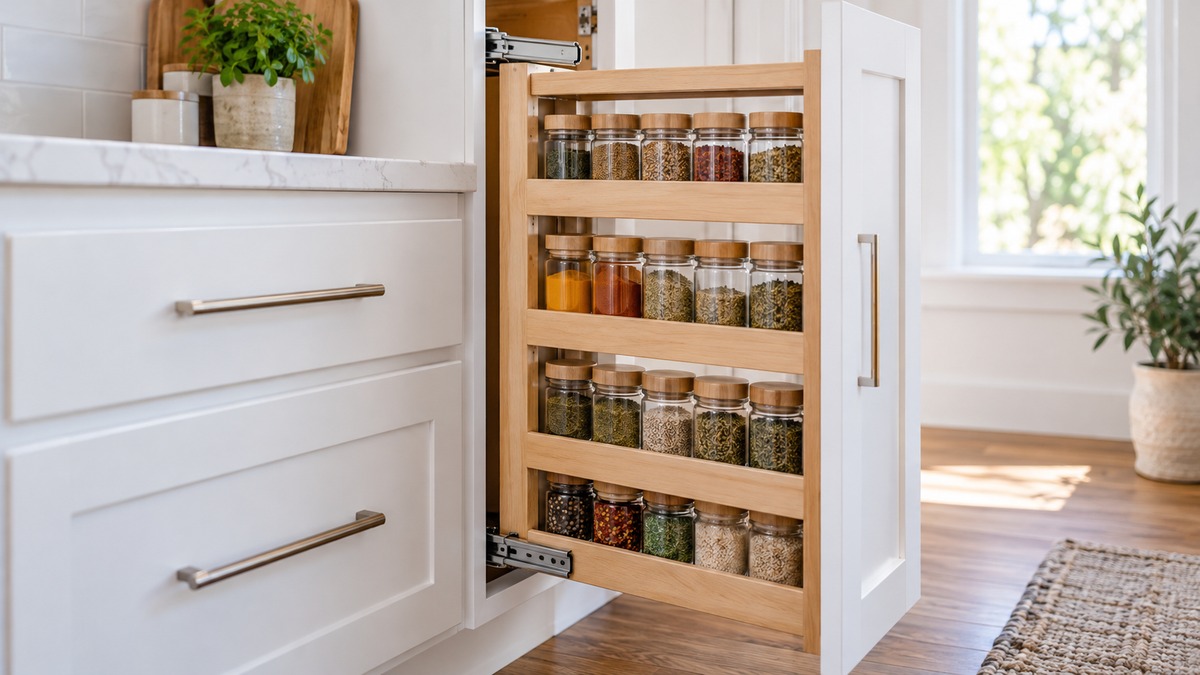
DIY spice cabinet organization means fitting a spice rack into a cabinet you already own, then installing or assembling it yourself. Spice jars tend to pile up at the back of a cabinet, and their labels disappear behind other jars. A rack inside the cabinet brings the back row forward without moving the whole shelf. This guide compares two in-cabinet pull-out spice racks, explains what to measure before you buy, and shows how to read each listing so you can match a rack to your cabinet.
Quick answer
Choose a pull-out spice rack when your cabinet is deep enough for the rack and you want every jar visible without emptying the shelf. Choose the narrow steel rack when your opening is tight and your jars are small and light. Choose the bamboo rack when you have a deeper, taller cabinet and want three levels, but confirm its recommended cabinet size first. Both racks are listed for mounting inside a cabinet, so neither one replaces a countertop organizer.
What matters for DIY spice cabinet organization
Five details change with this keyword, and most of them come from measurements you take before you order.
- Cabinet opening and depth. A pull-out rack only works if its depth fits the cabinet interior. The LYNK listing gives a size of 10.3 inches deep and 4.3 inches wide. The SpaceAid listing gives 10.6 inches deep and 7.6 inches wide. Measure the inside of the cabinet, not the door, because the door opening is often wider than the box behind it.
- Pull-out motion versus a fixed shelf. A pull-out rack slides out like a drawer. A drawer is a box-shaped container inside a piece of furniture that can be pulled out horizontally to access its contents. A fixed shelf does not slide, so jars at the back stay hidden behind the front row.
- Shelf weight capacity. The LYNK listing states a shelf weight capacity of 4.4 pounds. Add up the weight of the jars you plan to store on each level and compare the total with that figure before you load the rack.
- Materials and finish. The LYNK listing names an alloy steel frame with a chrome finish. The SpaceAid listing names bamboo as the material and natural as the color. The two materials look different on a cabinet shelf, so choose the one that matches your existing hardware and wood tones.
- Mounting and assembly. Both racks are listed for in-cabinet mounting. The LYNK listing says it installs with two screws at the back of the cabinet. The SpaceAid listing says it includes all the hardware, including a screwdriver, so you assemble it yourself at home.
Products that fit this
Only two listings in the research set are in-cabinet pull-out spice racks. Both are picked below, and each card shows that listing’s own specifications.
1. LYNK PROFESSIONAL® Pull Out Spice Organization for Cabinets – 4-3/8 inch Wide – Spice Rack (Best for narrow cabinets)
Specs from the listing (checked 2026-10-13):
- Product Dimensions: 10.3″D x 4.3″W x 8.5″H
- Shelf Weight Capacity: 4.4 pounds
- Number of Shelves: 2
- Mounting Type: In Cabinet
- Material: Alloy Steel
Pros
- The listing gives a width of 4.3 inches, which suits a narrow cabinet gap.
- The listing states a shelf weight capacity of 4.4 pounds.
- The listing says it installs with just two screws and includes hardware.
Cons
- The listing states a shelf weight capacity of 4.4 pounds, which is low for heavy glass jars.
- It has two shelves, so it holds fewer jars than a three-level rack.
Best for: Narrow cabinets where the opening is tight and the jars are small and light.
Skip if: Your jars are heavy glass or you need a full shelf of spices in one unit.
View on Amazon (affiliate link)
2. SpaceAid Bamboo Pull Out Spice Rack Organizer for Cabinet, Heavy Duty Slide Out Seasoning Kitchen (Best for three levels)
Specs from the listing (checked 2026-10-13):
- Product Dimensions: 10.6″D x 7.6″W x 9.6″H
- Number of Shelves: 3
- Mounting Type: In Cabinet
- Material: Bamboo
- Item Weight: 2.96 kg
Pros
- The listing includes ball bearing glides for smooth sliding.
- The listing says the bottom panel clears any cabinet lip.
- The listing says it includes all the hardware, including a screwdriver.
Cons
- The title describes a 3-drawer version while one bullet calls the same version 2-tier, so confirm the level count before ordering.
- The listing recommends a cabinet 12 inches tall and 10.60 inches deep, which a shallower cabinet will not meet.
Best for: Deep cabinets with room for three levels of bamboo storage.
Skip if: Your cabinet is shallower than the listed size, or you want a metal finish.
View on Amazon (affiliate link)
Installing a DIY spice rack step by step
Installing a rack is a short job, but the order of steps matters. Start by emptying the cabinet shelf so you can see the full interior. Wipe the surfaces where the rack will sit, and check the cabinet front for any lip, bracket or hinge that could catch the rack when it slides.
Next, assemble the rack on a flat surface, following the instruction sheet that comes with it. The SpaceAid listing says it comes with clear instructions, so read the whole sheet before you tighten anything. Leave the screws slightly loose until the frame is square, then tighten them fully.
Place the rack inside the cabinet and mark the mounting points on the cabinet side or back, if the listing calls for screws there. Fix the rack in place, then pull it out and push it back several times. A smooth slide tells you the rack is level and seated correctly. A rack that sticks or leans needs a second look before you load any jars.
Load the heaviest jars on the bottom level first, and keep the total under the shelf capacity the listing states. Finally, close the door and check that the rack clears the door when it moves. If it rubs, reduce the load or move the rack slightly inward, following the instructions that came with it. For other in-cabinet layouts, see the cabinet organizer for spices guide.
How to choose between them
Start with the cabinet, not the rack. Measure three things inside the cabinet: the usable width at the front of the opening, the depth from the front edge to the back wall, and the height of the space you want to fill. Write each number down before you open either listing. A rack that fits on paper can still bind if a hinge, a stop or a cabinet back panel sits in the way, so check the depth with a little room to spare. If your opening is unusually narrow, the narrow spice cabinet guide shows how other narrow layouts compare.
Choose the LYNK rack if your opening is narrow and you store a small set of lightweight jars or bottles. The listing gives a width of 4.3 inches, so it suits an opening that is narrower than most spice racks. Its two shelves hold fewer jars than a three-level rack. Skip it if your jars are heavy glass, or if you want to store a full shelf of spices in one place.
Choose the SpaceAid rack if your cabinet is at least as deep as the listing and you want three levels in one unit. The listing names a recommended cabinet of 12 inches tall and 10.60 inches deep. Check that recommendation against your cabinet before you order, and skip this rack if your interior is shallower than the listing or if you prefer a metal finish.
Read the layout line on each listing before you buy. The SpaceAid title describes a 3-drawer version, and one bullet calls the same version 2-tier, while its specifications list three shelves. The listing does not settle this clearly, so confirm the number of levels with the seller before you order. The LYNK listing has a clearer count, because its specifications list two shelves.
If you want a wider set of options before you commit to an in-cabinet rack, compare the pull-out spice shelves and the spice drawer organizer guides first. Finally, check the hardware. The LYNK listing describes an easy mount design with two screws, and it includes hardware. The SpaceAid listing includes the hardware and a screwdriver. If you prefer no screws in the cabinet, neither listing mentions an adhesive or screw-free option, so check the packaging or the manufacturer’s manual before you start.
Worked example: planning a spice cabinet
Your planned rack must fit inside that depth with some room left for the mounting screws and the slide.
Step 1. Compare the SpaceAid depth with the cabinet depth. The listing gives 10.6 inches for the rack. 11 minus 10.6 equals 0.4. That leaves 0.4 inches of clearance, which is a small margin for a slide, screws and a cabinet lip. This rack would be a tight fit in this cabinet.
Step 2. Compare the LYNK depth with the same cabinet. The listing gives 10.3 inches. 11 minus 10.3 equals 0.7. That leaves 0.7 inches of clearance, which is still tight but a little more forgiving than the SpaceAid rack in this example.
Step 3. Count the jars. Suppose you have 18 spice jars and plan to use two levels. 18 divided by 2 equals 9. Nine jars per level is a realistic load for a two-level rack, so the LYNK rack suits this count. Check the jar weight against the listed 4.4-pound shelf capacity before you load the rack.
Step 4. Decide. In this cabinet, neither rack leaves much space. Measure your own cabinet again, and treat this example as a method, not a measurement of your kitchen. If the margin is under half an inch, look for a shallower rack or recheck the interior depth.
Mistakes to avoid
- Measuring the door instead of the interior. The door opening is often wider than the cabinet box behind it. Measure inside the box, at the front and at the back.
- Ignoring the cabinet height. The SpaceAid listing recommends a cabinet 12 inches tall. A taller or shorter cabinet changes how many jars each level holds.
- Loading past the shelf capacity. The LYNK listing states 4.4 pounds per shelf. Glass jars add weight quickly, so weigh a sample jar before you fill the rack.
- Trusting the title over the bullets. When the SpaceAid title, bullets and specifications disagree about the level count, follow the seller’s written answer, not the headline.
- Forgetting the cabinet lip. The SpaceAid listing says its bottom panel clears any cabinet lip. Check your cabinet’s front edge before you slide the rack in, so the rack does not catch on the frame.
- Skipping the test slide. Pull the rack out and push it back several times before you fill it. A rack that sticks or leans is easier to fix when it is empty.
FAQ
Will a pull-out spice rack fit my cabinet?
It fits only if the rack’s listed depth and width are smaller than your cabinet’s interior. The LYNK listing gives 10.3 inches deep and 4.3 inches wide. Measure the inside of the cabinet before you compare those numbers with yours.
How do I measure a cabinet for a spice rack?
Measure the interior width at the front of the opening and the depth from the front edge to the back wall. Measure the height of the space too. Take each measurement at two points, because cabinet boxes are not always square. Use the smallest number as your limit.
How much weight can a pull-out spice rack hold?
The answer depends on the listing. The LYNK listing gives a shelf weight capacity of 4.4 pounds. The SpaceAid listing does not state a shelf capacity in its specifications, so check the listing or the manufacturer’s manual for that number before you load it.
Do I need tools to install an in-cabinet spice rack?
It depends on the rack. The LYNK listing describes two screws at the back of the cabinet, so a screwdriver is the main tool you need. The SpaceAid listing says it includes a screwdriver and all the hardware. Read the included parts list on the listing before you start.
Is bamboo or steel better for a spice rack?
Neither material is better in every kitchen. Steel suits a narrow, metal-look cabinet, and bamboo suits a warmer, natural look. Choose the material that matches your cabinet finish, and read the cleaning notes on the listing before you decide.
Can I use a pull-out spice rack for other items?
The LYNK listing names food and jars as its recommended uses. The SpaceAid listing names food as its recommended use. Both are sized for spice bottles, so check the weight and size of any other item before you store it there.
Why do my jars keep moving in a pull-out rack?
Jars tend to slide when a shelf sits at an angle or when the rack catches on the cabinet front. Level the rack, seat it fully in the cabinet, and check that the front edge clears the frame. The SpaceAid listing says its bottom panel clears a cabinet lip, which is the first detail to check.
Bottom line
Choose the LYNK rack if your cabinet is narrow, your jars are light and two levels are enough. Choose the SpaceAid rack if your cabinet is deep and tall enough for its listed size and you want three levels, after you confirm the level count with the seller. In both cases, measure the interior first, check the listed shelf capacity, and treat the listing as the final word on size.
Sources
- Drawer, Wikipedia: a drawer is a box-shaped container that can be pulled out horizontally to access its contents, which is the motion a pull-out rack uses.