Should Books Be Stored Flat or Upright
As an Amazon Associate we earn from qualifying purchases.
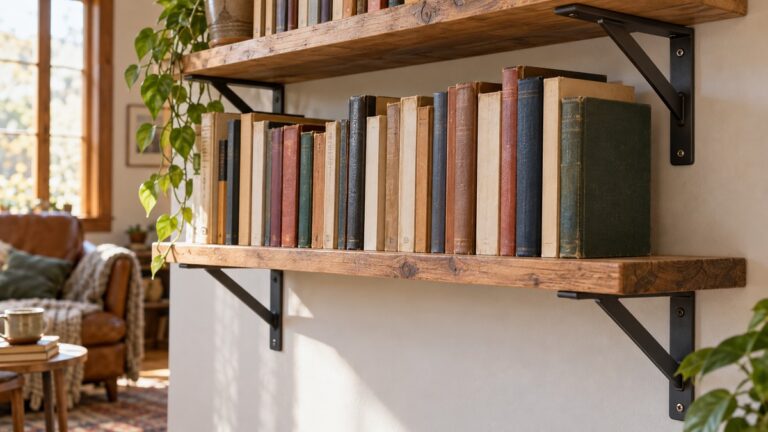
Should books be stored flat or upright? For most books, upright is the answer. The Library of Congress research guide says to keep shelved books upright, and the State Library of Queensland guide says small and medium sized volumes in good condition may be stored upright on shelves or within folders or boxes. Flat storage is the rule for books too large to stand, which the same Library of Congress guide says should be fully supported by the shelf underneath. This guide sets out the test for each book.
Quick answer
- Store most books upright, as the Library of Congress research guide says.
- Lay a book flat when it is too large to stand, fully supported by the shelf underneath.
- Boxed books that are not oversize, fragile or heavy can stand upright in their boxes, according to National Park Service guidance.
- When you pack a box, put heavier and larger volumes at the bottom, or pack the books vertically, spine down.
Upright is the default
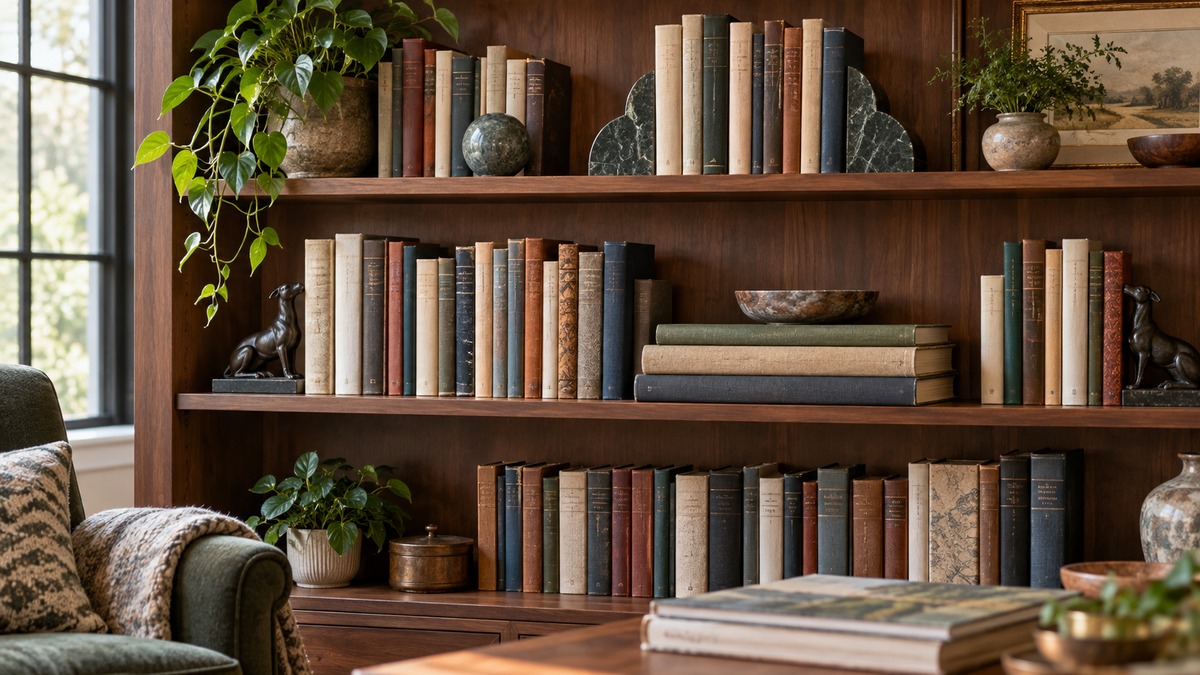
The Library of Congress research guide on storing books gives the default rule in a single line: “Keep shelved books upright.” It adds that shelf storage is acceptable for most books, “but technique is important.” The technique is the orientation of each book and the support it gets from its neighbors on the shelf.
The State Library of Queensland guide reaches the same answer for smaller collections. It says that “Small and medium sized volumes in good condition may be stored either upright on shelves or within folders or boxes.” The two sources agree on the default, and both leave room for a box when the books need more protection.
Spine down, and no slouching
Upright does not mean any position on the shelf. The National Park Service care sheet for rare books says: “Books should not slouch on the shelves.” A book that leans over its neighbors is not held up along its full height, which is why the sheet’s rule matters even though it is written for rare books rather than a home shelf.
Inside a box, the same idea appears as a direction for the spine. The Library of Congress scrapbook guide says: “Volumes in boxes should be stored spine down, adjacent to materials of similar size.” The second half of that sentence asks for neighbors of similar size, so a small volume does not sit beside a much larger one with nothing to lean on.
For a small room where upright shelving is the only option, see bookcase ideas for small rooms. For a living room unit with more shelves, see living room bookshelves for an apartment, and for a mini room, see bookshelves for mini rooms.
The shelf clearance test
The sources do not give a height cut-off for oversize books. The practical test is the clearance on the shelf: the gap between the shelf surface and the shelf above it, minus the height of the book. A book that fits inside that gap with room to spare can stand upright. A book taller than the gap cannot, and the Library of Congress guide points to flat storage for it.
The table uses clearances and book heights that we assumed for the example. Replace them with your own measurements before you decide.
| Book | Book height (inches, assumed) | Shelf clearance (inches, assumed) | Result | Room left (inches) |
|---|---|---|---|---|
| Trade paperback | 9.5 | 12 | Stands upright | 12 − 9.5 = 2.5 |
| Hardcover atlas | 12.5 | 12 | Lay flat | 12 − 12.5 = −0.5 |
| Hardcover novel on a 10-inch gap | 9.5 | 10 | Stands upright, tight | 10 − 9.5 = 0.5 |
The negative figure in the atlas row means the book does not fit with the clearance you assumed, so it goes flat. The 0.5-inch figure in the last row is a tight fit, and it is the kind of shelf the National Park Service sheet advises against packing too tightly. The table does not replace a measurement. It shows the order in which to check each book.
When flat is the right choice
Flat storage is the answer for a book that cannot stand. The Library of Congress research guide says: “Books too large to stand upright can be stored flat and horizontal, fully supported by the shelf underneath.” The support is the point. A book lying across the shelf carries its weight along its full length, not just at its spine.
The National Park Service sheet on bound archival materials takes the same view of oversize, fragile or heavy books. In summary, that sheet calls for flat storage in weight-bearing acid-free boxes on shallow shelves for those books. We do not quote the sheet on this point, because the text we opened is an uneven scan, but the summary matches its guidance.
Do not stack flat books on a shelf that holds upright books. The same sheet advises against loose stacking on the shelf unless the books are housed in weight-bearing boxes, so a stack that sits directly on a shelf is the case to avoid. If you cannot give each oversize book its own flat space, put it in a box that can carry it.
Boxed books: the heavy books go low
Boxes change the orientation question, because the book is no longer standing on the shelf alone. The National Park Service sheet on bound archival materials says that “House boxed books that are not oversize, fragile, or heavy, upright on their bottom edge on the shelving.” That gives a clear default for a boxed book: if it is not oversize, fragile or heavy, it can stand upright in the box.
The Library of Congress FAQ on books gives the packing rule for a box: “Pack books flat in the box with heavier and larger volumes at the bottom or pack books vertically, spine down.” Put the heaviest and largest volumes at the bottom of the box. If a box holds books of mixed sizes, the rule that matters most is the one about the heavy books.
For a unit that will hold boxes on its shelves, see bookshelves for a small room. For a dorm room where boxes share a shelf with upright books, see dorm room bookshelves.
Check the shelf before you lay books on it
A flat book needs a flat shelf. The Library of Congress storing guide sets the condition: “All shelves should be completely flat and not have any protrusions such as splinters or nails.” A shelf that is warped, rough or lifted at one end does not support a flat book across its length. Run a hand along the shelf before you lay an oversize book on it.
The guide’s condition applies to every shelf, upright or flat. The difference with a flat book is that a single protrusion or dip is more likely to press on the book’s edges, so check the surface more carefully before you place an oversize volume.
Flat books also use more of the shelf’s depth. A shelf that already holds upright books may have no room left to lay an oversize volume across it, so plan the flat shelf before you fill the others. The National Park Service sheet on books says they should not be packed too tightly on the shelves, and that advice applies to a flat book as much as to an upright one.
Shelf or box: a decision check
Use this order for each book, starting with the test that most books pass. First, check whether the book stands upright in its shelf clearance with room to spare. If it does, store it upright on the shelf. Second, if the book is too large to stand, lay it flat on a flat, fully supported shelf. Third, if the book is fragile, heavy or oversize and you want a box, pack it flat with the heavier volumes at the bottom, or store it upright in a box only if it is not oversize, fragile or heavy.
The check is the same whether the shelf is in a closet or a living room. The only thing that changes is the clearance, so measure the clearance on the shelf you plan to use. If you are choosing a new unit, compare Furinno and Sweetcrispy bookcases compared on shelf clearance and shelf width, not only on the number of shelves.
Compare units on shelf clearance
When you compare bookcases for this question, the number of shelves is the least useful figure. What matters is the clearance on each shelf and whether the surface is flat. Two of our published comparisons are a starting point: VASAGLE and IRONCK bookcases compared and Sweetcrispy and IRONCK bookcases compared. Read each unit’s stated dimensions where they are given, then run the clearance test above with the books you own.
Two more pairings follow the same approach: VASAGLE and Sweetcrispy bookcases compared and Furinno and IRONCK bookcases compared. Where a unit does not state its clearance, the sources we opened do not give one, so measure it yourself before you buy.
How we chose
This is an orientation guide, not a product list. We chose the rules that appear in the four pages we opened on 2026-10-21: a Library of Congress research guide on storing books, a National Park Service sheet on bound archival materials, a State Library of Queensland guide on caring for book collections, and a Library of Congress FAQ on books. We kept only the rules that one of these pages states in plain words, and we checked every quoted sentence against the text of the page it came from. Where a page text was uneven, we paraphrased and did not quote. The clearance table uses our own assumed numbers, each named in the table.
Mistakes to avoid
- Standing an oversize book upright. The Library of Congress guide says books too large to stand upright can be stored flat, fully supported by the shelf underneath.
- Stacking flat books directly on a shelf. The National Park Service sheet advises against stacking books on a shelf unless they are housed in weight-bearing boxes.
- Putting heavy books on top in a box. The Library of Congress FAQ says to put heavier and larger volumes at the bottom.
- Using a warped or rough shelf for flat books. The Library of Congress guide says all shelves should be completely flat and free of protrusions.
- Ignoring the clearance. A book taller than the gap cannot stand, so measure the gap before you choose the orientation.
What we could not verify
The pages we opened do not give a height cut-off for oversize books, a clearance for a typical bookcase, or a weight at which a book counts as heavy. The National Park Service text we opened has scan errors in places, so we paraphrase it rather than quote it, and its guidance is written for rare and archival books rather than a home shelf. The clearance and height figures in the table are our assumptions. We did not test any unit, and we make no claim about a particular bookcase.
Frequently asked questions
Should most books be stored upright?
Yes. Both guides cited in this article treat upright as the default, and the Queensland guide allows folders or boxes for small and medium volumes in good condition.
When should a book be stored flat?
When it is too large to stand. The Library of Congress research guide says books too large to stand upright can be stored flat and horizontal, fully supported by the shelf underneath.
Can a boxed book stand upright?
The National Park Service sheet says that boxed books that are not oversize, fragile or heavy can be upright on their bottom edge on the shelving. Oversize, fragile or heavy books need a different approach.
How should I pack heavy books in a box?
Put the heavier and larger volumes at the bottom. The Library of Congress FAQ says to pack books flat in the box with heavier and larger volumes at the bottom, or to pack them vertically, spine down.
How do I know if a book fits upright on my shelf?
Measure the gap between the shelf surface and the shelf above, then subtract the book’s height. If the book is taller than the gap, it cannot stand, and the Library of Congress guide points to flat storage.
Bottom line
Store most books upright, and lay any book that is too large to stand flat on a shelf that is completely flat and fully supports it.
Sources
- https://guides.loc.gov/preserving-your-books/storing (opened 2026-10-21)
- https://www.nps.gov/subjects/museums/upload/19-18_508.pdf (opened 2026-10-21)
- https://www.slq.qld.gov.au/sites/default/files/Caring%20for%20your%20collections%20-%20Books%20%26%20bound%20material_2025.pdf (opened 2026-10-21)
- https://www.loc.gov/preservation/about/faqs/books.html (opened 2026-10-21)
As an Amazon Associate we earn from qualifying purchases.